
Ronak’s story paints a clear picture of the generation gap, the lack of communication within families, and how extremist groups exploit the emotions of young people. After years of captivity, she has now returned to Iran and says: “There are no refugee camps behind the borders; it’s all a trap.”
In traditional and transitioning societies, many life-altering decisions are not made based on free choice but under the pressure of family, culture, and rigid social structures. In such environments, young people who seek identity, love, or independence are sometimes drawn into paths that are not chosen, but rather are a result of having no real or safe options.
One such example is Ronak Pahlevanikya, a young woman from the border town of Qasr-e Shirin who, after her family opposed her desired marriage, chose a perilous path. This path led her from an ordinary life into a dangerous armed group.
Ronak’s story is not just a reflection of her personal and emotional challenges; it also clearly reveals the generation gap, weak family communication, a lack of social support, and a deficit of emotional education in many Iranian families. Her joining the armed group was not a result of ideological beliefs or political commitment, but rather a combination of psychological pressure, impulsive decisions, and systemic vulnerabilities.
Now, with her return and separation from the group, there is an opportunity to use her personal narrative to gain a deeper understanding of the social and psychological roots of phenomena like the recruitment of youth into extremist groups, running away from home, and the identity crisis faced by young women. These issues require a serious reevaluation of the country’s cultural, educational, and social support policies.
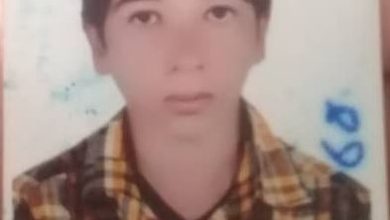
Ronak Pahlevanikya, born in 1996 in Qasr-e Shirin, is a married housewife with a high school diploma in accounting. Due to family problems (her parents’ refusal to allow her to marry Rasoul Sayadi because of his drug addiction), she left the country on August 14, 2019, and joined the armed group with Rasoul Sayyadi.
Her husband, Rasoul, returned to the country on August 8, 2024, after five years with the armed group. Ronak was also freed and returned to Iran a few months later, thanks to her family’s efforts and complaints against the group.
Q: Please tell us a little about your past and family situation.
A: I am Ronak Pahlevanikya, born in 1996 in Qasr-e Shirin. I grew up in a traditional, middle-class family. From a young age, I was very serious about my studies and my future. After getting my accounting diploma, I hoped to continue my education and maybe one day find a job to achieve financial independence. But family and social conditions didn’t allow it. Most of the time, I was a housewife. My family was strict, especially about marriage and relationships outside the family. This always made me feel a huge gap between what I wanted and what my family wanted, and it bothered me.
Q: How did you meet Rasoul Sayyadi?
A: I had known Rasoul for years. He was my age, and we had lived in the same neighborhood since childhood. Over time, an affection developed between us. But our main problem was Rasoul’s addiction. He had become addicted to drugs, and this was unacceptable to my family. He proposed to me several times, but my parents objected, saying I couldn’t build a future with someone who was an addict. On the other hand, I knew Rasoul was not a bad person at heart; life’s problems had pushed him down that path. This made my affection for him grow despite my family’s opposition. This conflict between me and my family put a lot of pressure on me. I loved Rasoul, but I also knew my family had a point.
Q: So, your families’ opposition led to your decision to leave the country?
A: Yes, exactly. We had reached a dead end. My family wouldn’t budge, and I couldn’t give up on my feelings for Rasoul. It was during this time that Rasoul got in touch with a person named Saman Javanroudi on Instagram. Saman presented himself as a benevolent person. He told Rasoul there were camps in Iraqi Kurdistan for Iranian Kurds who wanted to go to Europe. He said we could apply for asylum there and quickly start a new life in Europe. When Rasoul told me this, it was like a window of hope for me. I thought it was the only way we could be together and build a better future at the same time.
Q: So you thought you were going to a refugee camp?
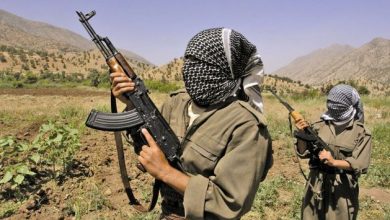
A: Yes. We had no idea what the place was really like. In our minds, we had a picture of a UN camp or some safe place where we could submit our documents and then go to Europe. We never even imagined it might be a base for an armed group. That’s why we crossed the border on August 14, 2019. Everything happened so fast. From the moment we arrived, we realized it had nothing in common with a refugee camp. Everything was under control, and everyone was a soldier. We had entered a sinister military base.
Q: What was your reaction when you realized where you were?
A: The first shock was that they separated me from Rasoul as soon as we arrived. They said girls and boys had to be in separate camps. I didn’t even get a chance to say goodbye. When we protested, they laughed and mocked us, saying: “There’s no Europe here; that’s just a line we use to recruit people on social media. There’s an entrance here, but no exit!” In that moment, all our dreams shattered. I realized we had been deceived and there was no way back. We were practically prisoners, held by a paramilitary group that explicitly said no one would be leaving its headquarters.
Q: What was life like inside the group’s headquarters?
A: It was truly difficult. Life in the mountains with minimal facilities, little food, hard labor, and forced obedience to commanders. Everything was controlled, even the simplest decisions. We had no contact with our families or the outside world. Every time we asked to return, we were met with threats and humiliation. They would say if we tried to escape or return, we would be treated as “traitors.” I lived in those conditions for years without even being able to see Rasoul once. The separation was a worse torture than anything else. We had gone to the region to be together, but they separated us!
Q: How did Rasoul’s return affect you?
A: After five years, Rasoul couldn’t take it anymore. In August 2024, while he was on guard duty, he escaped and surrendered to the Asayish forces. When I heard, I was filled with hope. But at the same time, the pressure on me increased. The group’s commanders repeatedly tried to exploit my feelings for Rasoul to convince him to return. They even threatened that if I went to Iran, I would regret it. I was in a strange dilemma: on the one hand, I wanted to be free and join Rasoul, but on the other hand, I was afraid I would be killed if I also tried to escape. I was also worried about Rasoul’s life.
Q: How were you finally able to return?
A: After Rasoul returned to Iran, my family didn’t rest. They didn’t want me to get lost in those camps forever or have an unknown fate, like so many others. With all their strength and limited resources, they started to follow up on my case. They filed official complaints, contacted the authorities, and sent repeated correspondence to save my voice from being forgotten. Their efforts were not easy or without cost. My family faced unanswered calls, fear, threats, mistrust, and despair along the way, but they didn’t give up.
They hoped that if they raised their voices louder, the group would be forced to back down. In the end, it was this pressure, this hope, and this continuous persistence that led the group to release me after a few months. My freedom was not a result of their goodwill, but a result of my family’s resilience.
When I reached the border, I had a strange feeling—a mix of fear, joy, disbelief, and a sense of returning to life. I can’t describe that moment. It was like a rebirth. The past five years felt like a long, endless nightmare, and now, I had finally opened my eyes and saw the light. When I arrived home and heard my mother’s voice again, for a few moments, I couldn’t believe I was free. It was as if part of my mind was still trapped in that closed-off, controlled, and fearful place. But my family’s embrace and their tears slowly brought my belief back. There’s still a long way to go before I get back to a normal life, but at least today, I am no longer a captive.
Q: When you look back now, how do you feel?
A: Sometimes I still have nightmares about those days. I feel like my youth was wasted in a place that had nothing to do with my life or my dreams. All I wanted was to marry someone I loved, but this simple desire turned my life into a hell. Today, Rasoul and I are married, and he has quit his addiction. I’m happy that we are finally together and have started a new life, but the wound those years left on my soul will always remain.
Q: What is your message for other young people and families?
A: I want to tell all young men and women not to fall for the promises you see on social media. People like Saman exploit your problems to trap you. There are no refugee camps behind the borders; it’s all a trap. And I want to tell families: if you object to your children’s choices, do it with dialogue and calmness. Strictness and strong opposition only push young people towards emotional and dangerous decisions. If Rasoul and I had more support from our families back then, maybe we never would have chosen that wrong path.