
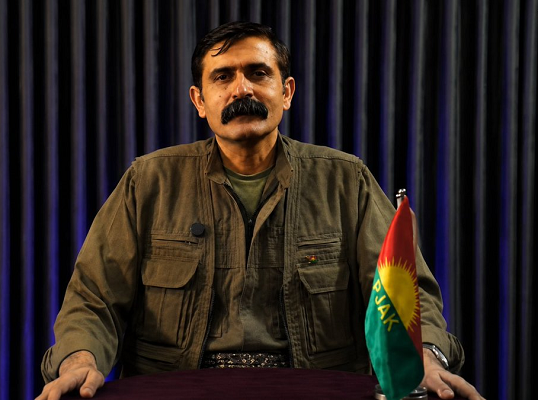
Recent remarks by Ribwar Abdanan (Ali Norouzi), the spokesperson for PJAK, in response to the publication of documents regarding judicial rulings, extradition requests, mutual legal assistance, and international mechanisms for prosecuting certain members and commanders of Kurdish armed groups, are filled with general claims, absolute denials, and political accusations rather than sound legal arguments. No documented answers have been provided to the most critical legal and human rights questions regarding the group’s conduct.
The first question is perfectly clear. The PJAK spokesperson characterizes all allegations against the group as “lies” and “baseless,” but fails to clarify exactly which accusations he is denying and on what legal or evidentiary basis.
Does he deny the numerous reports regarding the recruitment or use of individuals under the age of 18 within structures affiliated with PJAK and the PKK? Does he consider reports published by human rights organizations, independent researchers, specialized bodies, and United Nations mechanisms to be invalid? If so, a documented, reasoned, and verifiable response is expected for each individual case and report, rather than a sweeping denial of all documentation.
Protecting children in armed conflict is a peremptory and fundamental norm (jus cogens) of International Humanitarian Law (IHL) and International Human Rights Law (IHRL). The Convention on the Rights of the Child, its Optional Protocol on the involvement of children in armed conflict (OPAC), Additional Protocol II to the Geneva Conventions, and a series of UN Security Council resolutions on children and armed conflict explicitly demand all parties to conflicts—both states and non-state armed groups—to refrain from recruiting, training, and deploying children. These obligations do not target states alone; the conduct of armed groups is evaluated by the international community through the lens of these exact rules.
The second question pertains to PJAK’s own commitments. Over the past years, PJAK and other aligned groups have signed deeds of commitment with Geneva Call, prohibiting the use of children, preventing gender-based violence, banning anti-personnel mines, and mandating adherence to the core tenets of humanitarian law.
If such violations never existed, what was the philosophy behind accepting these commitments? Signing these documents indicates that serious humanitarian concerns existed regarding the behavior of armed groups, and these groups recognized the necessity of accepting specific obligations. Therefore, disregarding this history and completely denying all criticisms is incompatible with reality. What does it signify when PJAK and other Kurdish armed groups, despite these commitments and based on numerous documents and case studies, continue to persist in these practices that run counter to human rights?
Ali Norouzi (Ribwar Abdanan) recently stated in an interview that PJAK keeps children in safe environments! How is this even possible? For an armed group operating in mountains and caves, what exactly defines a “safe environment”? If the environment is safe, what has been the fate of the children aged 9 to 17 who entered this armed group, whose cases were compiled and published in the book Lost by the Kurdistan Human Rights Watch (IKHRW)? As one can see, it is impossible to escape reality.
The third question concerns the rights of victims. In past years, numerous families have spoken out about the disappearance of their children, the recruitment of teenagers, the deaths of family members in the group’s camps, pressure exerted on border residents, extortion, and other harms attributed to Kurdish armed groups. Furthermore, multiple narratives have been published by former members who separated from the group, detailing the internal structure, severe restrictions on personal freedom, deprivation of basic human rights, psychological pressure, and the management of camps.
While there may be differing perspectives on any individual narrative, the appropriate legal response to these reports is not total denial or attacking the critics. The principle of accountability demands that each claim be investigated based on evidence and answered transparently.
Another point requiring critical reflection is the PJAK spokesperson’s misinterpretation of the mechanisms of the International Criminal Police Organization (Interpol). An Interpol Red Notice is neither a conviction nor proof of guilt; rather, it is a tool for police cooperation and international notification regarding individuals facing judicial prosecution. The issuance or publication of a Red Notice is conditional upon checking the request’s compliance with Interpol’s regulations and rules, including its Constitution and the criteria of the Commission for the Control of Interpol’s Files. This mechanism is neither a purely domestic action nor a substitute for an independent judicial trial; it is part of the international criminal cooperation system operating on clear legal rules.
Furthermore, it must not be forgotten that Article 3 of the Interpol Constitution strictly forbids the organization from engaging in any intervention or activities of a purely political, military, religious, or racial character. Therefore, requests that successfully pass through Interpol’s legal filters have, at the very least, been vetted structurally against the organization’s regulations—though this by no means equates to a final proof of charges or the forfeiture of the defendants’ right to a defense.
Conversely, if international mechanisms are deemed credible when they issue reports or statements aligned with a group’s position, those same mechanisms cannot be dismissed as invalid when they raise questions or take legal actions regarding that group’s performance. Such an approach contradicts the principle of good faith in invoking international law and amounts to a selective exploitation of international bodies.
In another part of his remarks, the PJAK spokesperson proposed the formation of a fact-finding commission. The principle of an independent, impartial fact-finding mission based on international standards is a commendable measure, provided that all parties accept the principle of accountability without exception.
Is PJAK prepared to hand over files concerning child recruitment, the deaths of teenagers in camps, family complaints, narratives of separated members, financial sources, command structures, and its armed operations to an independent fact-finding mechanism?
We, at the Kurdistan Human Rights Watch (IKHRW), welcome the formation of any fact-finding commission regarding all the issues raised and loudly declare our opposition to any form of violence and behavior contrary to human rights. However, we speak with documentation regarding the relevant instances concerning groups like PJAK. We do not just baselessly claim a figure like 60,000 people without being able to provide a list; justice cannot be executed through slogans and deflection.
Are the commanders of this group willing to answer specific questions in an independent judicial process with full defense rights, the presumption of innocence, the presence of legal counsel for both sides, the participation of private complainants, and the oversight of international bodies? If the answer is yes, the best starting point would be reviewing these very documented cases, rather than repeating political slogans.
Another crucial point is the PJAK spokesperson’s insistence on presenting the group merely as a “political party.” In the lexicon of international law, there is a clear distinction between a political party and a non-state armed group. The legal personality or chosen title of an organization does not determine its nature. What forms the basis of legal assessment is actual conduct, command structure, degree of organization, the use or non-use of violence, and its role in armed conflicts. Therefore, the mere adoption of the title “party” cannot negate the legal consequences arising from the actions of an armed group.
Ultimately, what stands out most in Ribwar Abdanan’s recent remarks is the total absence of clear answers to fundamental questions. What is PJAK’s response to reports concerning children? What is its response to the complaints of families who have been demanding clarity on the fate of their children for years? What is its response to the narratives of former and separated members? What is its response to the humanitarian commitments it voluntarily accepted? And finally, why is the primary strategy still total denial, deflection, and the politicization of the issue instead of providing documented answers?
The principle of accountability is one of the most fundamental requirements of human rights and the rule of law. This principle makes no distinction between states and non-state armed groups. Any actor claiming adherence to human rights, democracy, and transparency must, first and foremost, be accountable to victims, their families, public opinion, and independent fact-finding and judicial mechanisms. The legitimacy of any human rights claim is measured not by slogans, but by the acceptance of responsibility, transparency, and accountability.
To familiarize Mr. Norouzi (Ribwar Abdanan) and other leaders and members of Kurdish armed groups, we outline below the legal foundations and international documents related to the allegations and complaints of private plaintiffs regarding the ongoing judicial cases, hoping these individuals voluntarily appear in court to let justice be tested.
1. Protecting Children in Armed Conflict
Protecting children from the effects of armed conflict is a core principle of International Humanitarian Law and International Human Rights Law. Under Article 38 of the Convention on the Rights of the Child, states are obligated to take all feasible measures to prevent the participation of children in hostilities.
This protection is expanded in the Optional Protocol to the Convention on the Rights of the Child on the involvement of children in armed conflict (OPAC), emphasizing that non-state armed groups must not, under any circumstances, recruit or use persons under the age of 18 in hostilities. Furthermore, Article 4(3)(c) of Additional Protocol II prohibits the use of children under fifteen in non-international armed conflicts.
Additionally, UN Security Council Resolutions 1612 (2005), 1882 (2009), 1998 (2011), 2068 (2012), 2143 (2014), and 2225 (2015) established a monitoring system for the six grave violations against children in armed conflict, with child recruitment by armed groups being one of the most critical.
2. Responsibility of Non-State Armed Groups
Although international treaties primarily address states, customary international humanitarian law and the regulations of armed conflicts oblige organized armed groups to respect fundamental humanitarian rules.
Under Common Article 3 of the Geneva Conventions and Additional Protocol II, all parties to a conflict—both states and armed groups—must adhere to minimum humanitarian standards. Thus, no armed group can exempt itself from accountability regarding potential violations of human rights and humanitarian law by citing its non-state status.
3. Humanitarian Commitments with Geneva Call
PJAK and several other Kurdish armed groups have signed humanitarian deeds of commitment with Geneva Call over the years. These documents encompass commitments to respect the ban on using children, honor women’s rights, prohibit the use of anti-personnel mines, and adhere to other core principles of international humanitarian law.
Signing these commitments demonstrates an acknowledgment of the need to respect humanitarian standards and address concerns raised about the groups’ conduct. Hence, any claim of adherence to these pledges requires transparency and accountability regarding published reports of their potential breach.
4. Interpol Red Notice: Neither a Conviction nor a Purely Political Decision
The International Criminal Police Organization is not a judicial authority, and a Red Notice does not constitute a conviction or proof of guilt. A Red Notice is simply a request for international cooperation to locate and provisionally arrest a wanted individual pending legal proceedings.
At the same time, publishing a Red Notice is subject to verifying the request’s compliance with Interpol’s regulations. Specifically, Article 2 of the Interpol Constitution mandates the organization to cooperate within the framework of domestic laws and in the spirit of the Universal Declaration of Human Rights, while Article 3 strictly prohibits any intervention or activities of a purely political, military, religious, or racial character.
Therefore, while a Red Notice does not mean a person is convicted, it is not merely an internal or political decision, contrary to some claims, but is evaluated within Interpol’s legal criteria.
5. Victims’ Right to Truth, Justice, and Reparation
International human rights law does not solely protect the rights of the accused; victims’ rights are an inseparable part of justice. According to the UN’s “Basic Principles and Guidelines on the Right to a Remedy and Reparation for Victims of Gross Violations of International Human Rights Law and Serious Violations of International Humanitarian Law” (adopted in 2005), victims possess rights such as the right to the truth, effective access to justice, reparation, and guarantees of non-repetition.
Consequently, families raising claims regarding the death, disappearance, recruitment, or injury of their relatives have the right under international standards to demand independent, impartial, and effective investigations—a demand that applies to all responsible actors in conflicts, not just states.
In a society built on the rule of law, no government, organization, or armed group is exempt from accountability based on mere political or ideological claims. Just as states are duty-bound to account for their actions, non-state armed groups bear responsibility before the fundamental rules of international humanitarian law, human rights standards, victims, their families, and public opinion. From this perspective, a documented, transparent response based on legal evidence is an irreplaceable alternative to slogans, wholesale denials, and projection.