
Introduction
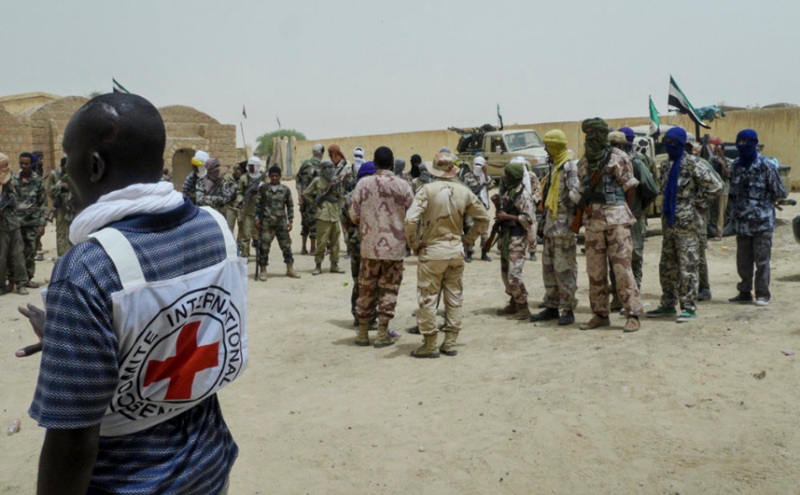
The International Committee of the Red Cross (ICRC), pursuant to its mandate, engages in dialogue with all parties to armed conflicts, including non-state armed groups. The organization maintains a long-standing practice of confidential communications with these entities to prevent and alleviate human suffering in areas under their control. As this task grows increasingly complex, the ICRC conducts an annual internal review across all its delegations to assess relations with armed groups and identify avenues for strengthening future engagement.
Global Statistics on Armed Groups in 2024
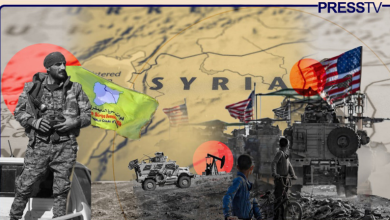
The ICRC estimates that in 2024, over 450 armed groups of humanitarian consequence operated globally. More than 130 of these are legally classified as non-state armed groups, placing them directly under the obligations of International Humanitarian Law (IHL).
Africa accounts for the largest share at 44% (195 groups), followed by the Near and Middle East at 20% (89 groups), the Americas at 18% (84 groups), Asia and the Pacific at 17% (76 groups), and Eurasia at 2% (11 groups). The total figure exceeding 450 groups has remained consistent over the past six years, underscoring persistent operational hurdles for humanitarian actors.
The total population residing in territories under the full or contested control of armed groups reached approximately 210 million people in 2024:
-
83 million people live in areas under full control.
-
127 million people reside in contested zones.
-
Nearly half of this total population (102 million) resides in Africa.
-
In the Near and Middle East, 40 million people live predominantly under full control.
-
In the Americas, the majority of the 41 million affected people live in contested areas.
A prominent trend in 2024 was a significant rise in the population under the full control of armed groups, increasing by roughly 19 million people compared to 2023. This shift was largely driven by territorial expansion in Africa and Asia. Concurrently, the proportion of groups exercising full territorial control grew by 10%, with a corresponding decrease in groups holding only contested control.
Groups operating within an Islamic ideological framework accounted for nearly 40% of the total population under armed group influence. A subset affiliated with Al-Qaeda or ISIS/ISIL controlled approximately 18% of this population (nearly 37 million people). These metrics highlight the necessity for deeper humanitarian investment in engaging groups referencing Islamic jurisprudence as a source of rules and constraints.
Governance and Service Provision by Armed Groups
Many armed groups, including several lacking sustained territorial control, function as de facto local service providers or governing bodies. In 2024, approximately 80% of armed groups (365 groups) provided public services or collected taxes from local populations:
-
56% enforced security measures.
-
51% collected taxes or levies.
-
34% operated dispute resolution or judicial mechanisms.
More complex services—such as social welfare, healthcare, education, municipal services, or civil documentation—are generally provided by groups maintaining long-term control. However, these figures do not necessarily reflect the quality or accessibility of such services. Populations in these regions face acute vulnerabilities, including proximity to hostilities, infrastructure deficits, blockades, sanctions, and a lack of state institutions to issue recognized documentation.
Levels of ICRC Engagement
In 2024, the ICRC maintained contact with roughly 60% of all monitored armed groups, remaining stable year-over-year:
-
54% were involved in operational dialogue regarding access and security guarantees.
-
34% participated in humanitarian awareness sessions.
-
30% engaged in discussions on specific protection issues.
Factors such as geographical region, organizational hierarchy, and length of territorial control strongly influence engagement depth. Groups rooted in local communities or possessing stable territorial control for over four years maintained more regular contact with the ICRC.
Additionally, 2024 saw increased engagement with hacktivists and civilian cyber actors participating in armed conflicts. Utilizing its legal expertise in cyber operations, the ICRC sought to clarify applicable IHL rules through public communications, direct dialogue, and government briefings.
Key Obstacles to Engagement
Security risks and adverse political repercussions from state authorities remain the primary barriers to engagement. Volatile security conditions hindered interaction with 50% of groups (228 groups), while state-imposed restrictions obstructed contact with 48% of groups (213 groups).
The designation of armed groups on national counter-terrorism lists continues to severely impact humanitarian operations. Over a quarter of all global armed groups (28%, or 126 groups) carry such designations. Among these designated groups:
-
Dialogue was rendered entirely impossible with 18%.
-
Dialogue was significantly restricted with 45%.
Contrary to common assumptions, resistance from the armed groups themselves was a minor impediment in 2024, leading to a complete breakdown in dialogue in only 5% of cases. State-imposed constraints posed the largest obstacle, rising by 7% compared to the previous year. The implementation of UN Security Council Resolution 2664 (2022), which provides humanitarian carve-outs in asset freeze sanctions regimes, represents a positive step, though national-level counter-terrorism legislation requires further humanitarian exemptions to ease these operational barriers.
Comparative Analysis: Relevance to IKHRW Documentation
The findings of the ICRC regarding the legal status, governance, and responsibilities of non-state armed groups provide a vital framework for assessing armed factions operating in and around the Kurdish regions of Iran. As emphasized by international legal standards, an armed group must be evaluated not by its political claims or declared motives, but by its degree of organization, capacity for violence, control over individuals, recruitment methods, and adherence to International Humanitarian Law.
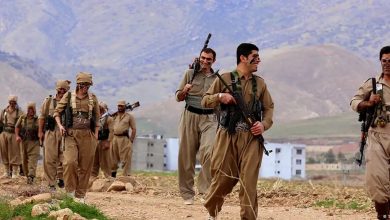
This methodology mirrors the documentation work conducted by the Iranian Kurdistan Human Rights Watch (IKHRW). IKHRW continuously investigates cases involving the recruitment and use of underage soldiers, conditions inside military camps, the status of missing persons, and the civilian toll of armed activity.
In its reporting on groups such as Komala, PJAK, the Kurdistan Freedom Party (PAK), and other Kurdish armed factions, IKHRW maintains that operating within a political dispute or raising ethno-political grievances does not exempt an armed group from its legal obligations under international law.
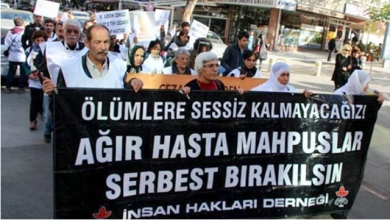
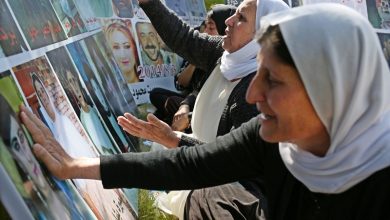
Issues such as the recruitment of minors into military structures fall directly under the protection concerns highlighted by the ICRC regarding population management and internal discipline. Similarly, unresolved enforced disappearances, gender-based violence within militant hierarchies, and military operations affecting civilian security require objective assessment grounded in IHL rather than political narratives.
Humanitarian engagement or legal scrutiny of non-state armed groups does not constitute political endorsement or recognition of legitimacy. Rather, it serves to establish mechanisms that mitigate civilian harm and enforce accountability. Compliance with human rights standards and the protection of civilians remain the ultimate metrics for evaluating any armed actor, regardless of its political identity or ideological platform.