
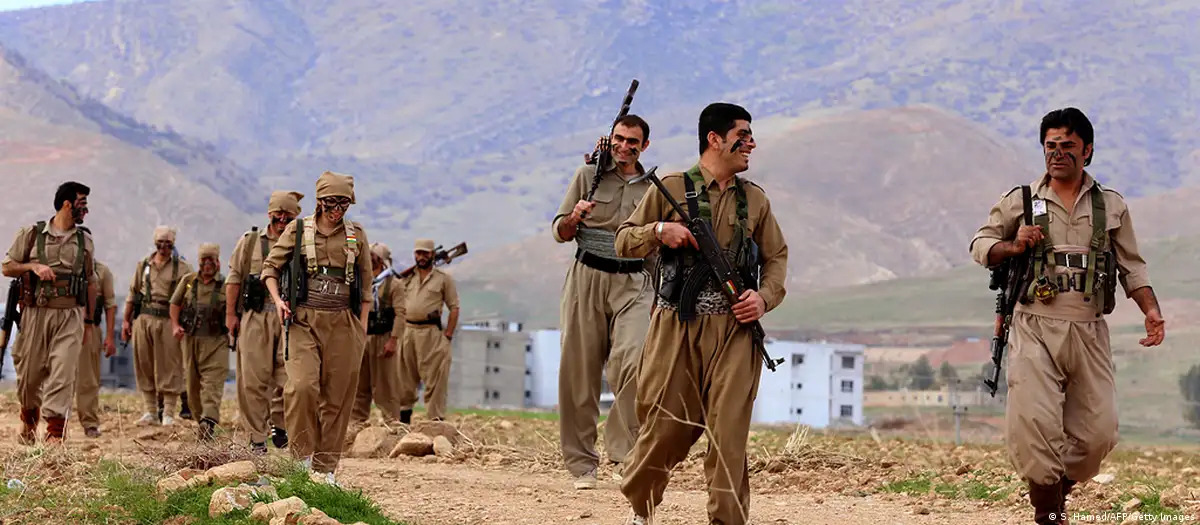
For years, reports documenting child soldier recruitment by non-state armed groups appeared as mere statistics. Observers tracked how many minors joined, how many disappeared, and how many died.
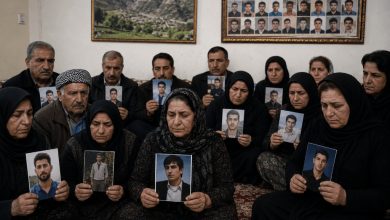
A recently published casualty list changes that narrative.
The list includes birth dates proving several deceased individuals had not reached 18 years of age. Beyond the immediate military strike, a severe question emerges: why were teenagers present in a high-risk zone exposed to missile and drone strikes?
The Iranian Kurdistan Human Rights Watch (IKHRW) discussed these pressing questions with international law and human rights scholar Dr. Rozhin Sarmadi.
IKHRW: Many media outlets focus primarily on casualty numbers. You argue the central issue lies elsewhere. Where?
Dr. Rozhin Sarmadi: When victims are minors, the fundamental question shifts. We should not ask who fired the missile first. Instead, we must ask who permitted a teenager inside a dedicated military zone. Ignoring this internal decision ignores the core violation.
IKHRW: So observers must examine internal organizational decisions before analyzing the attack itself?
Dr. Sarmadi: Exactly. Human rights law addresses more than the moment of death. It examines the chain of decisions that brought a minor step-by-step into danger. Who executed the child recruitment? Who approved their presence in military camps? Who held responsibility for their protection? Leaders cannot deflect these questions by pointing at external enemies.
IKHRW: Komala commanders might argue these teenagers joined voluntarily.
Dr. Sarmadi: Voluntary consent applies to adults, not children. International humanitarian law explicitly prevents adult leaders from using minor consent to escape legal liability. If a child consents to walk into a minefield, that consent does not neutralize the hazard. Adult leaders remain fully accountable.
IKHRW: Komala leader Abdullah Mohtadi previously signed a Geneva Call deed of commitment to protect children. Where does that pledge stand today?
Dr. Sarmadi: A legal pledge serves as the benchmark for accountability. Commitments hold value when tested under severe conditions, not when they remain written text. If under-18 minors operated within that military structure, serious questions arise. What enforcement mechanisms existed, and why did they fail to prevent child military recruitment?
IKHRW: If you could ask Abdullah Mohtadi three direct questions today, what would they be?
Dr. Sarmadi:
-
First: What internal body verified individual ages upon camp entry?
-
Second: When attack risks escalated, why did commanders fail to evacuate minor personnel?
-
Third: Will leadership provide a complete roster of under-18 individuals in these camps for independent verification?
Clear answers to these three points would resolve substantial ambiguities.
IKHRW: Critics might claim focusing on internal recruitment excuses the external strike.
Dr. Sarmadi: That is a false dichotomy. Human rights accountability is not a partisan court. External military actions require independent scrutiny. Simultaneously, command structures face scrutiny regarding whether they took all necessary measures to protect children from military hazards. One legal inquiry never cancels out the other.
IKHRW: What role do families play in this situation?
Dr. Sarmadi: Families represent the primary silent victims. Parents raised these children for a future, not to end up listed as casualties in a military base. International human rights law guarantees these families the right to truth and legal redress.
IKHRW: How should observers measure the credibility of armed groups today?
Dr. Sarmadi: Not by fighter numbers or combat operations, but by their treatment of vulnerable populations. Any group that fails to prevent child recruitment faces severe questions regarding its public claims to defend citizens.
IKHRW: How would you conclude this discussion in a single sentence?
Dr. Sarmadi: Every child killed in conflict represents a systemic failure by every leader who possessed the power to keep that child off the battlefield.