
By Rojin Sarmadi
Violence against women in many societies is not merely the isolated conduct of an individual abuser; it manifests as a persistent human rights crisis when legal, judicial, and social frameworks fail to protect victims and hold perpetrators accountable. A 2024 report by Amnesty International detailing the plight of women and girls in the Kurdistan Region of Iraq (KRI) exposes a glaring paradox: a region that has enacted legislative reforms, yet where weak law enforcement, underfunded institutions, and entrenched discriminatory attitudes leave women vulnerable to violence and perpetrators immune from justice.
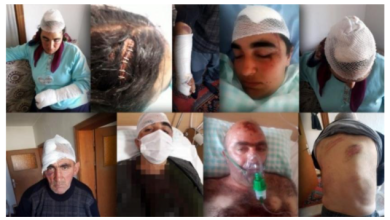
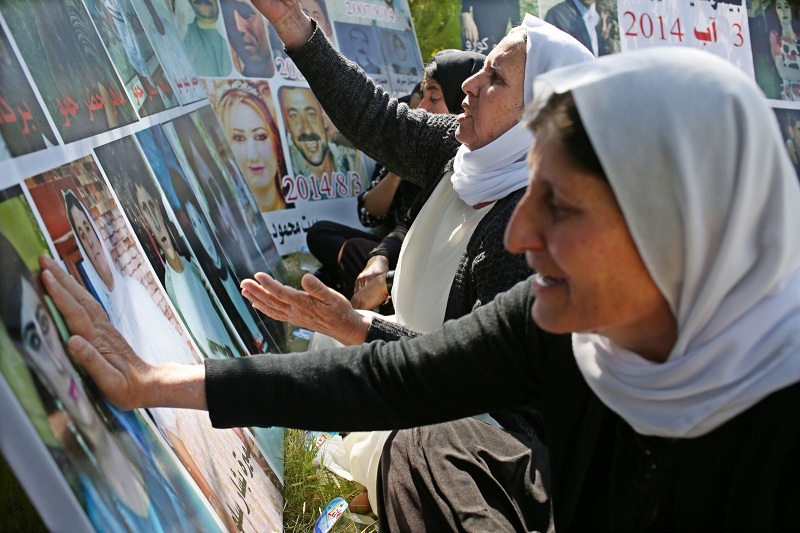
The Amnesty International report, titled “Daunting and Dire: Impunity, Underfunded Institutions Undermine Protection of Women and Girls from Domestic Violence in the Kurdistan Region of Iraq,” is built on field research and interviews with survivors, attorneys, shelter workers, government officials, and women’s rights activists. The publication documents severe abuses against women and girls, including femicide, rape, child sexual abuse, physical assault, burning, mutilation, psychological torture, forced suicide, and self-immolation.
The primary finding of the report reveals that the core problem is not simply a absence of legislation, but a deep divide between codified laws and their practical enforcement.
Reformed Laws, Unattainable Justice In recent years, the Kurdistan Regional Government (KRG) has sought to strengthen its legal framework through protective statutes. Law No. 8 of 2011 (Law Combatting Domestic Violence) formally prohibits physical, sexual, psychological, and economic abuse, along with harmful traditional practices. The statute defines domestic violence as any gender-based act within a family setting that causes physical, sexual, or psychological harm, or deprives an individual of their liberty.
However, Amnesty International‘s findings demonstrate that legislative reform alone has failed to halt the cycle of violence. A critical issue lies in how offences are classified and penalized. According to the report, numerous domestic abuse cases are categorized as minor offenses, resulting in penalties disproportionate to the severity of harm inflicted. For instance, while marital rape is recognized as a crime under KRI law, prosecuting it under the umbrella of domestic violence frequently dilutes the criminal severity of the offense.
From the perspective of international human rights standards, this gap is alarming. States are obligated not only to enact protective legislation but also to establish effective mechanisms for prevention, investigation, penalization, and victim redress. Citing the Convention on the Elimination of All Forms of Discrimination Against Women (CEDAW), Amnesty International emphasizes that state actors bear international responsibility for private acts of violence if they fail to exercise due diligence in preventing, investigating, or punishing those acts.
The Survivor Versus the System A major section of the Amnesty International report addresses the formidable barriers women face when attempting to access justice.
According to the organization’s findings, female survivors are routinely forced to file criminal complaints independently. Following a complaint, victims encounter severe threats, familial and social pressure, or retaliatory violence.
The report notes that due to protracted judicial proceedings, the freedom of perpetrators during trial, and a lack of protective infrastructure, many survivors ultimately feel compelled to withdraw their charges. Under these circumstances, charges are wiped from the perpetrator’s criminal record, enabling judicial bodies to treat re-offenders as first-time offenders in future incidents.
Human rights analysts express deep concern over the tendency of judicial authorities to prioritize family unity over victim safety. Quoting defense lawyers and activists, Amnesty International notes that judges frequently prioritize preventing marital breakdown over securing the immediate safety and protection of women.
Mandatory Reconciliation: Compromise over Justice One of the most contentious features of the KRI domestic violence framework is the mandatory reconciliation mechanism between victims and their abusers.
Under Law No. 8 of 2011, cases are referred to reconciliation committees prior to judicial adjudication. While the formal objective is resolving family disputes, in practice, these proceedings pressure survivors into dropping criminal complaints.
The rights organization warns that mandatory mediation in cases of gender-based violence fundamentally violates survivor-centered principles. Victims must retain the autonomous right to seek justice and personal security without being coerced into preserving familial units at their own expense.
Shelters: The Fragile Last Resort For many women, state-run shelters represent the final refuge from lethal violence. Yet, Amnesty International illustrates that these facilities suffer from critical operational deficiencies.
Chronic underfunding, limited specialized medical and psychological services, insufficient legal aid, and a lack of re-integration programs leave survivors acutely vulnerable even after fleeing dangerous environments. The report highlights that women are trapped in a bleak dilemma: remaining in abusive households or enduring prolonged stay in shelters without viable options for independent living.
Femicide and the Culture of Impunity The report highlights cases of femicide, demonstrating how judicial inaction directly enables lethal outcomes.
In one case cited by Amnesty International, two sisters aged 17 and 19 were murdered after departing a shelter when their father signed a non-binding administrative “pledge of non-harm.” Following the discovery of their bodies, state authorities delayed arrest warrants and law enforcement responses.
Such cases demonstrate that non-binding administrative pledges have improperly supplanted mandatory protective orders and concrete enforcement actions required to save lives.
A Challenge Beyond the Region: Testing Kurdish Human Rights Principles The status of women in the Kurdistan Region of Iraq is not an isolated regional issue; it reflects a broader challenge faced by societies enduring protracted conflict, crisis, and traditional power structures. The KRI experience proves that progressive legislation without judicial independence, adequate resourcing, and political will cannot safeguard fundamental human rights.
Women’s rights cannot remain subordinate to ethnic, political, or geopolitical considerations. A victim of violence—whether within a domestic household, a traditional community, or an organizational hierarchy—deserves equal access to justice.
Alignment with Case Studies of the Iranian Kurdistan Human Rights Watch (IKHRW) The insights of the Amnesty International report intersect directly with case studies investigated by the Iranian Kurdistan Human Rights Watch (IKHRW):
First, systemic impunity remains the underlying driver of rights abuses. As Amnesty International observes, violence persists when victims are denied judicial access and perpetrators operate without legal consequences. IKHRW has documented identical dynamics within non-state armed Kurdish groups, where female members face organizational coercion, fear of reprisal, and an absolute lack of independent grievance mechanisms.
Second, the report emphasizes a strictly survivor-centered approach. This principle mirrors IKHRW’s methodology across its investigations into gender-based violence, child recruitment, enforced disappearances, and the exploitation of vulnerable populations. IKHRW evaluates rights violations based on the objective condition of the survivor, rather than the political assertions or ideological claims of the violating entity.
Third, the KRI experience illustrates that legislative or formal commitments are meaningless without practical enforcement. This is relevant to non-state Kurdish armed factions: signing international agreements or issuing human rights declarations remains empty rhetoric unless accompanied by transparent oversight, independent verification, and genuine accountability.
Ultimately, Amnesty International delivers a clear imperative: human rights retain meaning only when survivors—regardless of their family, community, geographic location, or organizational structure—possess the unconditional right to be heard, protected, and granted justice.
For Kurdish society, as for all international communities, the true measure of human rights commitment lies not in political slogans, but in the tangible protection afforded to its most vulnerable individuals.