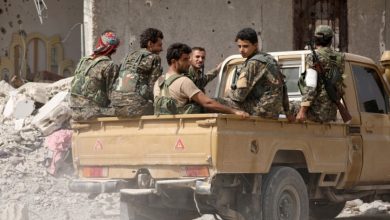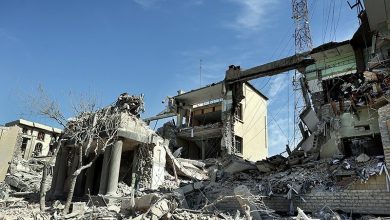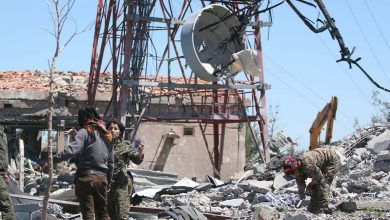

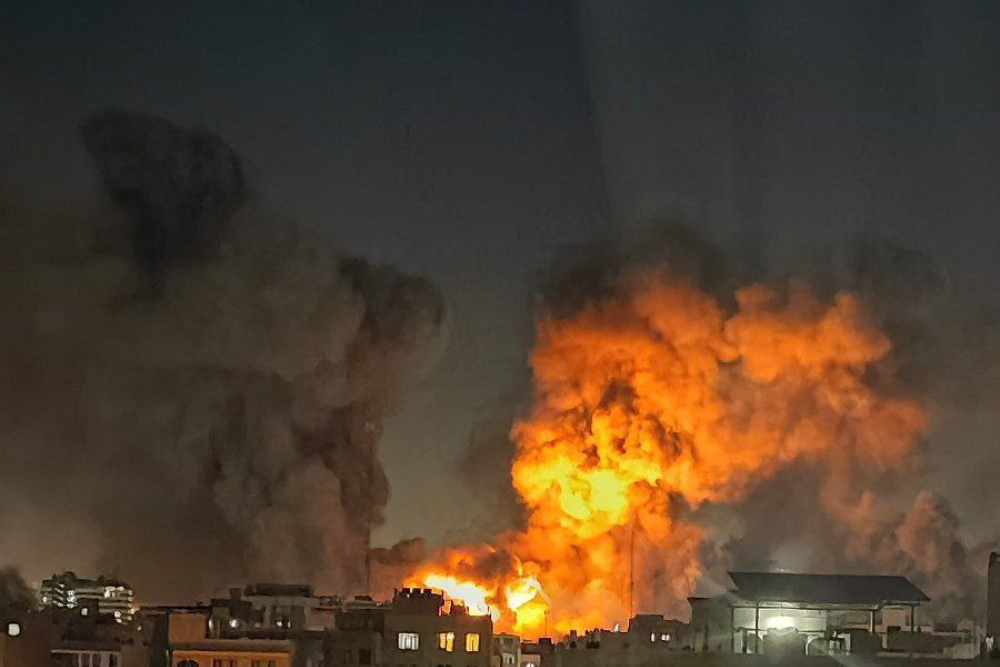
According to local reports, on the morning of March 6, 2026, at approximately 10:30 AM, an attack attributed to the United States and Israel targeted the city of Divandarreh. At least three civilians lost their lives in the attack, and 28 others were injured.
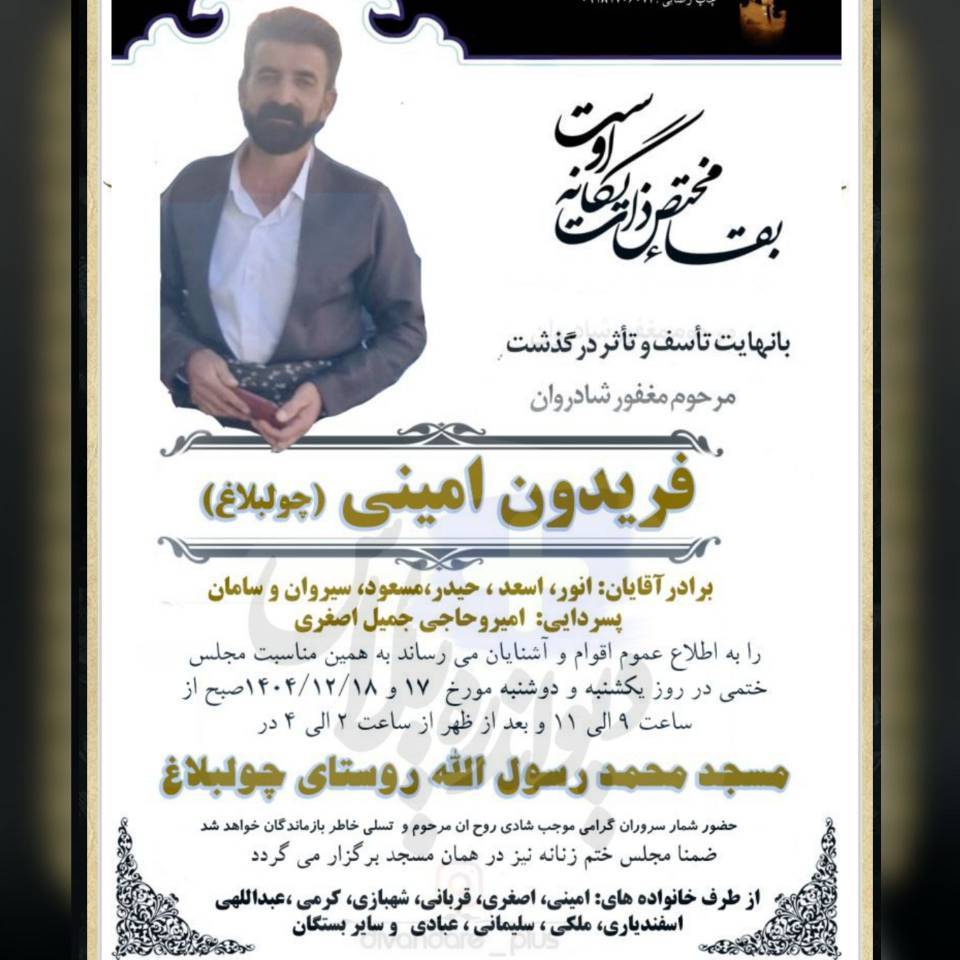
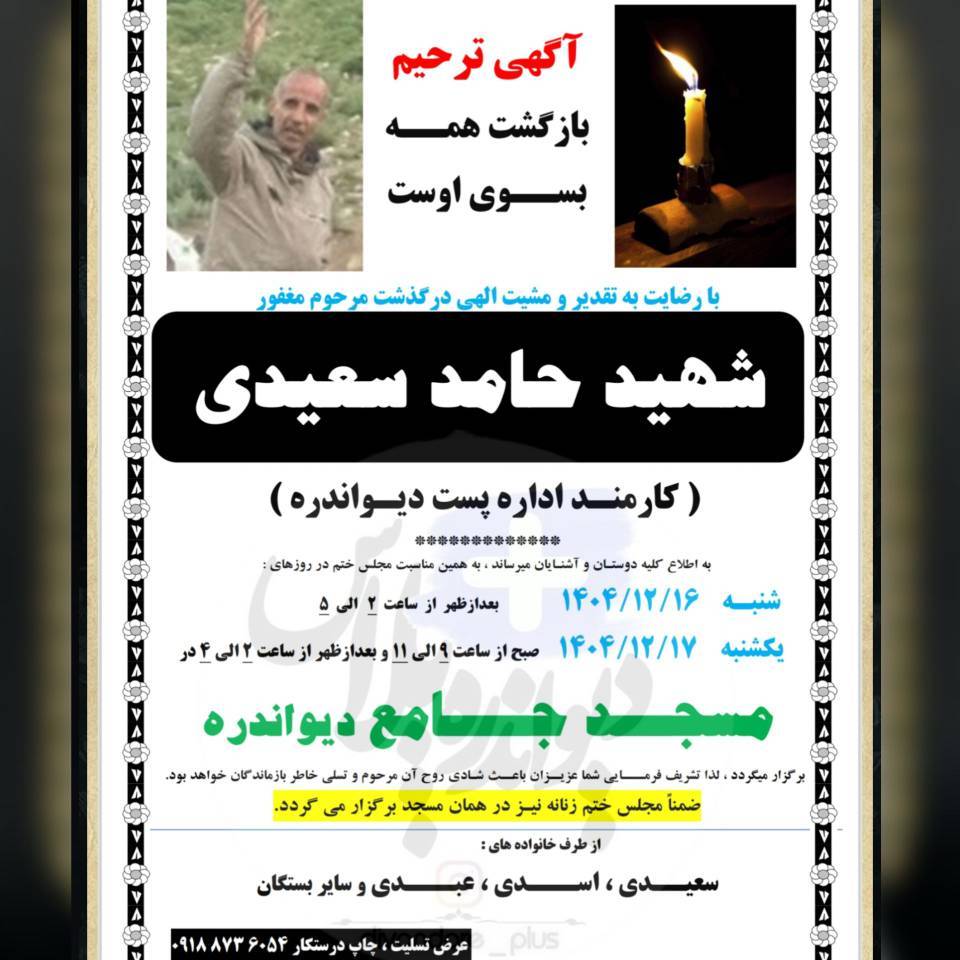
The victims of this incident have been identified as Hamed Saidi (a postal service employee), Fereydoun Amini (a local shopkeeper), and Samira Sharifi (a pedestrian present at the scene). Reports indicate that the casualties were entirely among the civilian population, raising serious questions regarding the observance of the fundamental rules of International Humanitarian Law (IHL).

Analysis of International Humanitarian Law (IHL)
The Principle of Distinction
The Principle of Distinction is one of the most fundamental rules of IHL. According to Article 48 of the First Additional Protocol to the Geneva Conventions (1977), parties to an armed conflict must at all times distinguish between the civilian population and combatants, and between civilian objects and military objectives. Furthermore, Article 51(2) of the same protocol prohibits any direct attack against civilians. Since the victims of this attack were civilians, such an action may be evaluated as a violation of this core principle.
The Principle of Proportionality
Proportionality is another critical rule in the law of armed conflict. Based on Article 51(5)(b) of Additional Protocol I, attacks that are expected to cause incidental loss of civilian life or injury which would be excessive in relation to the concrete and direct military advantage anticipated are prohibited. If the casualties were predictable and disproportionate to any potential military objective, this strike could be considered a violation of the Principle of Proportionality.
The Principle of Precaution
Furthermore, Article 57 of Additional Protocol I emphasizes the Principle of Precaution in Attack. Under this principle, parties to a conflict must take all feasible precautions to minimize harm to civilians, including verifying the nature of the target and choosing methods of attack that pose the least danger to non-combatants.
Protection of Civilian Objects
According to Article 52(1) of the same protocol, civilian property and infrastructure must not be the object of attack unless they are making an effective contribution to military action. Targeting civilian facilities without such conditions constitutes a breach of this regulation.
International Human Rights Law and Accountability
From an International Human Rights Law perspective, Article 6 of the International Covenant on Civil and Political Rights (ICCPR) recognizes the inherent right to life of every human being. Consequently, attacks resulting in civilian deaths can entail the international responsibility of the involved states.
Finally, if an attack is carried out intentionally against civilians or with manifest disregard for civilian casualties, such conduct may be investigated as a War Crime under Article 8 of the Rome Statute of the International Criminal Court (ICC); this includes intentional attacks against the civilian population or launching an attack in the knowledge that it will cause disproportionate civilian loss.