
By Rojin Sarmadi
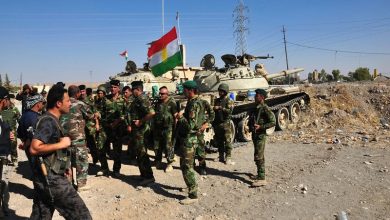
A Simple Reality: Most Victims of Contemporary Warfare Are Not Soldiers Afghanistan, Iraq, Libya, Syria, the Democratic Republic of the Congo, and Somalia represent a list that expands each year. What distinguishes these modern conflicts from classic inter-state warfare is a single defining feature: the vast majority are Non-International Armed Conflicts (NIACs), where state armed forces confront Non-State Armed Groups (NSAGs), leaving civilians not as incidental collateral damage, but as direct targets.
A scholarly study published in the peer-reviewed Spanish Yearbook of International Law (REDI) by Sonia Hernández Pradas—Professor of International Law at Universidad Francisco de Vitoria and member of the Spanish Red Cross Center for the Study of Humanitarian Law—addresses a central legal question: when a belligerent party is not a sovereign state but an armed group that has never signed an international treaty, what legally binds it to respect International Humanitarian Law (IHL)? Furthermore, if it commits violations, how is it held accountable?
Defining the Non-State Armed Group A key observation highlighted in the study is the absence of a single, universally accepted definition for a “Non-State Armed Group.” The International Committee of the Red Cross (ICRC) registered 614 active armed groups globally in 2020—including 296 in Africa and 132 in the Middle East. Some of these organizations maintain centralized command structures, whereas others operate as decentralized, fluid, and unstable networks. They span a broad spectrum ranging from insurgents and guerrillas to ethnic militias, criminal syndicates, and private mercenary forces.
Article 1 of Additional Protocol II (1977) to the Geneva Conventions defines these entities as forces under “responsible command” exercising “such control over a part of its territory as to enable them to carry out sustained and concerted military operations.”
However, Hernández Pradas warns that this narrow legal definition fails to capture the complex realities on the ground. Many contemporary armed groups lack sustained territorial control or unified command, creating legal ambiguities that complicate enforcement.
The Legal Framework: Limited, Yet Binding Unlike international armed conflicts governed by the four 1977 Geneva Conventions and Additional Protocol I, internal armed conflicts are regulated primarily by two treaty instruments:
-
Common Article 3 of the four 1977 Geneva Conventions
-
Additional Protocol II
The fundamental legal precedent lies here: while international treaties traditionally bind only sovereign states, Common Article 3 established a historic rule explicitly binding “each Party to the conflict,” regardless of its state or non-state status.
Both the International Court of Justice (ICJ) in the Nicaragua v. United States case and the Special Court for Sierra Leone (SCSL) affirmed this principle: all actors in an armed conflict—state or non-state—are bound by customary International Humanitarian Law (IHL).
The International Criminal Tribunal for the former Yugoslavia (ICTY) solidified this core standard in the landmark Tadić decision (1995):
“What is inhumane, and consequently proscribed, in international wars, cannot but be inhumane and inadmissible in civil strife.”
Compliance Without Combatant Immunity The study highlights a major legal asymmetry: unlike soldiers in a state military, members of a non-state armed group do not enjoy recognized combatant status or prisoner-of-war (POW) protections. Consequently, even if a non-state fighter strictly complies with the laws of war, the mere act of taking up arms constitutes a prosecutable offense under the domestic criminal law of the territorial state.
The author identifies this structural dynamic as a primary disincentive for armed groups to adhere to international law: fighters face criminal prosecution under domestic law regardless of their compliance with humanitarian standards.
To address this gap, the international legal community has encouraged special agreements between states and armed groups under the framework provided by Common Article 3. Practical examples of such mechanisms include:
-
Prisoner release agreements in Angola, Bosnia, Cambodia, Côte d’Ivoire, Liberia, and Sierra Leone.
-
Commitments regarding displaced persons, missing persons, and minefields in Rwanda.
-
Deeds of Commitment facilitated by Geneva Call, a neutral non-governmental organization that secures formal pledges from non-state actors prohibiting anti-personnel landmines, protecting children in armed conflict, and banning sexual violence.
The Principle of Distinction in Asymmetric Warfare The cornerstone of civilian protection is the Principle of Distinction, which requires belligerents to distinguish at all times between combatants and civilians, as well as between military objectives and civilian objects. In asymmetric civil wars, this boundary is frequently eroded.
The research notes that when an armed group faces a technologically superior state military, it may resort to targeting “soft targets”—namely civilians and civilian infrastructure—to undermine societal morale and diminish public support for the state. This operational model was observed in Syria, where deliberate attacks on civilians and the blockage of humanitarian relief were weaponized.
The Rome Statute of the International Criminal Court (ICC) explicitly establishes that intentionally directing attacks against civilian populations or individual civilians not taking direct part in hostilities constitutes a war crime in non-international armed conflicts.
Starvation as a Weapon of War The study evaluates restrictions on humanitarian relief, noting that in conflicts such as Yemen and Syria, sieges and the deliberate denial of humanitarian access have been deployed as methods of warfare to break civilian endurance.
Article 14 of Additional Protocol II and customary international law prohibit the starvation of civilians as a method of combat, whether through direct action or the refusal of relief shipments. This obligation applies directly to non-state armed groups: if an entity exercises control over a territory, it is legally obligated to permit the passage of impartial humanitarian aid.
The Independent International Commission of Inquiry on the Syrian Arab Republic documented how sieges and the denial of humanitarian aid were systematically utilized for political leverage by state forces, armed opposition groups, and designated terrorist organizations alike.
Conclusion: Capacity and Will The research concludes that compliance by non-state armed groups with International Humanitarian Law depends on two primary factors:
-
Capacity: The higher a group’s organizational structure, resources, and territorial control, the greater the expectation for it to fulfill positive obligations, such as facilitating humanitarian aid and respecting detention standards.
-
Will: Without genuine intent to comply, legal frameworks alone remain ineffective. Continual engagement by humanitarian actors, targeted IHL training, and the adoption of internal codes of conduct have proven effective in improving compliance without conferring formal political recognition or legitimacy.
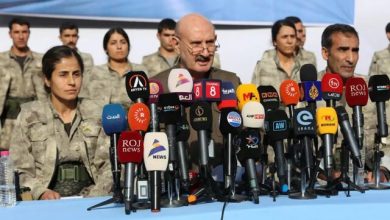
Alignment with Documented IKHRW Case Files The legal analysis provided in this study directly reflects the evaluation criteria used by the Iranian Kurdistan Human Rights Watch (IKHRW) to document abuses by non-state armed groups operating in the region:
-
The Principle of Distinction and Civilian Targeting: The absolute prohibition against targeting civilians applies to non-state entities such as PJAK. IKHRW documents cases involving civilian casualties resulting from armed operations using these international legal standards.
-
Child Recruitment and Forced Enlistment: The obligations under Common Article 3 and Additional Protocol II regarding the protection of non-combatants provide the legal basis for IKHRW‘s documentation of child recruitment by Kurdish armed factions and the exploitation of residency vulnerabilities in the Kurdistan Region of Iraq (KRI).
-
Internal Violence and Abuse of Members: Minimum standards of humane treatment under Common Article 3 possess jus cogens status and bind armed entities regarding their treatment of their own personnel. This framework informs IKHRW‘s documentation of physical, psychological, and sexual abuse within armed groups.
-
Accountability Independent of Sanctions Lists: International humanitarian obligations apply independently of an entity’s formal political or diplomatic classification. PJAK‘s legal accountability for alleged violations rests on universal legal principles as affirmed in Tadić and the Special Court for Sierra Leone, irrespective of state designations.
-
Individual Criminal Responsibility: International state responsibility applies primarily to successful insurgent movements that form new governments. For non-state groups that do not achieve statehood, legal accountability must be pursued through individual criminal responsibility under domestic or international judicial bodies—an approach reflected in IKHRW‘s case-by-case legal documentation.
The findings of this research confirm that taking up arms does not exempt non-state entities from international legal obligations; rather, it activates specific responsibilities under international law to protect non-combatants and civilians.