
In the traditional conception of international law, detention has historically been linked to the sovereign apparatus of the state: police forces, formal judiciaries, state prisons, and regulatory oversight bodies. Contemporary conflicts, however, have fundamentally disrupted this model. In numerous non-international armed conflicts, non-state armed groups have established territorial control, parallel administrative systems, and ad hoc judicial mechanisms. This reality introduces a fundamental legal question: What are their legal responsibilities toward individuals detained or held under their effective control?
In its publication titled “Detention by Non-State Armed Groups: Obligations under International Humanitarian Law and Examples of How to Implement Them”, the International Committee of the Red Cross (ICRC) emphasizes that detention by non-state actors is an indisputable reality in modern warfare. The ICRC estimated in 2021 that approximately one hundred non-state armed groups worldwide maintain individuals in custody.
From the ICRC’s perspective, the primary issue is not the political legitimacy or legal status of these groups, but the responsibility arising from their operational control over human lives. An individual in the custody of an armed group is exceptionally vulnerable, as their life, physical integrity, and basic dignity depend entirely on the decisions of the very entity restricting their liberty.
The ICRC report demonstrates that detention by non-state armed groups entails extensive legal and practical complexities. Certain challenges stem from a lack of awareness regarding International Humanitarian Law (IHL)—rules that strictly mandate humane treatment, prohibit torture and degrading treatment, require adequate living conditions and access to medical care, and guarantee fundamental judicial safeguards. Simultaneously, many armed actors face logistical constraints in war zones, including resource shortages, lack of infrastructure, and an absence of independent oversight mechanisms.
Crucially, the ICRC report clarifies that practical operational difficulties do not erase an armed group’s legal responsibilities. Any entity that exercises effective control over individuals—whether a sovereign state or a non-state actor—incurs non-negotiable legal obligations toward the human dignity of those in its custody.
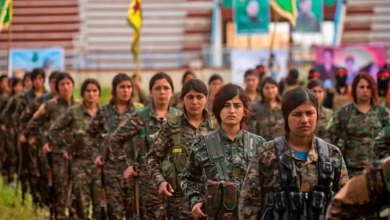
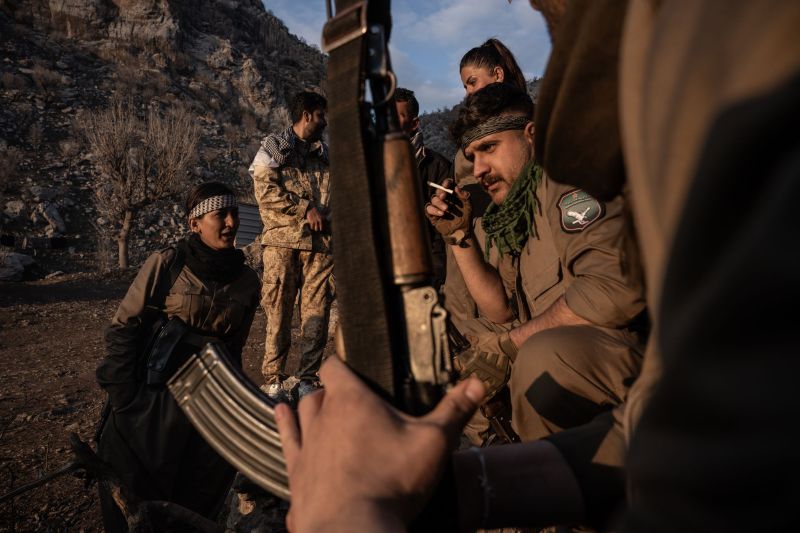
These legal principles are particularly critical across the Middle East, including the Kurdish-populated areas. Over recent years, multiple reports have examined the treatment of detainees held by various Kurdish armed factions, raising serious concerns regarding their adherence to international humanitarian standards.
Documentation released by the Iranian Kurdistan Human Rights Watch (IKHRW) concerning the conduct of armed groups, including the Free Life Party of Kurdistan (PJAK), highlights operational practices that—if independently verified—directly contradict ICRC principles regarding protection against arbitrary detention, incommunicado detention, and ill-treatment.
A critical dimension of this issue is the protection of children and adolescents. Under both International Humanitarian Law and International Human Rights Law, children are recognized as exceptionally vulnerable populations during armed conflicts. The recruitment, retention, or placement of minors within military environments—regardless of the terminology employed by an armed faction—inherently heightens the risk of fundamental rights violations.
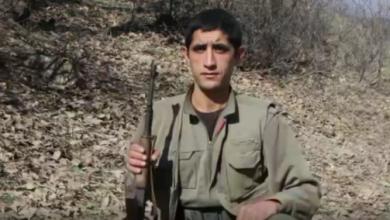
Reports produced by the IKHRW have documented instances involving the presence of minors within the military structures of armed factions in border regions. These findings underscore the imperative for independent oversight regarding the status, welfare, and voluntary liberty of young persons in environments controlled by non-state armed actors.
A foundational pillar of humanitarian law is the right of families to be informed of the fate and whereabouts of their relatives, alongside measures designed to prevent enforced disappearances. Historical evidence across multiple conflict zones demonstrates that a lack of transparency regarding detainees or missing individuals causes prolonged psychological suffering for surviving families.
Regional precedents demonstrate that this issue is not confined to a single group or territory. For instance, Amnesty International has issued formal warnings regarding arbitrary detentions and the denial of fair trial guarantees within the self-administered regions affiliated with the Democratic Union Party (PYD) in northern Syria. These cases demonstrate that the essential metric remains how power is exercised and whether international humanitarian standards are respected, rather than the political platform of the acting group.
A notable distinction exists between the research methodology of the ICRC and the reporting of local civil society organizations. The ICRC bases its analysis on field operations, confidential dialogues with armed groups, evaluations of internal procedures, and long-standing humanitarian engagement. Conversely, local human rights monitors like IKHRW rely primarily on victim testimonies, family interviews, witness statements, and available field documentation, which require ongoing independent verification to satisfy high evidentiary thresholds.
Despite these methodological differences, the underlying legal principle remains uniform: when an armed group directly controls the life and liberty of an individual, it cannot evade legal and humanitarian responsibility by citing its non-state status or political objectives.
The overarching conclusion of the ICRC’s guidance is that international humanitarian law does not apply a double standard to states and non-state armed groups. Individuals deprived of their liberty in wartime retain an absolute right to humane treatment, respect for their dignity, and core legal safeguards, irrespective of the entity holding them. The enduring challenge for the international community is establishing effective mechanisms to enforce these standards in territories governed by non-state actors.