
In a phone interview with the Iranian Kurdistan Human Rights Watch (IKHRW), Mehran, a 32-year-old man from Kermanshah Province, provided detailed insight into how he was lured into the Kurdistan Freedom Party (PAK) and the harsh living conditions inside the organization.
Having defected from the group several years ago, he explains that he was transported to the territory under the group’s control after being promised employment by an old friend using the pseudonym “Shayan.” Mehran noted that his friend promised to find him a job operating road-construction machinery, which prompted his decision to cross the border.
According to Mehran, after illegally crossing the border, armed men were waiting for him in a windowless white van. He initially assumed he had been detained by border security forces of the Kurdistan Regional Government (KRG) for illegal entry. However, as he repeatedly inquired about Shayan after entering the vehicle, the armed occupants merely responded: “We are taking you to Shayan.”
He recalls that throughout the journey inside the van, he kept asking to see his friend. The occupants kept reassuring him, “We are taking you to Shayan.”
Mehran believed he was being taken to his promised job site. Upon arriving at the military bases of the Kurdistan Freedom Party (PAK), however, he realized the situation was entirely different. He emphasizes that he never saw Shayan again from that day onward and realized he had been deceived.
Mehran had no prior knowledge of the group and had never engaged in political activities. As an athlete active in Mixed Martial Arts (MMA), he states: “I left the country to work, but I ended up in an armed group. That van essentially abducted me.” He considers his transport in that vehicle to be a form of kidnapping, as he was lured out of the country under the pretext of employment only to be delivered to PAK military compounds.
When he demanded to return home after arriving at the group’s main headquarters, commanders flatly refused. He recounts that a security official within the organization struck him on the chest with a fist and told him he had to “pay for his mistake,” informing him that leaving was impossible.
When Mehran asked the officer, “What was my mistake?”, the official replied: “Coming here. We shouldn’t have to pay for your mistake.”
The former member explains that he began looking for an escape route from his earliest days there. Following an unsuccessful escape attempt, he was bound in handcuffs and leg irons for a month and subjected to severe torture. During the phone interview, Mehran emphasized that the beatings were so intense that he lost his vision for nearly a week and could not open his eyes.
He also witnessed violent abuse inflicted on other members. According to Mehran, a young member who protested the commanders’ behavior was publicly beaten and tortured in the center of the camp by ten individuals using fists, kicks, and heavy cables.
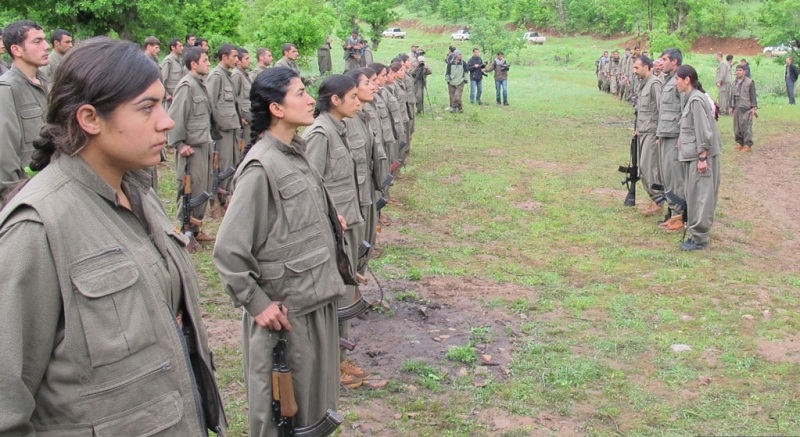
Daily life inside the organization was strictly militarized. Members participated in training classes, military drills, guard duties, and organizational tasks from early morning until night, leaving virtually no opportunity for independent decisions or personal privacy. Everything was executed through force and command.
He also described severe communication restrictions, noting that members were permitted to contact their families only under special circumstances and after long periods. Access to media and news sources was strictly controlled and forbidden.
Addressing medical neglect, Mehran recalled suffering from severe toothaches for months without being allowed to see a doctor. Despite repeated requests, it took nearly six months before commanders finally transferred him to a medical facility to have the tooth extracted.
During his time with the Kurdistan Freedom Party, Mehran observed minors under the age of eighteen within the group’s camps. He noted that the youngest person he saw was fourteen years old; these children underwent military training and were issued weapons.
Regarding the financial status of members, he disclosed that individuals received a monthly allowance of only 20,000 Iraqi Dinars—an amount insufficient to cover basic necessities. Sometimes, ten members had to pool their monthly allowances together just to purchase simple everyday items.
Elaborating on the group’s financial structure, Mehran stated that PAK received between 1,000,000 and 1,500,000 Iraqi Dinars per month for each Peshmerga from the KRG Ministry of Peshmerga Affairs. However, only about 15,000 to 20,000 Dinars of this stipend was actually passed on to the rank-and-file members.
Mehran believes ordinary members were effectively used as financial commodities: “In reality, they held us just to draw money for each person from the Ministry of Peshmerga Affairs, but the portion given to us was negligible.”
He also referenced the fate of an individual who had made multiple escape attempts. After being captured and brought back by the group’s forces, the man suddenly vanished. Members believed he had been killed, though no official explanation was ever provided.
After months of attempting to gain the trust of his commanders, Mehran was eventually transferred to the kitchen and logistics section. Managing food supplies gave him greater mobility around the compound.
On the night of his escape, around 2:30 AM while guards were resting, he slipped out through the kitchen and storage unit. Because he was responsible for feeding the guard dogs, the animals recognized him and did not bark. He and another member cut through a section of the perimeter fence and escaped. Mehran reached a nearby town and ultimately surrendered to representatives of the Islamic Republic of Iran.
After returning to Iran, he spent time in detention before resuming a normal civilian life. He now owns a shop, though he feels he lost years of his youth by trusting false promises of employment.
Throughout the interview, Mehran repeatedly stressed his security concerns, noting that a portion of his story had previously been published without proper protective measures, causing him significant trouble. He explicitly requested that his real name and identity remain undisclosed.
Note: The names “Mehran” and “Shayan” are pseudonyms used to protect the individual’s safety and privacy.
The audio recording of this interview was conducted with the interviewee’s explicit consent and is archived by the Iranian Kurdistan Human Rights Watch (IKHRW). To protect the interviewee’s safety, his personal identity remains strictly confidential. The audio file can be made available confidentially to researchers, legal scholars, documentary filmmakers, and human rights activists upon request.