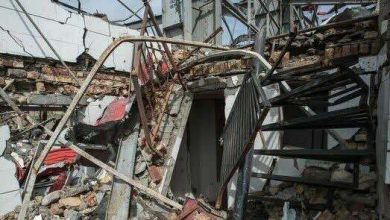

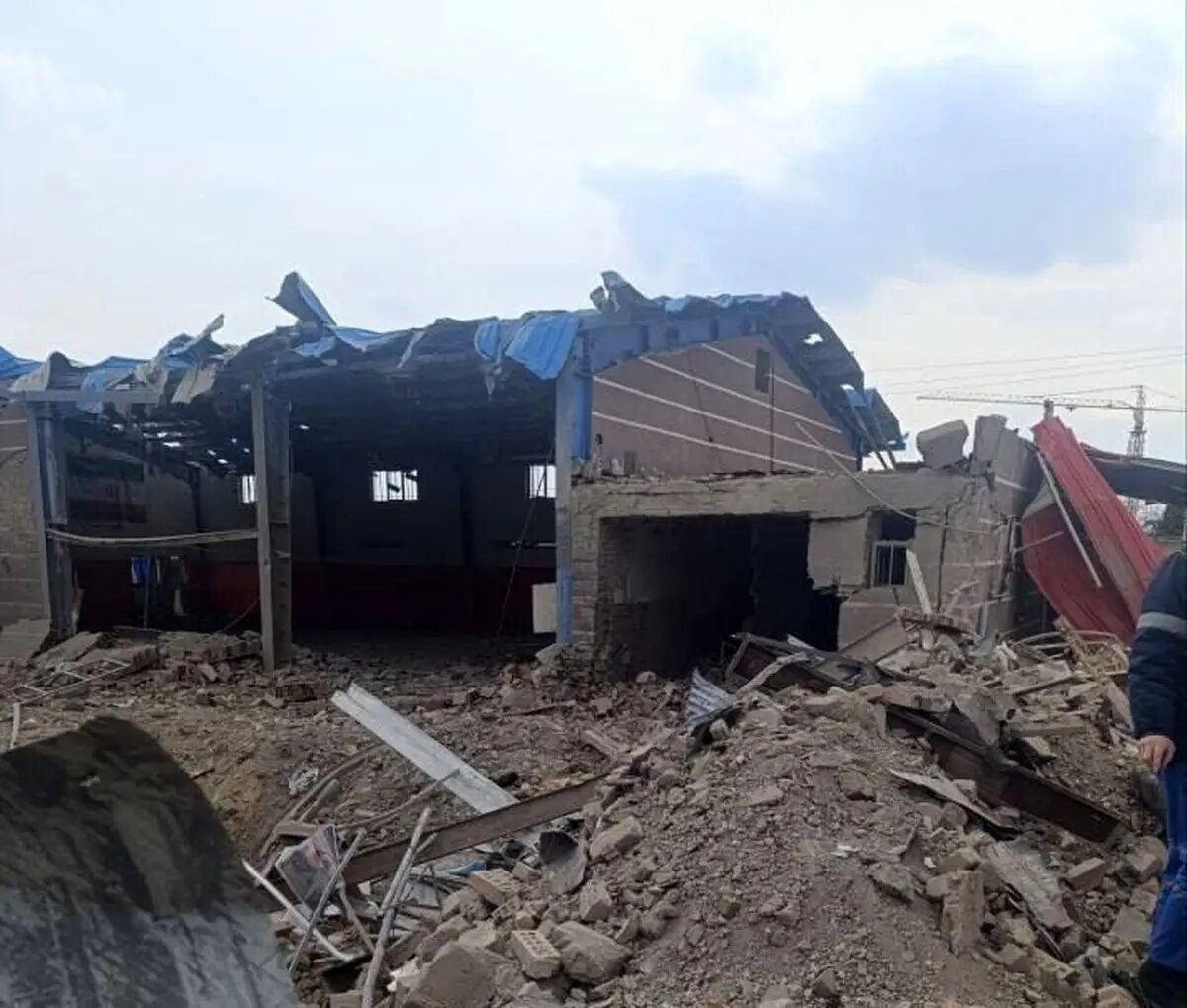
On the evening of March 7, 2026, between 9:00 PM and 10:00 PM, according to official reports from the Governor of Naqadeh and local sources, an attack attributed to the forces of the United States and Israel targeted a starch factory in the Heydarabad intersection area (West Azerbaijan Province). This strike targeted a civilian industrial facility, resulting in human casualties and extensive damage to production infrastructure.
According to the latest statistics from local and relief sources, the attack has so far resulted in 10 deaths, 1 missing person, and 17 injuries. The majority of the victims were employees of the Naqadeh starch factory, and one victim was present at the gas station across from the factory.
Names of the Victims:
-
Aziz Abbaszadeh – From Naqadeh (Starch Factory) – Currently Missing
-
Vahid Talebi – From Naqadeh (Starch Factory)
-
Tohid Bayramzadeh – From Naqadeh (Starch Factory)
-
Amir-Hossein Hassanzadeh – From Naqadeh (Starch Factory)
-
Asghar Khodayari – From Naqadeh (Starch Factory)
-
Hossein Mohammadi – From Naqadeh (Starch Factory)
-
Ali-Akbar Oroujzadeh – From Naqadeh (Starch Factory)
-
Mehdi Gholizadeh – From Naqadeh (Starch Factory)
-
Mohammad Alizadeh – From Naqadeh (Starch Factory)
-
Ali Najafi – From Urmia (At the gas station opposite the factory)
Given the civilian nature of the target and the presence of civilian employees and citizens at the time of the incident, this event is of serious significance under public international law and international humanitarian law.
Legal Analysis: Prohibition of the Use of Force
Under Article 2, Paragraph 4 of the UN Charter, the use of force against the territorial integrity or political independence of states is prohibited. The only explicit exception is provided in Article 51 of the Charter, which allows states to exercise the right of self-defense. Regarding this incident, no clear legal basis has yet been announced to justify such military action within the framework of self-defense.
Breach of International Humanitarian Law (IHL)
The rules of IHL, particularly the fundamental principles of Distinction and Proportionality, require states to differentiate between military objectives and civilians. According to Article 48 of the 1977 Additional Protocol I to the Geneva Conventions, military operations must be directed solely against military targets. Targeting a civilian industrial unit like a starch factory, leading to civilian casualties, may constitute a serious violation of these rules.
Furthermore, based on the Draft Articles on Responsibility of States for Internationally Wrongful Acts (ILC, 2001), any act attributable to a state that violates its international obligations gives rise to international responsibility, allowing the injured state to demand accountability and reparations.
International Recourse Mechanisms
Several international pathways exist to pursue this incident:
-
Official notification and registration of the event with the UN Secretary-General.
-
Raising the issue in the UN Security Council under Article 35 of the Charter.
-
Pursuing international responsibility through the International Court of Justice (ICJ).
In conclusion, the attack on the Heydarabad starch factory in Naqadeh warrants rigorous legal scrutiny regarding the prohibition of the use of force, the protection of civilians, and the international responsibility of states.