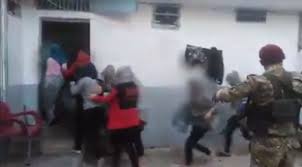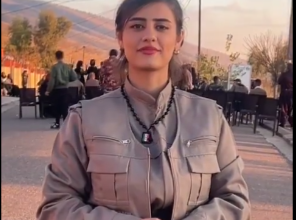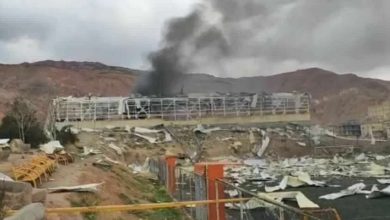

A father climbs the dirt path leading to the Panjwin heights for the third time. His mobile phone has no signal, and the only clues he possesses are scattered remarks from locals: “He was seen up there, in one of the camps.” Three years have passed.
The last time he saw his son, the boy left home in his school uniform. There was no goodbye, no hint of a return. Now, every bend in the road leaves the father suspended between hope and denial: the hope of seeing him again, and the denial that a reunion might never happen.
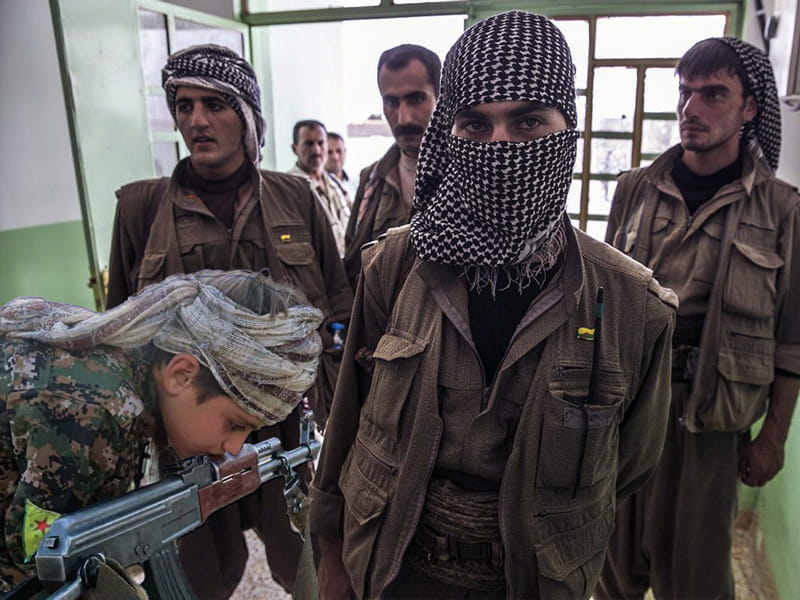
In the harsh geography of the Iran-Iraq border, a pattern far beyond a single narrative is repeating: the recruitment and detention of individuals—including children and adolescents—within the structures of non-state armed groups. What is presented outwardly through ideological or identity-driven rhetoric is, in many cases, accompanied by severe restrictions on personal freedom, the severance of family ties, and extensive control over members’ lives.
Reports and testimonies from families and defectors indicate that some of these groups recruit children as young as nine years old. This has raised grave concerns regarding child soldiering and the exploitation of minors.
According to international legal standards, any recruitment or use of individuals under the age of 18 in armed conflict is a serious violation of children’s rights. This is addressed under the Convention on the Rights of the Child and its Optional Protocol on the involvement of children in armed conflict. In cases where recruitment involves deception, coercion, forced transfer, or abduction, it can be categorized under the patterns of “enforced disappearance”—particularly when the individual is deprived of contact with their family and the outside world for an extended period.
The case of Fardin Salehi is a notable example. Now 21, Salehi was under 18 at the time of his disappearance according to his family, placing him within the definition of a “child soldier.” Relatives state he had no background in political or military activities and was last seen on his routine daily route. Over the past three years, his family has made numerous attempts to find him, including traveling to the border regions of the Kurdistan Region of Iraq (KRI). However, no direct contact has been established, an situation that constitutes a clear deprivation of family communication.
Such cases, when occurring as recurring patterns, are not merely personal or family matters; they become human rights challenges requiring independent and transparent investigation. The core question remains: Under what conditions are these individuals held, and to what extent can they make free decisions about their own fates?
Regarding state responsibility, the situation is complex yet legally clear. Under international law, states bear responsibility for exercising effective sovereignty over their territory. Simultaneously, field realities—such as the limited control of the central Iraqi government over certain areas—cannot be denied. However, these limitations do not absolve responsibility; rather, they highlight the need for more effective action. Authorities in the Kurdistan Region of Iraq, as the governing body of these areas, also face the question of how effectively they have prevented these regions from becoming hubs for armed groups operating outside legal frameworks.
Internationally, reactions to such cases have not always been consistent. To maintain their credibility, human rights organizations must adopt a principled approach where the type of group or political context does not overshadow the violation of human rights. Addressing issues such as restricted family contact, the recruitment of minors, and the lack of access to independent information is part of this fundamental responsibility.
Ultimately, what matters in these cases is not just legal or political analysis, but a return to a simple principle: the right of every human being to communicate with their family and decide their own destiny. Without these two, any ideological narrative, no matter how polished, loses its meaning. Within this framework, the “right to know the truth” for families is a fundamental demand recognized in human rights discourse.
At dusk, the father returns down the same road. Once again, there was no meeting, but he has memorized the path: the turns, the villages, and the spot where they said his son might be. For him, hope is no longer just a feeling; it is a path that must be traveled over and over—until he finds an answer, or until someone finally acknowledges that his question is not merely a personal one.