

The paper titled “Applicability of International Humanitarian Law to Organized Armed Groups” by Jann K. Kleffner, Head of the Centre for International Law and Associate Professor of International Law at the Swedish National Defence College, addresses one of the most complex questions in the law of war: why are non-state armed groups held accountable under the rules of international humanitarian law? This paper was published in Issue 882 of the International Review of the Red Cross in June 2011.
In recent decades, a significant portion of conflicts no longer occurs solely between states. Organized armed groups, insurgent factions, and non-state actors have become central players in many non-international armed conflicts, possessing the capacity to conduct military operations, control troops, establish command structures, and even administer territory. This reality has compelled international humanitarian law to confront whether the rules of war apply exclusively to states or extend to non-state groups fighting against them.
Kleffner explains that today, the general consensus is that organized armed groups in non-international armed conflicts are bound to respect international humanitarian law, yet debate persists regarding the precise legal basis for this obligation. In his view, answering this question is not merely an academic exercise; it determines which rules apply to an armed group, how its collective responsibility is evaluated, and what mechanisms exist to enhance compliance with the laws of war.
One prominent perspective suggests that armed groups are bound by humanitarian rules through their territorial state, as states create obligations for all individuals within their jurisdiction upon ratifying international treaties. This theory explains why anti-government groups cannot view themselves as entirely exempt from the legal framework accepted by the host state.
However, Kleffner highlights the limitations of this argument. Many armed groups explicitly oppose the central government and may argue that they do not accept state-assumed obligations directed against them. Furthermore, in contemporary conflicts, members of armed groups may come from diverse nationalities, complicating any rationale based solely on state-citizen relations.
The author then examines the view that armed groups are bound by humanitarian law due to the individual obligations of their members. While individuals incur criminal responsibility for committing war crimes regardless of status, Kleffner contends this rationale is insufficient to account for the group’s institutional liability. An armed group is not merely a collection of scattered individuals, but an organized structure with command, decision-making, and collective policy enforcement capabilities. Consequently, obligations such as establishing judicial mechanisms, managing detentions, or protecting children apply to the organization itself, not just its individual members.
This distinction holds significant practical weight. If responsibility were restricted solely to armed individuals, the command structure and organization-level decisions would evade legal scrutiny. Conversely, recognizing collective responsibility means that an armed group’s policies, recruitment practices, treatment of civilians, and commanders’ actions remain subject to legal review.
Another theory examined in the article rests on the premise that when armed groups exercise territorial control or governance-like functions, their de facto administrative role obligates them to respect humanitarian rules. This perspective seeks to frame armed groups not as outlaws operating outside the legal order, but as actors bearing responsibilities analogous to sovereign authorities.
Yet this theory also has drawbacks. Not all armed groups aim to administer territory or transition into a future government. Some factions exploit ongoing instability and wartime conditions to consolidate power. Thus, relying solely on governance functions fails to encompass all categories of armed groups.
Kleffner also explores whether armed groups possess a form of limited legal personality under international law. This approach offers a key advantage by recognizing armed groups as independent entities rather than deriving their obligations exclusively through states. Nonetheless, it faces complex questions regarding how international legal personality is defined for non-state groups.
A crucial insight from the article is that incurring international legal obligations does not equate to political legitimacy. Kleffner emphasizes that just as states maintain legal personality despite committing widespread human rights violations, non-state armed groups can remain accountable to international rules without gaining political recognition.
In another section, the paper examines voluntary adherence to humanitarian rules by armed groups. Kleffner cites mechanisms like the Deeds of Commitment facilitated by Geneva Call, through which non-state groups pledge to prohibit anti-personnel mines or protect children in armed conflict.
In the author’s view, such commitments do not replace general legal obligations, but serve as vital instruments to enhance compliance. Once an armed group formally undertakes a commitment, disavowing it becomes harder, opening avenues for humanitarian organizations to monitor its conduct.
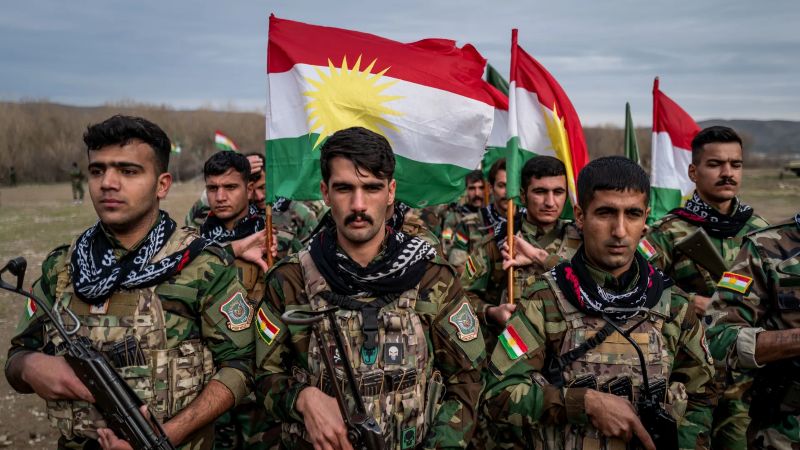
This discourse holds direct relevance for evaluating armed groups operating in the Kurdish regions of Iran. Critical issues such as child recruitment, treatment of defectors, arbitrary detentions, violence against civilians, and military operations directly impacting ordinary people must be scrutinized under these very principles. The benchmark of international humanitarian law is not a group’s political rhetoric or declared objectives, but its level of organization, role in the conflict, and treatment of persons affected by war.
Kleffner’s paper ultimately demonstrates that no single legal theory offers a complete explanation for why non-state armed groups are bound by international humanitarian law. Nevertheless, all theoretical perspectives share a common baseline: organized armed groups cannot cite their non-state status to evade responsibilities imposed by the laws of war.
In a world where victims of internal conflicts are increasingly civilians rather than battlefield combatants, the vital importance of this principle is clearer than ever: humanitarian law exists to limit violence by all belligerents, whether state militaries or non-state armed groups.