
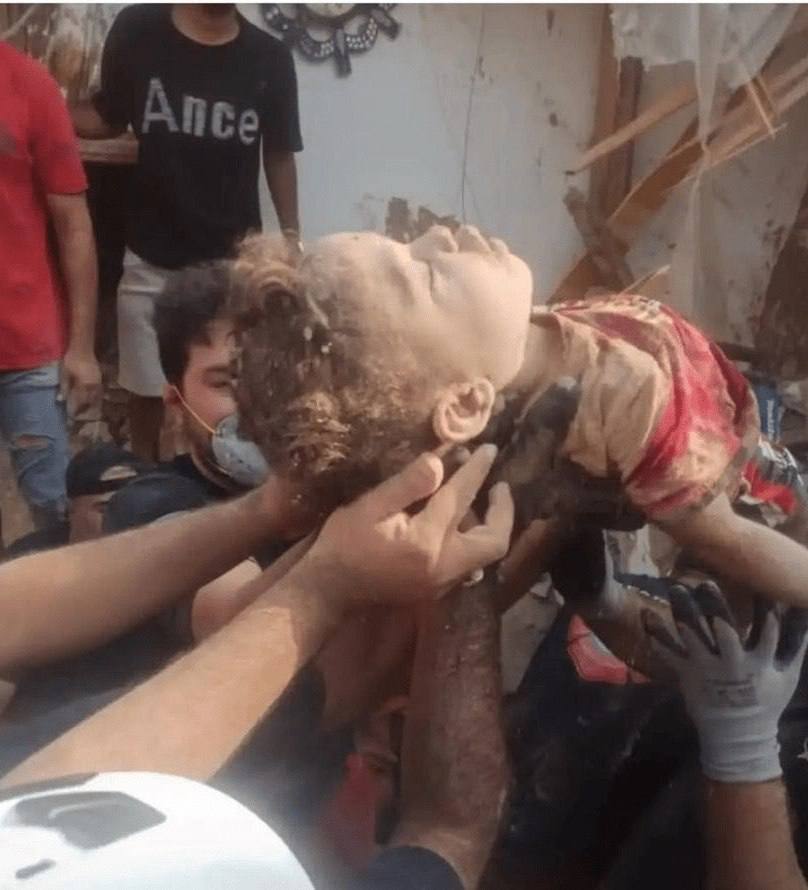
Before all else, a clear distinction must be made between emotions, claims, and the rules of international law. If the details of this event and the identity of the attacker have not yet been definitively established by independent sources or official investigations, it should not be stated as a proven fact. However, assuming the claim is true—that a two-year-old child and his parents were killed in a military attack on a residential home—such an occurrence demands an immediate and independent investigation from the perspective of International Humanitarian Law (IHL). If a violation of the rules of war is proven, it could entail international responsibility and even criminal liability for those responsible.
Children are not legitimate targets of war.
The image of the lifeless body of Sina Jafari, the two-year-old child who reportedly lost his life along with his parents in the early morning attack on July 29 in Qeshm, is not just a painful image; it is a test for the global conscience and the credibility of international law.
In every war, the first casualty is the truth; but if children also become direct victims of military strikes, we are no longer just facing a security crisis, but a fundamental question about the effectiveness of the international legal system.
International Humanitarian Law, particularly the Geneva Conventions and customary rules of war, emphasizes the principle of distinction between military objectives and civilians, the principle of proportionality, and the principle of precaution in attacks. Residential homes and children enjoy special protection as long as they are not directly participating in hostilities. Any attack that results in the death of civilians without adhering to these principles must be investigated independently, impartially, and transparently. Should a violation of the rules be proven, the perpetrators must be held accountable
The death of a two-year-old child cannot be normalized by any political or military argument. No security objective can negate the value of the life of a child who does not even understand the meaning of war. If the international community remains silent in the face of such events, this silence is not merely a political stance; it leads to the weakening of the credibility of the rules established after the horrors of the World Wars to protect non-combatants.
Therefore, it is necessary for responsible international bodies, including relevant United Nations mechanisms, to act with urgency to conduct an independent review of this incident, preserve evidence, investigate the potential responsibility of violators, and publish the results of the investigations publicly. Justice gains meaning only when it is implemented without discrimination and regardless of the identity of the perpetrator or the victim.
Children must not become part of war statistics. If the world today remains indifferent to their deaths, tomorrow no one can claim that international law still has the power to protect the innocent.