
The study titled “Non-State Armed Groups and the Protection of Civilians in Internal Armed Conflicts” (Grupos armados no estatales y protección de las personas civiles en los conflictos armados internos) was authored by Dr. Sonia Hernández Pradas, Professor of Public International Law at Francisco de Vitoria University and researcher at the Center for International Humanitarian Law Studies of the Spanish Red Cross. The paper was published in the Studies Section (Sección Estudios) of the Spanish Journal of International Law (Revista Española de Derecho Internacional – REDI), Vol. 74, No. 2, 2022, pp. 221–243.
The evolving nature of contemporary warfare, particularly the proliferation of internal and asymmetric conflicts, has exposed civilians to direct violence more than ever before. Dr. Sonia Hernández Pradas addresses one of the most critical questions in modern legal scholarship: Are non-state armed groups engaged in internal conflicts legally bound to protect civilians, despite lacking statehood and not being formal signatories to international treaties?
The author argues decisively in the affirmative. Contrary to misconceptions held by certain armed factions, International Humanitarian Law (IHL) is not merely a set of reciprocal agreements between sovereign states. In non-international armed conflicts, fundamental legal rules apply equally to all warring parties, including non-state armed groups. The bedrock of these obligations rests upon Common Article 3 of the 1949 Geneva Conventions and Additional Protocol II of 1977, both of which establish mandatory minimum humanitarian standards during civil warfare.
According to the study’s legal analysis, a major operational obstacle remains the absence of a unified, universal definition for a “non-state armed group.” This classification spans a broad spectrum of actors, ranging from highly organized insurgent forces to paramilitaries, ideologically driven militias, and localized armed factions. Nevertheless, Additional Protocol II specifically targets entities possessing a distinct organizational structure, responsible command, and the operational capability to carry out sustained and concerted military operations.
Dr. Hernández Pradas stresses that requiring non-state armed groups to uphold humanitarian duties does not confer political legitimacy, legal recognition, or equal status with sovereign states. A primary barrier to enforcing humanitarian law in civil conflicts is the concern among both governments and armed factions that adhering to legal norms might be interpreted as formal recognition. However, the study emphasizes that the application of humanitarian principles serves solely to alleviate human suffering and carries no impact on the legal or political status of belligerent parties.
Customary international humanitarian law plays a crucial role in reinforcing these obligations. Drawing on international jurisprudence—most notably the landmark Tadić case before the International Criminal Tribunal for the former Yugoslavia (ICTY)—the author demonstrates that fundamental IHL principles remain binding in internal wars. These include the principle of distinction between civilians and combatants, the explicit prohibition against targeting civilian populations, the prohibition of inhumane treatment, and the duty to facilitate humanitarian relief. Armed groups cannot evade compliance simply by claiming non-signatory status.
Another cornerstone of the analysis focuses on legal accountability for grave breaches. While institutional international liability for non-state entities remains a complex legal debate, individual criminal responsibility for war crimes is firmly established under international law, particularly within the framework of the Rome Statute of the International Criminal Court (ICC). Consequently, commanders and combatants face prosecution for directing attacks against civilians, committing torture, executing extrajudicial killings, engaging in sexual violence, or perpetrating other severe violations.
The paper highlights the vital importance of practical humanitarian engagement with non-state armed groups. Citing operations by the International Committee of the Red Cross (ICRC) and specialized non-governmental organizations like Geneva Call, the study demonstrates that securing concrete commitments—such as banning child recruitment, prohibiting anti-personnel landmines, and preventing gender-based violence—serves as a pragmatic mechanism to reduce civilian harm on the ground.
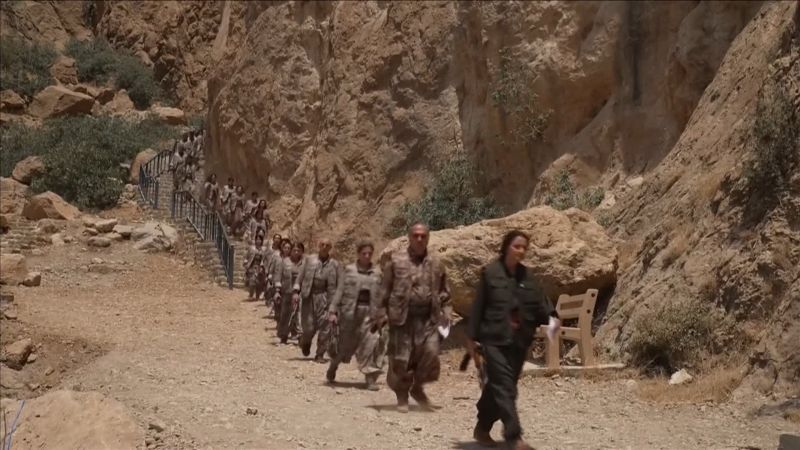
From the perspective of the Iranian Kurdistan Human Rights Watch (IKHRW), this research holds profound relevance. A significant volume of documented human rights violations in Iranian Kurdish regions directly involves non-state armed groups and the severe fallout of their activities. Pressing issues such as the recruitment and exploitation of child soldiers, forced disappearances, violence against women, the military exploitation of minors, and psychological harm inflicted on families fall precisely under the central inquiry of this paper: How can non-state armed actors be effectively held accountable to international standards?
Under the legal framework presented by Dr. Hernández Pradas, declaring a political or ideological struggle can never justify violating fundamental civilian rights. Regardless of declared grievances, armed factions involved in conflict are legally mandated to respect basic human rights principles. This provides a solid legal foundation for documenting abuses, establishing the individual criminal liability of commanders, and submitting cases to international accountability mechanisms.
For IKHRW, this academic work reinforces a critical strategic path: human rights documentation must move beyond political discourse between states and insurgent factions, focusing instead on verifiable actions, specific victims, and demonstrable IHL breaches. Within this objective structure, systematic child recruitment, enforced disappearances, and civilian targeting cease to be framed as political disputes and are recognized as actionable violations under International Humanitarian Law.
Ultimately, the study underscores that the future of accountability in internal conflicts relies heavily on the capacity of the legal community and human rights organizations to document, analyze, and pursue violations committed by non-state actors. Precise, evidence-based documentation grounded in established humanitarian rules forms the indispensable foundation for securing justice for victims in international forums.