
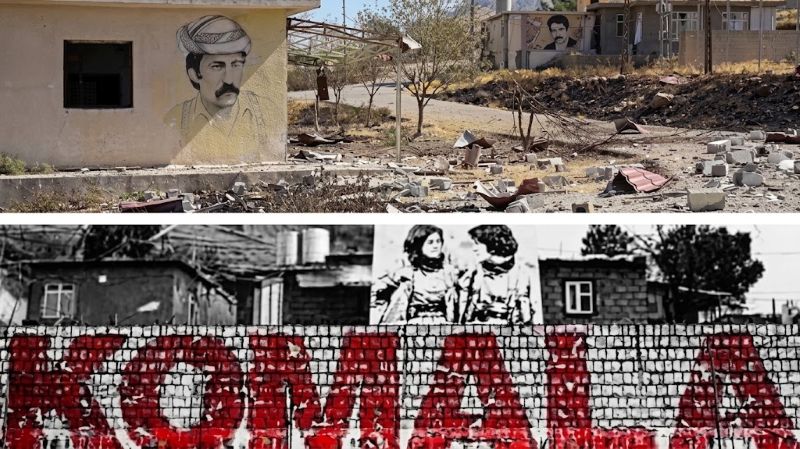
Mr. Abdi, now a 21-year-old resident of a western Iranian border county, was recruited at the age of fifteen—years before reaching the legal age of majority—by the armed opposition group Komala through deceptive online promises of relocation to Europe.
He reached out directly to the Iranian Kurdistan Human Rights Watch (IKHRW) via the contact number on its official website. In an unmediated telephone interview, he detailed his experiences: the severe living conditions inside the group’s mountain reception camp, the noticeable presence of underage minors among the ranks, and his eventual decision to return home after approximately twenty-five days.
His account illustrates a broader pattern documented among youth in border regions: targeted social media campaigns leveraging false promises to alter the trajectory of vulnerable adolescents who legally remain children.
According to Mr. Abdi, his primary motivation for leaving home stemmed from family difficulties and personal hardships at that age—vulnerabilities that left him susceptible to external manipulation. He made contact with the group after watching promotional videos on social media, where recruiters guaranteed him passage to Germany. He later characterized these assurances as empty promises that never materialized.
At fifteen, Mr. Abdi fell well under the international legal thresholds defining childhood. Under the UN Convention on the Rights of the Child and international humanitarian standards prohibiting the recruitment of child soldiers, enrolling minors into armed structures constitutes child exploitation and a clear violation of international law. Minors are particularly vulnerable to ideological propaganda and false promises, lacking the legal capacity to provide fully informed consent.
Upon arrival at the group’s headquarters, Mr. Abdi was transferred directly to a remote mountain facility known as the “reception camp” (pazirash), where new recruits are held prior to military training. He described an environment lacking basic necessities, including adequate food, clean water, and proper hygiene facilities. Recruits held in this section were subjected to mandatory guard duties in the mountains and physical labor, including construction work on camp infrastructure. He noted that throughout his stay, he was kept isolated from the “main battalion” while waiting for a training cohort to form—a cohort he never joined.
A key element of Mr. Abdi’s testimony is the prevalent presence of adolescents within the camp. He observed that most recruits in the reception section were sixteen or seventeen years old. While he did not personally encounter anyone under sixteen besides himself, the concentration of sixteen- and seventeen-year-olds indicates that child recruitment within these camps is a structural pattern rather than an isolated incident.
After approximately twenty to twenty-five days, prior to commencing formal military training, Mr. Abdi concluded that remaining with the group would not resolve his personal hardships. He chose to leave, describing his decision as clear and unhesitating. Upon departure, camp administrators imposed a financial penalty on him and other departing recruits under the pretext of food and clothing expenses, after which he was permitted to leave.
Now twenty-one, Mr. Abdi resides in his hometown, having completed his education through the eleventh grade. He is currently unemployed and single. He maintains no contact with the individuals who recruited him, noting that some remain active with the group in Iraq while a relative who also departed has since married and settled in Sulaymaniyah, Iraq.
The audio recording of this interview is held in the confidential archives of the Iranian Kurdistan Human Rights Watch. In accordance with strict privacy protocols, the recording can be made available to researchers, legal experts, and human rights investigators upon formal request for verification and research purposes.