
The signing of the “Deed of Commitment” in 2012 between the Democratic Party of Iranian Kurdistan (PDKI) and Geneva Call raised hopes for strengthening the protection of children in armed conflicts. However, reports published in subsequent years have raised serious questions regarding how these commitments are implemented and the effectiveness of monitoring mechanisms. In a critical interview with Dr. Rozhin Sarmadi, a researcher in international humanitarian law, the Iranian Kurdistan Human Rights Watch (IKHRW) examines the legal dimensions of this document, the resulting responsibilities, and the challenges of monitoring non-state armed groups.
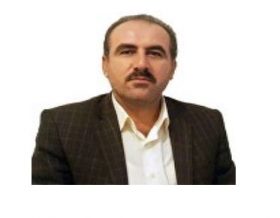
In this dialogue, Dr. Rozhin Sarmadi details the provisions of the 2012 agreement and addresses the identity of the signatories. The commitment was formally signed by Mostafa Shalmashi on behalf of the political bureau of the Democratic Party of Iranian Kurdistan (PDKI) and registered as a voluntary pledge with Geneva Call. According to Dr. Sarmadi, signing such a document implies the acceptance of a specific set of obligations toward protecting children in armed conflicts, and its execution is expected to be accompanied by transparency and accountability.
IKHRW: Dr. Sarmadi, to begin, what exactly is the legal nature of the document signed in 2012? Is it a political agreement or a humanitarian law commitment?
Dr. Rozhin Sarmadi: This document is a Deed of Commitment, which signifies the formal and voluntary declaration of a non-state armed group’s compliance with a set of humanitarian rules. While it is not an inter-state treaty, it holds significant weight in terms of public credibility and accountability. By signing it, an actor publicly agrees to align its conduct with specific standards and subjects itself to evaluation by monitoring bodies.
IKHRW: Some observers believe that signing this document was merely a symbolic gesture. What is the actual significance of it being signed by an official representative of the PDKI?
Dr. Sarmadi: It is far from purely symbolic. Although it is not an inter-governmental treaty, its signing by an official representative of a non-state armed group carries substantial weight. In this specific case, Mostafa Shalmashi, representing the political bureau of the PDKI, committed the group to refraining from recruiting and using individuals under the age of 18. The group also pledged to remove underage individuals from military structures if identified, cooperate in child protection efforts, and facilitate monitoring. Therefore, the signature is not a ceremonial act; it serves as the benchmark against which the group’s subsequent field performance is measured.
IKHRW: What are the core obligations of the signatory group under this deed?
Dr. Sarmadi: The most vital obligation is to abstain from recruiting or using individuals under 18 in any activity related to armed conflict. Beyond that, the document emphasizes identifying and extracting underage individuals from military structures, cooperating to protect affected children, training forces on these obligations, and cooperating with monitoring mechanisms. Crucially, the issue is not just “absence from the frontlines”; the underlying principle is keeping children entirely out of military frameworks.
IKHRW: If reports emerge showing the presence of adolescents in camps or structures affiliated with a group, would that contradict the spirit of this commitment?
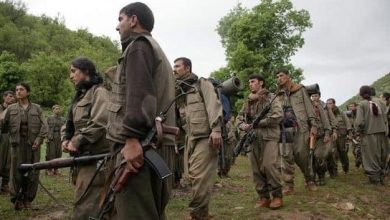
Dr. Sarmadi: If such reports are verified by credible evidence and independent fact-checking, they can raise serious questions about compliance. In international humanitarian law, simply altering titles or utilizing euphemisms like “training,” “cultural activities,” or “young Peshmerga” does not shield the situation from scrutiny. The final evaluation always depends on objective, observable conditions on the ground.
IKHRW: Certain reports published by the Iranian Kurdistan Human Rights Watch highlight the difficulties families face when trying to contact their children, or the obstacles preventing these youths from returning to civilian life. What is the legal significance of these points?
Dr. Sarmadi: If verified, the issue expands beyond initial recruitment. Maintaining family contact, ensuring access to education, and enabling a safe return to civilian life are core pillars of child protection. Any unjustified restriction in these areas raises serious human rights concerns and demands independent investigation.
IKHRW: Over recent years, the IKHRW has published various reports concerning the situation of minors, family communication barriers, and allegations of underage recruitment. How should these reports be evaluated in light of the 2012 Deed of Commitment?
Dr. Sarmadi: If these reports are corroborated by independent investigations and reliable evidence, they serve as a solid basis for evaluating the group’s adherence to its pledges. The exact value of the Deed of Commitment lies in its ability to provide a comparative framework between official promises and practical behavior. At the same time, from a legal perspective, one must distinguish between an “allegation made in a report” and a “proven violation,” relying on independent verification for final conclusions.
IKHRW: Some critics argue that after these documents are signed, Geneva Call lacks the necessary teeth and tools to monitor and enforce them. How do you assess this criticism?
Dr. Sarmadi: This criticism is valid to an extent. Geneva Call’s model relies fundamentally on engagement, persuasion, and monitoring; it does not possess judicial or executive power to enforce compliance through punitive measures. Consequently, its success depends heavily on the cooperation of the signatory group and the access granted to independent observers. If access is restricted or information cannot be independently verified, evaluating compliance becomes exceedingly difficult.
IKHRW: Can the mere act of signing such a document be viewed as definitive proof of a genuine commitment to child rights?
Dr. Sarmadi: No, the signature is the starting point, not the finish line. The real baseline consists of field behavior, transparency, accountability, and the viability of independent oversight. Any claim of compliance must be backed by practical, verifiable actions.
IKHRW: IKHRW reports have alleged the continuity of certain concerning patterns even after the taahhütname was signed. What impact do such reports have on the legal assessment?
Dr. Sarmadi: These reports act as a catalyst for demanding independent reviews and deeper investigations. Legally, we must separate a “report” or an “allegation” from a “proven finding.” The most effective approach is for neutral entities to obtain field access to directly verify or refute these claims.
IKHRW: What steps must be taken to increase the efficacy of these types of deeds of commitment?
Dr. Sarmadi: I believe several practical measures are essential:
-
Establishing regular, independent mechanisms for on-site field inspections of camps and facilities linked to non-state armed groups.
-
Publishing periodic, public reports detailing the status of implementation and corrective actions taken.
-
Providing safe, secure communication channels for families to contact their children and log complaints without fear of retaliation.
-
Designing independent programs to reintegrate children and adolescents into education and civil life.
-
Fostering closer cooperation between international bodies, child protection agencies, and local actors to verify field data.
-
Conditioning international engagement with signatory groups on verifiable proof of implementation, rather than treating the mere signing of papers as a success.
IKHRW: To close, what is your primary message to international organizations?
Dr. Sarmadi: The greatest danger is when the signing of a document becomes the end of the accountability process rather than its beginning. The credibility of humanitarian commitments is preserved only through independent oversight, continuous evaluation, and transparency. Ultimately, children are protected not by the ink on a document, but by the practical, verifiable implementation of the obligations within it.
International bodies should not treat a voluntary signature as a mission accomplished. Real success is achieved when commitments are continuously tracked, independent data is published, observer access to camps is guaranteed, and impartial investigations are launched whenever credible allegations of child rights violations surface. Only under these conditions can we ensure that humanitarian documents transcend paper promises and translate into genuine protection for children.