
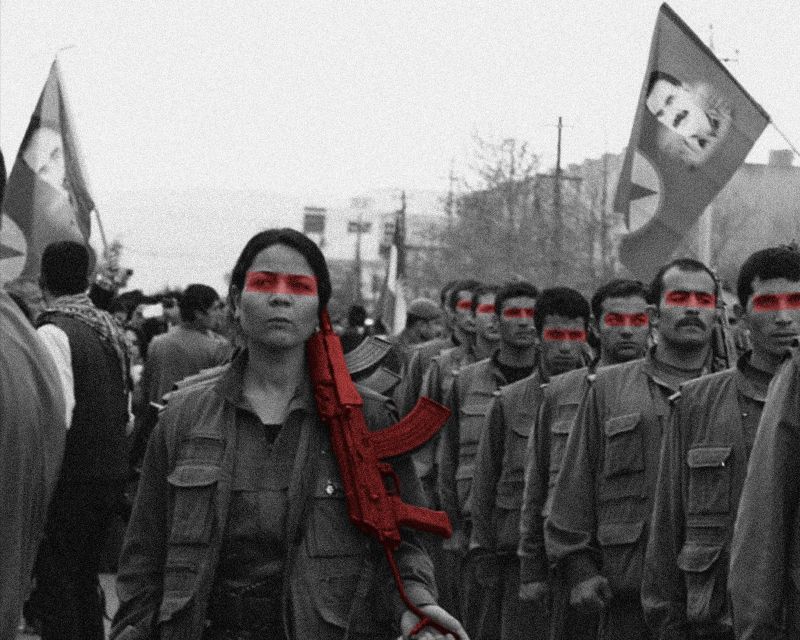
When Abdullah Öcalan called for an end to armed struggle, the dissolution of military structures, and a transition toward politics and human rights in 2025—initiating the gradual disarmament and disbanding of the PKK—many observers viewed the event merely as a tactical pivot or a byproduct of regional security shifts. However, analyzing this development within the broader framework of international law and peace studies reveals a profound reality: what is approaching its end may not be a single organization, but an entire operational paradigm.
Four decades ago, when the Kurdistan Workers’ Party (PKK) initiated its armed campaign, the international arena was shaped by the Cold War, national liberation movements, and ideological conflict. During that era, many ethnic and national movements believed that sovereign states would never grant minority rights without a military counterweight. Weapons served not merely as tools, but as the primary language of politics, with armed insurgency regarded as a legitimate strategy to enter power dynamics.
The contemporary international order has fundamentally transformed. Over the past three decades, political legitimacy has ceased to derive primarily from territorial control or military capacity; instead, it stems from adherence to human rights, the rule of law, democratic participation, and human dignity. Furthermore, modern international law reinterprets the right to self-determination not through secession and violent conflict, but through internal autonomy, non-discrimination, political inclusion, and civic equality.
In this context, the decision to abandon armed conflict represents an implicit acknowledgment of these evolving global norms. A movement that derived its legitimacy from armed resistance for decades now centers its discourse on political and legal struggle, demonstrating that even non-state armed actors recognize how legitimacy is forged in the twenty-first century.
This shift does not guarantee an immediate resolution to the Kurdish issue in Turkey. Critical questions persist regarding cultural rights, political representation, civil liberties, local governance, and institutional trust between the state and Kurdish society. Moreover, peace processes depend on sustained political commitments, particularly given the collapse of the 2013–2015 peace talks.
Nevertheless, a historic benchmark has been set: for the first time, the region’s primary Kurdish armed movement formally declared that its future lies in political and legal channels rather than perpetual warfare. This decision reflects a deeper structural transformation in international politics.
For other ethnic and regional movements, the core lesson is clear. Achieving lasting equality, addressing systemic discrimination, and securing fundamental rights in the twenty-first century rely on human rights frameworks, civic equality, democratic engagement, and non-violent resistance. While this path offers no easy guarantees, recent history demonstrates its superior capacity to generate international legitimacy, build domestic consensus, and achieve sustainable reform compared to political violence.