
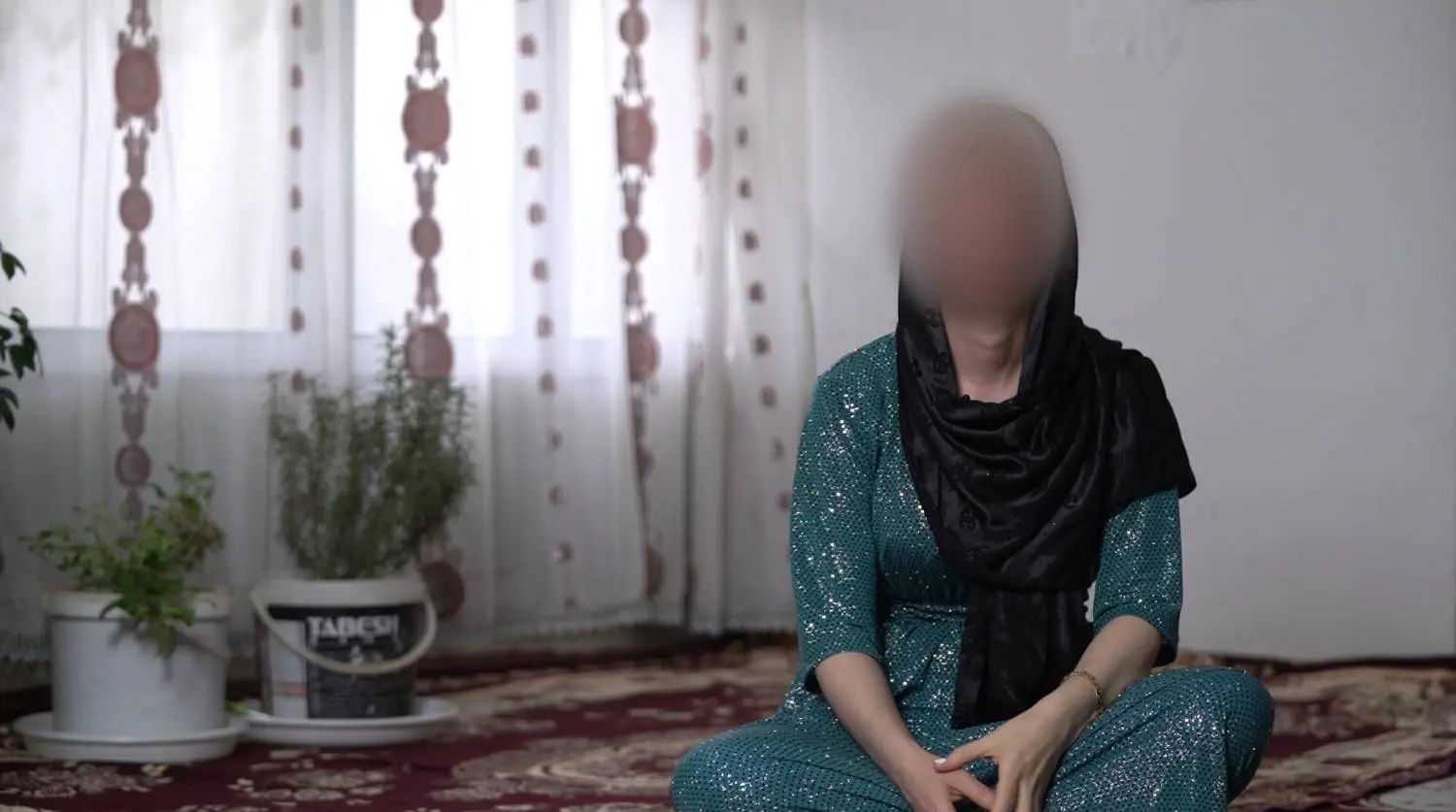
Somayeh Rahmani recounts her years with the Party for a Free Life in Kurdistan (PJAK), alleging coercion, restrictions on family contact and mother-tongue use, military training, detention and torture, and deaths whose circumstances, she says, were concealed or misrepresented.
Main Content
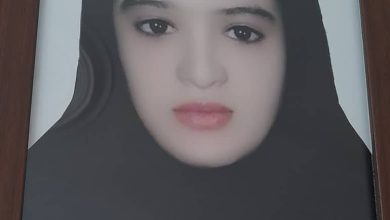
It is a snowy, subdued day. Iranian Kurdistan Human Rights Watch has visited Somayeh Rahmani’s home in a border town in Kurdistan Province. It is a modest house at the end of an alley buried in snow, where the sound of the wind is the only thing breaking the neighborhood’s silence. Somayeh opens the door and leads us into a room filled with the smell of tea and firewood. Her father is an elderly man whose back has been bent by years of work and grief. Her mother is a bereaved woman mourning a child who was killed while with PJAK—a child who, according to the family, pursued goals that brought them nothing but loss, grief, and displacement. They remain silent until the conversation begins, watching us without speaking. Yet everything this account concerns is present in the silence of that room: families who, according to the narrator, entrusted their children to a group that, in the name of freedom, led them toward disappearance and death.
What follows is her own account, with the details as she provided them: names, dates, places, and events she says she witnessed firsthand. Every detail has a place in this account—from the date of a transfer to a girl’s organizational name—because such details turn a personal recollection into a narrative that can be followed and documented for further investigation. The experiences described in this interview are not simply a list of unrelated incidents. They form a sequence of events that, according to her, affected the lives of several people and, in some cases, ended in death.
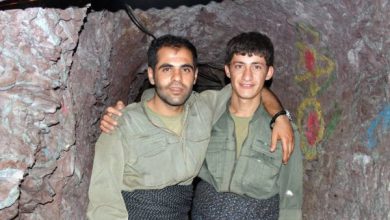
Somayeh Rahmani identifies herself as having been born in 1988 and as the fourth child in her family. According to her, her brother joined PJAK in 2016 and was killed fighting ISIS. Somayeh says she was deeply attached to him and could not bear being separated from him, which led her to join PJAK herself. Before that, most of what she knew about the group came from propaganda and satellite television. She says people in the region knew PJAK and other Kurdish parties because these groups operated in the mountains and maintained contact with local residents, particularly in villages near their areas of activity. Their presence had, in various ways, affected local people. However, she says she knew little about PJAK’s ideology or internal structure before her brother was killed.
She says that after joining and completing the “perwerde” training course, she realized that Asos was close to Iran and regretted her decision on the very first day. According to her, the first things she encountered there were “duplicity” and “intrigue.” She explains that someone had attributed a statement to her that she had never made, claiming she had said it to one of the commanders, who, she says, held a very senior position within the organization. Somayeh says members were told they had the right to criticize, but in practice, they did not dare to do so.
According to her, whenever she criticized the existing conditions or said she did not intend to stay, she faced a harsh response. She says that on one occasion, she explicitly stated that she did not want to remain there and wanted to return home, but the confrontation escalated to the point of physical assault. Somayeh recalls being told: “You have no right to do that. How dare you even think of doing such a thing? You’ve only just arrived, and you already want to go back?” She says they also frightened her by describing what might happen if she returned to Iran. Somayeh says she was afraid of them as well and found herself in a situation where she “knew nothing,” feeling that she had been placed in a fait accompli.
She explains that when someone seriously expressed a desire to leave, members would initially talk to that person and try to calm them down. According to her, they would spend some time supporting the person and sometimes assign them responsibilities to make them feel important and capable of doing something. She describes this as an attempt to persuade people to reconsider their decision and abandon plans to leave. Somayeh says promises about freedom, democracy, women’s rights, and individual rights were made in the process.
Somayeh says that in 2017, she again told them she did not want to stay. In her own words, she told them: “Even if you kill me, it is better than staying here.” She had asked them to contact her family. At that point, she was sent to Qadi Joki. A woman named Zilan Tanya, whom Somayeh knew and describes as a Hawrami speaker, said she would speak with her and might be able to calm her down.
Somayeh says that after she went to the women’s section, she felt that the people there paid little attention to her and even called her a “traitor.” Zilan Tanya then arrived and told her that she could stay with her for a while until she calmed down, and then decide whether she still wanted to leave and return home. Somayeh says Zilan Tanya treated her differently during that period, showing her affection and concern, and that this affected her. According to Somayeh, Zilan Tanya also acknowledged that some people’s behavior was wrong but told her she had to adapt to the circumstances and remain strong and steadfast.
“But the reality was that, at this stage, the goal was to keep me there by any means possible. I was truly alone and had no one. I was afraid of torture and death. For that reason, I had to behave as though I accepted what Zilan Tanya was doing.”
One issue Somayeh repeatedly raises is her desire to visit her brother’s grave. She says her brother had been killed fighting ISIS and that she had repeatedly been promised permission to visit his burial place. Somayeh says she told them many times that she had not joined to fight ISIS; she wanted to visit her brother’s grave. She asked why they would not let her go, especially when, according to her, other people had been allowed to travel there and had spent much of their time sightseeing. She says she had obtained Zilan Tanya’s promise that she would find a way to arrange the visit.
According to Somayeh, she was finally allowed to travel to Syrian Kurdistan in the spring of 2018, after completing a period of “perwerde” training. She says she traveled there in late summer, as autumn approached, and stayed for about a month, during which she was able to visit her brother’s grave. She also says she attended a “Jineology conference” there. After approximately one month, she was sent back to the Iranian Kurdistan section.
Somayeh says that after returning, she also encountered difficulties and mistreatment related to Jineology. During that period, she had undergone surgery to remove her gallbladder. She says she experienced nausea and other physical problems afterward and became ill easily. According to her, the water where she was staying was dirty and unsuitable for her physical condition.
She says the medical staff themselves, in what they called the “Health Department,” assessed her condition and concluded that she needed to be transferred elsewhere. Somayeh says that when she explained to staff in the Health Department that she had been unwell for a long time, they initially did not take her seriously. However, a doctor who examined her wrote that she should be moved out of the area and that returning to her previous location could put her life at risk. She was subsequently sent to Penjwen, to a location that she says was associated with the “Committee for Self-Defense.”
Somayeh says conditions there were better for her. A spring was located near their accommodation, and she was allowed to drink clean water and rest. She says she took medication for a little over a month and her physical condition improved. Afterward, she was sent back to the “academy.”
According to Somayeh, she was told at the academy that she had ideological problems, had not been sufficiently convinced to remain with the organization, and needed further training. She says she also faced mistreatment there. One of the issues that distressed her most was the prohibition on speaking Hawrami. Somayeh says she had met a Hawrami-speaking girl named Ronad Leila, but they were not allowed to speak to each other in Hawrami because the people in charge could not understand what they were saying.
She considered this inconsistent with the image of freedom that had been presented to her. Somayeh says she found it strange that, on the one hand, members were told they were fighting for freedom, while on the other, she was not even allowed to speak her mother tongue with another person. According to her, this left her feeling distressed and imprisoned.
Somayeh says that people who had come from different parts of Turkey and Iraq could speak their own languages for hours without anyone reprimanding them, while her conversations in Hawrami were met with disapproval. According to her, when she protested and asked why she could not speak with the other girl, she was told that they belonged to a united party and were fighting for everyone. Somayeh says she felt that she had been deprived of even her most basic right: the ability to use her mother tongue.
She also describes the treatment she says she faced when criticizing the organization. Somayeh says members were told they had the right to criticize, but anyone who criticized a commander faced severe reactions. She describes these encounters as deeply intimidating and frightening, saying that at times they felt comparable to torture in their intensity. However, when asked specifically about torture, she clarified that she meant physical beating or torture in the direct sense, while also referring to meetings and confrontations that caused her extreme fear.
Somayeh says she felt unable to express her true thoughts there. According to her, Abdullah Öcalan’s statements were presented as absolute and beyond criticism, even though individuals might privately have doubts about some of his views. Somayeh says she did not dare express such thoughts because she had repeatedly been called a “hypocrite” or something similar. She says this created the impression that she might have been sent there to cause division or undermine the party.
She also speaks of physical demands. Somayeh says that because of her health problems and internal medical conditions, she could not work like a healthy person, yet she was expected to work like a man. According to her, this expectation and the way she was treated made her feel that she was being discriminated against and treated differently.
Somayeh says that when officials sent her to communicate with local residents, they made use of her ability to speak Sorani Kurdish and asked her to talk with people in nearby villages. However, she says that after she returned, even her use of Sorani sometimes drew negative reactions, and she was accused of showing off. She says she saw a gap between what people were expected to do in practice and what was proclaimed in slogans.
Regarding the concept of “Life, Woman, Freedom,” Somayeh says that the treatment of women she experienced differed from what their training sessions and books said about women’s rights. In her view, women should have rights and autonomy, but women there were expected to match men in physical ability. She also says that lying, accusations, and attempts to create divisions occurred among the women themselves, which did not correspond with the image of unity and freedom that had been presented to her.
On armed missions, Somayeh says she was never assigned a mission to assassinate or kill anyone and that her physical problems would have prevented her from carrying out such a task. She also says she did not personally know the people sent on these missions. According to her, they generally belonged to specialized groups, and not everyone knew who they were.
Somayeh emphasizes that anyone caught trying to escape was killed.
Somayeh also describes the existence of a prison within the organization. She mentions a girl whose name she remembers as Esra, who was also there. According to Somayeh, Esra did not want to stay. She says that after Esra expressed this wish, she was detained, disarmed, and taken to prison. Somayeh says she later saw Esra, who told her that she had been tortured and severely mistreated. According to Somayeh, Esra said she had feared for her life and had been forced during interrogation to say what the officials wanted to hear so that she could be released and return home. Regarding Esra’s origins, Somayeh says that, as far as she remembers, Esra was from Saqqez or Sardasht. She later heard that Esra had returned to Iran, but she did not see her again.
Somayeh also recounts two cases of suicide that she says she witnessed or was closely connected to. In one case, a young man who had been in the same training cohort as her was accused of being romantically interested in a girl, which he denied. Somayeh says he was put in a situation that left him feeling humiliated and that he subsequently died by hanging. She says that afterward, he was even referred to as a “martyr,” with the designation “martyr of standing firm.”
In the second case, Somayeh says that at a place called Roonahi Hill, or a location whose exact name she cannot remember, they were informed that a young man had died by suicide. According to her, they were told that he had argued with a commander and then shot himself with his own weapon.
Another account Somayeh shares concerns a girl who died under unclear circumstances three days after being transferred to Iraqi territory. Somayeh says they were later told that the girl had been killed by gunfire. She considers suicide a possibility, but says there were also rumors among the people there that the girl might have been killed. Somayeh stresses that she does not know what actually happened.
According to Somayeh, the girl’s parents were told that their daughter had been killed in a bombing at the Asos Training Center. Somayeh says she saw the girl’s father in 2018 or around that time. He told her that he had been asked to speak about his daughter on camera and say that she had become a “martyr.” Somayeh emphasizes that this is what she heard directly from the father and that she has no definitive knowledge of the actual circumstances of the girl’s death.
She also recounts the case of another girl whose parents, she says, came to Qadi Joki to see their daughter. Because Somayeh spoke Sorani Kurdish, she was asked to speak with them. According to Somayeh, the girl’s father said members of the group had come to their home and taken his daughter away, and that he no longer wanted her to remain there. Somayeh says the father believed his daughter was underage, still attending school, and had been misled.
Somayeh says she had not seen the girl herself at the time and that her parents had only been shown a photograph. She told them that if their daughter was undergoing “perwerde” training, it would not be possible to show her to them. She also explained that if the family became upset or behaved in a way that indicated they wanted to take their daughter home, permission for a visit might be denied. Somayeh says she considered these rules extremely rigid and believed they were incompatible with family relationships, affection, and marriage.
She says the girl’s parents stayed there day and night but ultimately failed to achieve what they had come for. Somayeh adds that she herself had not been there for long and did not know how the family had been treated before her arrival.
In another part of her account, Somayeh describes the military training she received. She says she was trained in the use of the Kalashnikov, as well as “vazhesh,” “bikisi,” and grenades, and received training with various weapons. When asked about assassination training, she referred to a “special central section” and said that people selected for such tasks were sent to specialized units.
She goes on to say that her experience in Iraq later made her realize how difficult life in a foreign land can be for a young person or a woman, and how essential security is. Somayeh says she did not face harsh treatment when she returned to Iran, although she went through administrative procedures and questioning. She says she recognizes that joining the group was a mistake and regrets her decision. In her words, she lost her youth and wronged her parents and family.
Somayeh says that after returning, she felt that people’s attitudes toward her had changed. According to her, some people knew she had spent time in a place where they believed “wrongdoing” took place, and she felt she had consequently lost her former standing and reputation.
At the end of her account, Somayeh urges girls not to repeat the mistake she says she made. She also calls on government officials to understand the problems facing young people, noting that, in her view, some of these problems originate within families. She believes propaganda by groups such as PJAK also influences young people and says recruitment through propaganda should be prevented.
Somayeh also explains how she first became familiar with these groups. She says people in the region learn about Kurdish parties through propaganda, satellite television, and the groups’ presence in mountainous areas. Before joining, she watched channels such as Newroz TV, particularly in the hope of seeing footage of her brother. According to her, she eventually learned of his death through satellite news broadcasts and Newroz TV.
She says the groups’ propaganda was not limited to news reports. Video clips, music, and songs were also used to attract audiences. Somayeh recalls a Hawrami song that she says had a propaganda purpose, although she cannot remember its exact lyrics.
This interview was recorded on video at Somayeh Rahmani’s family home, with her informed consent. The video recording, together with field notes and supporting documents, is preserved in the archives of Iranian Kurdistan Human Rights Watch (IKHRW). Upon formal request and subject to confidentiality safeguards, these materials may be made available to researchers, writers, human-rights advocates, university professors, documentary filmmakers, and journalists.