
When a foreign government provides financial and military assistance to a warring party in a civil war, does that conflict remain non-international? This is the central question addressed by Aaron Dumont, a researcher and doctoral candidate at the Institute for International Law of Peace and Armed Conflict (IFHV) at Ruhr University Bochum, Germany, in a commentary titled “When Does Support Become Intervention?” published on February 25, 2026.
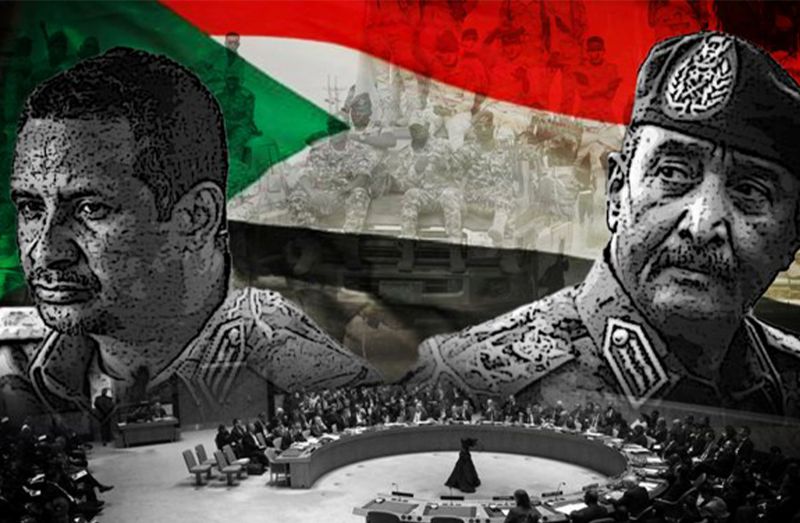
His primary case study is the ongoing war in Sudan. Since April 2023, the Sudanese Armed Forces (SAF), led by General Abdel Fattah al-Burhan, have been locked in combat against the Rapid Support Forces (RSF) under the command of Mohamed Hamdan Dagalo, widely known as “Hemedti.” The RSF originated from the Janjaweed militias utilized during the 2000s in Darfur. What complicates this internal war is the involvement of the United Arab Emirates (UAE)—a state that, alongside Saudi Arabia, maintains strategic interests in the conflict driven by Red Sea port logistics and access to Sudan’s gold reserves, according to Dumont.
International humanitarian law establishes a firm distinction between two types of conflict. If hostilities occur between two sovereign states, the conflict is classified as an international armed conflict (IAC), triggering the full application of the Geneva Conventions, including prisoner-of-war status for captured combatants. Conversely, if fighting occurs between a state and an organized armed group, or among armed groups themselves, it is governed as a non-international armed conflict (NIAC). Under a NIAC, only baseline protections apply, such as Common Article 3 prohibitions against torture and the targeting of civilians. This distinction is far from academic; it dictates legal protections, mechanisms for assessing human rights violations, and the parameters of criminal liability.
The critical legal question remains: at what threshold does external state support internationalize a civil war? The International Court of Justice (ICJ) established a strict standard in the landmark 1986 Nicaragua case: financial aid, military training, or weapons supply alone do not suffice; the foreign state must exercise effective control by directly directing specific military operations. However, the International Criminal Tribunal for the former Yugoslavia (ICTY) introduced a broader standard in the famous Tadić case: if a foreign state exercises overall control over an armed group—engaging in general planning or operational coordination—the conflict becomes internationalized, even without direct orders for every specific act. Crucially, while overall control determines the classification of the armed conflict, attributing specific unlawful acts of an armed group to a foreign state still requires meeting the ICJ’s stricter effective control test.
Under the Tadić framework, for internal hostilities to legally qualify as an armed conflict in the first place, two cumulative criteria must be satisfied: the violence must be protracted and continuous, and the armed group must demonstrate a minimum level of organization, including a clear command structure and the capacity to sustain military operations. Both requirements are mandatory.
Applying this to Sudan, Dumont highlights existing documentation, including findings by Amnesty International concerning Chinese-manufactured drone munitions tied to UAE logistics, as well as French and British weapons entering Sudan via the UAE and Chad. While these transfers breach the UN arms embargo, they do not automatically internationalize the war. A more critical element is the recovery of Emirati passports in Omdurman. Media reports indicate these individuals may have belonged to Emirati intelligence services, with information submitted to the UN Security Council. If proven that Emirati officers participated directly in tactical planning or military decisions alongside the RSF, it would strongly indicate that the overall control threshold has been met, internationalizing the war. However, Dumont stresses that definitive proof of this level of control has not been publicly established.
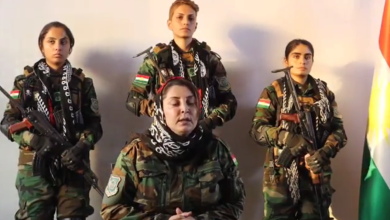
The relevance of this framework extends beyond Africa. These legal distinctions provide a methodological model for analyzing non-state armed groups in other regions, including Kurdish armed factions operating near the borders of Iran and Iraqi Kurdistan—with an essential caveat. Dumont’s analysis focuses strictly on the legal relationship between a foreign state and a supported proxy, not the domestic or command responsibility of armed group leaders over their own forces. These are distinct legal matters. The only directly applicable aspect of the Tadić standard to regional groups is the organization threshold: evaluating whether a group possesses a defined command structure, operational capacity, and sustained military activity.
Kurdish armed entities active in the region—including PJAK, factions of Komala, and the Democratic Party of Iranian Kurdistan (KDPI)—differ substantially in structure, history, and operational capability, requiring individual assessment. Dumont’s work does not evaluate whether specific Kurdish groups meet the criteria for organization or intensity. Instead, it provides a clear conceptual framework distinguishing between support, influence, dependency, and operational control—a tool for objective human rights research to separate political assertions from rigorous legal determination.