
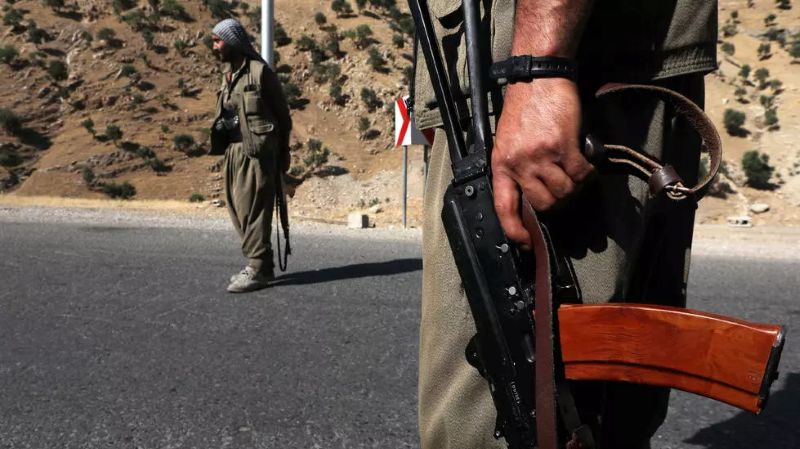
In contemporary warfare, the boundary between a military actor and a governing power has increasingly blurred across numerous global conflict zones. In several internal armed conflicts, non-state armed groups not only engage in military operations but have also maintained effective control over territories for years. These groups establish administrative structures and directly dictate the daily lives of thousands or even millions of civilians. This evolution poses one of the most challenging questions in modern international law: Can an entity that exercises de facto sovereign power evade human rights responsibilities simply because it lacks the formal status of a state?
A legal study by Alva Rydberg, titled “Rebellgruppers förpliktelser mot befolkningen i områden under deras kontroll – ett skyddssystem med brister” (Rebel Groups’ Obligations Toward the Population in Areas Under Their Control – A Protection System with Deficiencies), examines this precise normative void. Submitted in the field of international law in late 2024, the thesis focuses on the legal status of armed groups exercising effective control over territory and its population. By analyzing International Humanitarian Law (IHL), International Human Rights Law (IHRL), and the framework governing non-state actors, Rydberg investigates whether such entities can be bound by human rights obligations.
The core premise of the study is that the existing legal framework—though developed to limit violence in armed conflict—faces severe structural constraints when confronted with the realities of modern internal conflicts. IHL establishes explicit obligations for armed groups in non-international armed conflicts. Specifically, Common Article 3 of the Geneva Conventions strictly prohibits acts such as torture, cruel treatment, hostage-taking, and summary executions. Additional Protocol II provides further guarantees, particularly regarding humane treatment and the protection of children.
However, Rydberg argues that this protective framework remains critically limited. IHL was designed fundamentally for wartime conditions and fails to adequately regulate the ordinary aspects of civilian life that persist under armed group governance. Fundamental rights—such as freedom of expression, freedom of religion, freedom of association, the right to work, and cultural participation—are vital to human dignity but do not always possess a direct nexus to active military operations. Consequently, these rights frequently fall outside the protective scope of IHL.
This dynamic creates a severe protection gap. When a central government loses effective control over a region, the practical administration of governance falls to the non-state armed group. Yet, traditional international law continues to assign human rights obligations almost exclusively to sovereign states. As a result, populations living under armed group control are left stranded in a legal gray zone—neither fully covered by IHL nor able to demand human rights compliance as recognized citizens under standard state mechanisms.
A central pillar of Rydberg’s analysis is the distinction between armed groups solely engaged in active combat and those that have established territorial control. According to the author, a distinct legal status emerges when an armed group exercises stable, prolonged control over a geographic area. Such an entity ceases to function merely as a military force; it assumes functions analogous to a government, exercising direct authority over the civilian population.
This phenomenon reopens a long-standing debate on the nature of human rights. The classical doctrine maintains that human rights govern the relationship strictly between the state and the individual, positioning states as the primary duty-bearers under international treaties like the International Covenant on Civil and Political Rights (ICCPR) and the International Covenant on Economic, Social and Cultural Rights (ICESCR).
Conversely, a growing body of legal scholars argues that focusing strictly on formal statehood leaves victims without remedies. If the objective of human rights law is to prevent abuses of power and safeguard individuals against unchecked authority, an entity exercising effective power over a population cannot claim immunity from legal scrutiny simply due to its non-state status. Rydberg’s research emphasizes the principle of effectiveness (effet utile): legal rules must not be interpreted in a manner that deprives them of their core practical purpose. If an armed group de facto replaces state authority, ignoring its responsibilities leaves the civilian population systematically unprotected.
This legal dilemma holds profound relevance for the Kurdish-inhabited regions of Iran and Iraq, where various non-state armed groups have operated for decades, at times establishing camps, rear bases, or zones of influence. From a human rights perspective, the primary concern is not the political ideology or stated objectives of these groups, but their exercise of power and the direct impact of their conduct on civilians.
The monitoring and documentation work of the Iranian Kurdistan Human Rights Watch (IKHRW) centers precisely on this objective: evaluating the conduct of all entities that impact individual security, liberty, and rights, regardless of their political claims or asserted legitimacy. The analytical framework highlighted in Rydberg’s study applies directly to assessing non-state armed groups operating in the region, particularly regarding the recruitment of children, internal dissent, defectors, women’s rights, and the treatment of populations under their influence.
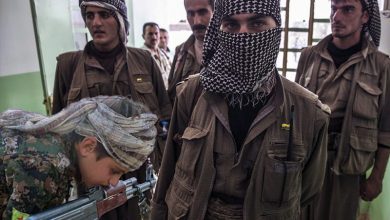
A critical point of intersection between this research and IKHRW case files is the systemic involvement of children in the military structures of armed groups. International Humanitarian Law provides explicit protections for children in armed conflict, with Additional Protocol II emphasizing the requirement to ensure continued education and protection from military involvement. Therefore, any military recruitment or deployment of minors within armed structures is not merely an internal organizational matter, but a direct violation of international humanitarian standards and the Convention on the Rights of the Child.
Furthermore, the administration of camps and controlled territories by armed groups represents another key area of application. Rydberg’s findings demonstrate that when an armed group exercises control over daily life, human rights evaluations must extend beyond battlefield conduct. Internal governance, the right to dissent, freedom of movement, the treatment of former members, and access to basic rights must all be subjected to rigorous human rights oversight.
Ultimately, the study underscores an essential principle of modern international law: power and accountability must remain inextricably linked. An entity that exercises authority over a territory or community cannot claim the benefits of power while remaining immune from its legal consequences. For the Iranian Kurdistan Human Rights Watch, the protection of victims must never depend on the formal identity of the perpetrator. Whether human rights are violated by a state actor or a non-state armed group, the governing metric must remain the degree of control exercised and its impact on human lives. Until international law fully bridges this institutional gap, populations under non-state control will remain vulnerable within the gray zone of legal accountability.