
Introduction
In recent years, a significant portion of armed conflicts worldwide has occurred not between states, but between sovereign states and non-state armed groups. From the Middle East to Africa, groups exercising control over territories, populations, or economic resources have become major actors whose behavior has direct humanitarian consequences for millions of civilians.
Volume 102, Issue 915 of the International Review of the Red Cross (IRRC), published in 2021, is entirely dedicated to this subject. It seeks to address one of the fundamental questions of contemporary International Humanitarian Law (IHL): When a non-state armed group directly impacts the lives of individuals, what legal responsibilities does it bear toward them?
Titled “Non-State Armed Groups”, this special issue (Vol. 102, No. 915, pp. 979–1384) was published by the International Committee of the Red Cross (ICRC) in collaboration with Cambridge University Press. In this collection, the ICRC notes that hundreds of armed groups worldwide possessed the capacity to generate humanitarian crises in 2021, with over a hundred such groups legally classified within the framework of non-international armed conflicts.
Moving Beyond a Strictly Military Perspective
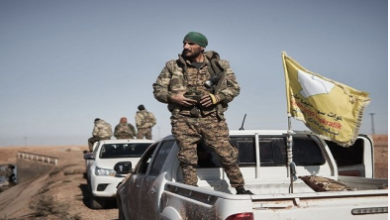
A key insight of this issue is that non-state armed groups should not be examined solely as combat forces. Many such entities establish governance structures, provide public services, enforce internal regulations, or exercise social control in areas under their influence.
This reality gives rise to critical legal questions: Does a group exercising control over a population owe duties only to enemy combatants, or does it also bear obligations toward the civilians under its control? The contemporary IHL framework provides a clear answer: control over a population generates legal responsibility.
Protection of Civilians Under Armed Group Control
Tilman Rodenhäuser’s article on the legal protection of individuals living in territory under the control of non-state armed groups serves as one of the central pillars of this issue. It analyzes how rules of International Humanitarian Law and International Human Rights Law can be mobilized to protect civilians living in territories under armed group influence.
This discussion holds particular significance for regions where armed groups maintain an organized presence over extended periods. In such contexts, the issue extends beyond military clashes to encompass everyday civil rights, personal security, liberty, education, and the rights of women and children.
Humanitarian Engagement with Armed Groups
An article by Irene Oregui and Jérôme Drevon addresses a core operational challenge for the ICRC: How to engage in humanitarian dialogue with non-state armed groups to alleviate human suffering without conferring political legitimacy upon them.
This reflects a fundamental principle of humanitarian action: engaging with a party to a conflict does not imply endorsement of its political or ideological objectives.
Responsibility and Reparation: The Legal Gap
Articles by Olivia Herman and Luke Moffett tackle the critical issue of reparations by non-state armed groups. This section is particularly significant because victims of human rights violations by armed groups frequently face a total absence of effective avenues for redress.
The core question remains: When an armed group commits serious violations—such as the recruitment of child soldiers, violence against women, enforced disappearances, or other grave breaches—what mechanisms exist for accountability and reparations? This issue directly applies to cases involving victims of armed groups in the Kurdish region, where families and victims have spent years seeking truth and justice.
Connection to IKHRW Findings
The themes explored in this special issue of the IRRC share direct conceptual alignment with issues documented by the Iranian Kurdistan Human Rights Watch (IKHRW). IKHRW reports on child soldiers, the accountability of non-state armed groups, the status of women in paramilitary structures, the fate of missing persons, and the testimony of former members all fall squarely within key IHL inquiries:
-
Do non-state armed groups bear responsibility for violations committed against individuals under their control?
-
Is the military recruitment of children merely an internal organizational matter, or does it constitute a violation of international obligations?
-
How can victims of abuses by non-state armed groups access justice?
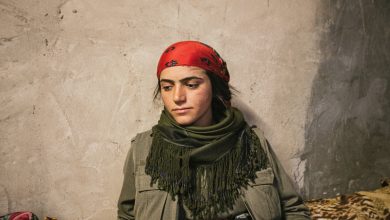
For instance, IKHRW field reports regarding the recruitment of minors—such as the case of Esrin Mohammadi (Sonya)—alongside findings on gender-based violence and testimony from former members, offer concrete field-level evidence of the precise legal and theoretical challenges examined in international legal literature.
Conclusion
The central message of Issue 915 of the International Review of the Red Cross is clear: non-state armed groups do not operate outside the realm of legal accountability, even when functioning outside state structures. International Humanitarian Law strives to balance the realities of conflict with the imperative of protecting human dignity. This framework does not legitimize armed actors; rather, it underscores that no entity impacting human lives can place itself above fundamental humanitarian principles.
Source: International Review of the Red Cross, Vol. 102, No. 915 (2021), Non-State Armed Groups, International Committee of the Red Cross & Cambridge University Press.