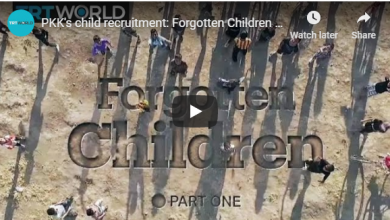

Recent statements by Rivar Abdanan, the spokesperson for PJAK, regarding the issue of child soldiering have once again brought one of the most serious human rights cases associated with Kurdish armed groups into the spotlight. In response to these remarks, Azad Salavati, a former member of the Democratic Party of Iranian Kurdistan, explicitly speaks in a video about the deployment of children and adolescents within structures affiliated with the PKK and PJAK, linking the issue to the history of international criticism directed at these groups.
The significance of these statements lies not only in their content but also in the position of the speaker. Salavati active for years in one of the rival parties, is now exposing a part of internal organizational realities that usually remain hidden within the atmosphere of political rivalries. In many instances, the testimony of former members and cadres of armed groups has become one of the most vital sources for understanding recruitment mechanisms, organizational operations, and human rights violations.
Nevertheless, the issue of child soldiering cannot be reduced to a rivalry between two political currents. What matters is the core of the issue: whether or not minors have been recruited, trained, or deployed within military or paramilitary structures. This is a question that must be answered independently of political affiliations and partisan rivalries.
Over the past years, the Iranian Kurdistan Human Rights Watch (IKHRW) has published dozens of cases involving family complaints, accounts from former members, and reports related to the recruitment and deployment of individuals under the age of 18 across various Kurdish armed groups. These reports have not been limited to a specific organization or faction, and the names of various groups have been raised within them. From this perspective, child soldiering is a structural and pervasive issue that cannot be attributed solely to one group while absolving others of all responsibility.
Salavati’s statements simultaneously raise another crucial question. If the use of children within structures affiliated with PJAK and the PKK is condemned, does the same standard apply to other Kurdish armed groups? Past experience has demonstrated that a selective approach to human rights violations not only fails to clarify the truth but also fosters the continuation of immunity from accountability.
According to international standards, the recruitment or deployment of individuals under the age of 18 in military and armed activities, even when framed as “voluntary enlistment,” is a serious matter requiring independent investigation. The responsibility of armed groups to protect children is an undeniable obligation that cannot be influenced by political or security considerations.
Ultimately, what must be placed at the center of attention is not the disputes among Kurdish armed parties, but the fate of the children whose names have repeatedly appeared in human rights reports, family complaints, and the testimonies of former members. The primary victims of these cases are not rival political groups, but the children who have lost their right to education, family life, and their future under the shadow of armed conflicts. Therefore, any claim regarding child soldiering must be investigated and held accountable across all groups using a single standard, without exception and without double standards.