
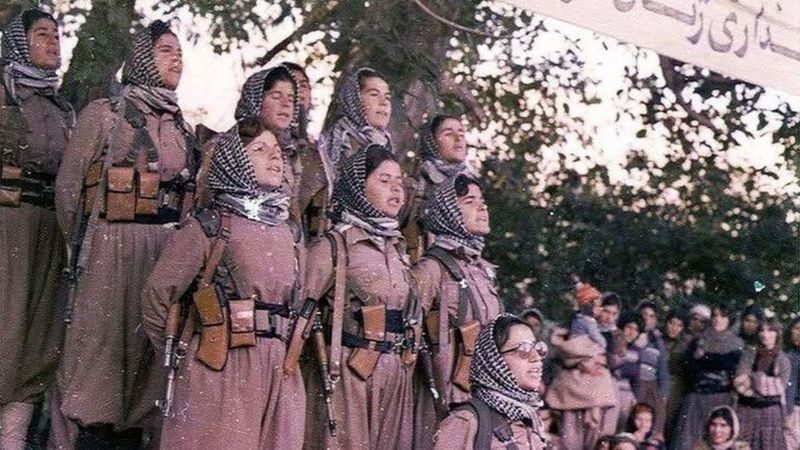
The recent publication of a video interview featuring Rivar Abdanan, the spokesperson for the Free Life Party of Kurdistan (PJAK), has once again brought the controversial issue of minors under the age of 18 present in paramilitary structures to the forefront of media and civil society attention. While Abdanan heavily relies on concepts such as “democracy” and the “Woman, Life, Freedom” slogan to deny child recruitment—describing their presence as merely “supportive and educational”—field documentation reveals a starkly different and shocking reality. The deep contradiction between the party’s official narrative and the evidence compiled in the book The Lost, alongside documented cases like that of Asrin Mohammadi, raises serious, unanswered questions regarding enforced disappearances and the violation of international protocols.
In an effort to analyze this profound rift between rhetoric and reality, the Iranian Kurdistan Human Rights 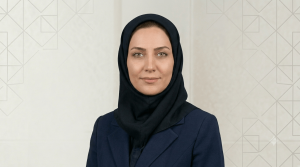 Watch (IKHRW) reached out to Dr. Rozhin Sarmadi, a prominent researcher in international humanitarian law. In this challenging conversation, we explore how the mask of “education” is utilized as a tool to justify the fundamental violation of child rights, and why the lack of transparent accountability and the uninspectable nature of these camps remain the greatest obstacles to validating the democratic claims of this movement.
IKHRW: Dr. Sarmadi, recently PJAK spokesperson Rivar Abdanan attempted to draw a line between “official membership” and “the presence of minors in educational centers.” He claims the official membership age is 18, yet he justifies the presence of individuals below this age under titles like “educational support” and “providing refuge.” From a legal standpoint, how valid is this distinction?
Dr. Rozhin Sarmadi: This distinction is nothing more than a linguistic maneuver designed to evade international legal liabilities. Under the protocols of the Geneva Call—a framework that non-state armed groups often claim to adhere to—any direct or indirect link between a child and an armed structure, whether labeled as education, logistics, or refuge, constitutes a clear-cut case of child soldiering. When a minor is held inside camps controlled by an armed group, they are systematically stripped of their fundamental right to remain disengaged from armed conflict. Mr. Abdanan is using softened vocabulary to deny a straightforward legal truth: a military environment can never be educational or protective for a child; it is purely a breeding ground for militarization.
IKHRW: He also claims that these adolescents seek refuge with them due to “social oppression” or “family problems.” However, our field documentation at IKHRW, particularly the cases recorded in the book The Lost, tells an entirely different story. What is your analysis of this contradiction?
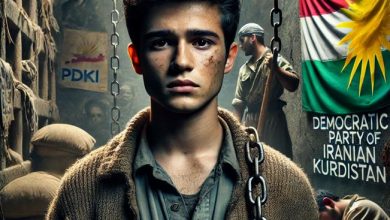
Dr. Rozhin Sarmadi: This is precisely where PJAK’s official narrative completely collapses. The book The Lost is a compilation of thoroughly documented cases of minors who were not seeking asylum, but were rather enticed and recruited through deceptive promises such as “studying abroad” or “working in Europe,” only to vanish entirely. What we are dealing with here is the phenomenon of enforced disappearance. How can families whose children vanished without their knowledge or consent, and who have had zero contact with them for years, believe the claim of “voluntary refuge”? If these minors are truly refugees, why are they denied the right to communicate freely with their parents? This clearly demonstrates that the situation has mutated from “refugee protection” into the systematic exploitation of child vulnerability.
IKHRW: Abdanan emphasized in the interview that these individuals play no role in military operations. Yet, the announced deaths of minors like Asrin Mohammadi, Naser Alizadeh, or Benyamin Farajzadeh in armed conflicts directly contradicts this. How do these pieces fit together?
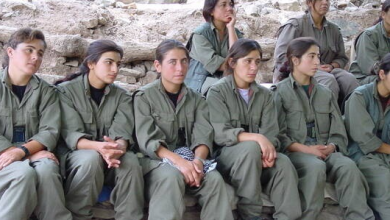
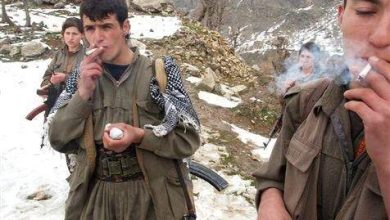
Dr. Rozhin Sarmadi: This is the most damning evidence violating PJAK’s claims. The critical question must be asked: if these children were strictly staying in “educational centers,” how is it that their official photographs in full military uniform, holding weapons, are published in the organization’s official announcements as killed combatants? The cases of individuals like Naser Alizadeh or Benyamin Farajzadeh serve as living proof that the boundary between an “educational center” and the frontlines of combat is practically nonexistent within these groups. Instead of being in classrooms, minors recruited at a tender age end up on battlefields, a reality that cannot be sanitized by any justification, including “legitimate defense.”
IKHRW: We have repeatedly demanded independent oversight and access to these camps but have received no response. Why is transparency so incredibly difficult for these groups to provide?
Dr. Rozhin Sarmadi: Because transparency marks the definitive end of these fabricated narratives. If these centers are purely supportive, as Mr. Abdanan claims, why are independent journalists, neutral international bodies, and human rights monitors barred from visiting them? Why is there no permission for independent interviews with these minors away from the presence of group cadres? In the absence of independent monitoring, all of PJAK’s democratic assertions remain deeply compromised. The massive gap between what they broadcast in the media and what actually transpires within their closed, isolated camps can only be bridged through independent inspection—something these groups deeply fear.
IKHRW: In conclusion, how do you view the correlation between these practices and the slogan “Woman, Life, Freedom,” which Rivar Abdanan repeatedly took pride in?
Dr. Rozhin Sarmadi: It is a deeply painful paradox. The “Woman, Life, Freedom” slogan is rooted in human dignity and emancipation, yet these groups’ actions regarding children reproduce the exact same oppression and subjugation they claim to fight against. You cannot champion the liberation of women while simultaneously robbing young girls of their childhood and making them disappear into sectarian structures. Democracy begins with accountability. Until PJAK answers to grieving families and grants them access to their children, utilizing that slogan is merely a propaganda tool to camouflage systemic human rights abuses. No political ideology can ever legitimize linking child soldiering to democracy.
IKHRW: Thank you for your time, Dr. Sarmadi. What emerges clearly from this conversation is the urgent need to move past political rhetoric and confront the harsh truth of human rights violations hidden in remote mountain ranges. The open cases in the book The Lost and the anxious eyes of families whose children vanished under the ambiguity of “educational centers” remain a living testament that cannot be erased by any interview or press release.
Accountability is not an optional choice; it is a foundational obligation for any movement claiming to fight for liberation. The Iranian Kurdistan Human Rights Watch reiterates that the true metric of any democratic movement lies not in the resonance of its liberating slogans, but in its practical adherence to protecting the most defenseless segment of society—children—and respecting the right of families to know the fate of their loved ones. We remain steadfast in our demand for independent international monitoring of these camps and the unconditional release of all minors, holding onto the firm belief that no political cause is higher than the fundamental right to life and childhood.