
By: Dr. Ali Farahmand
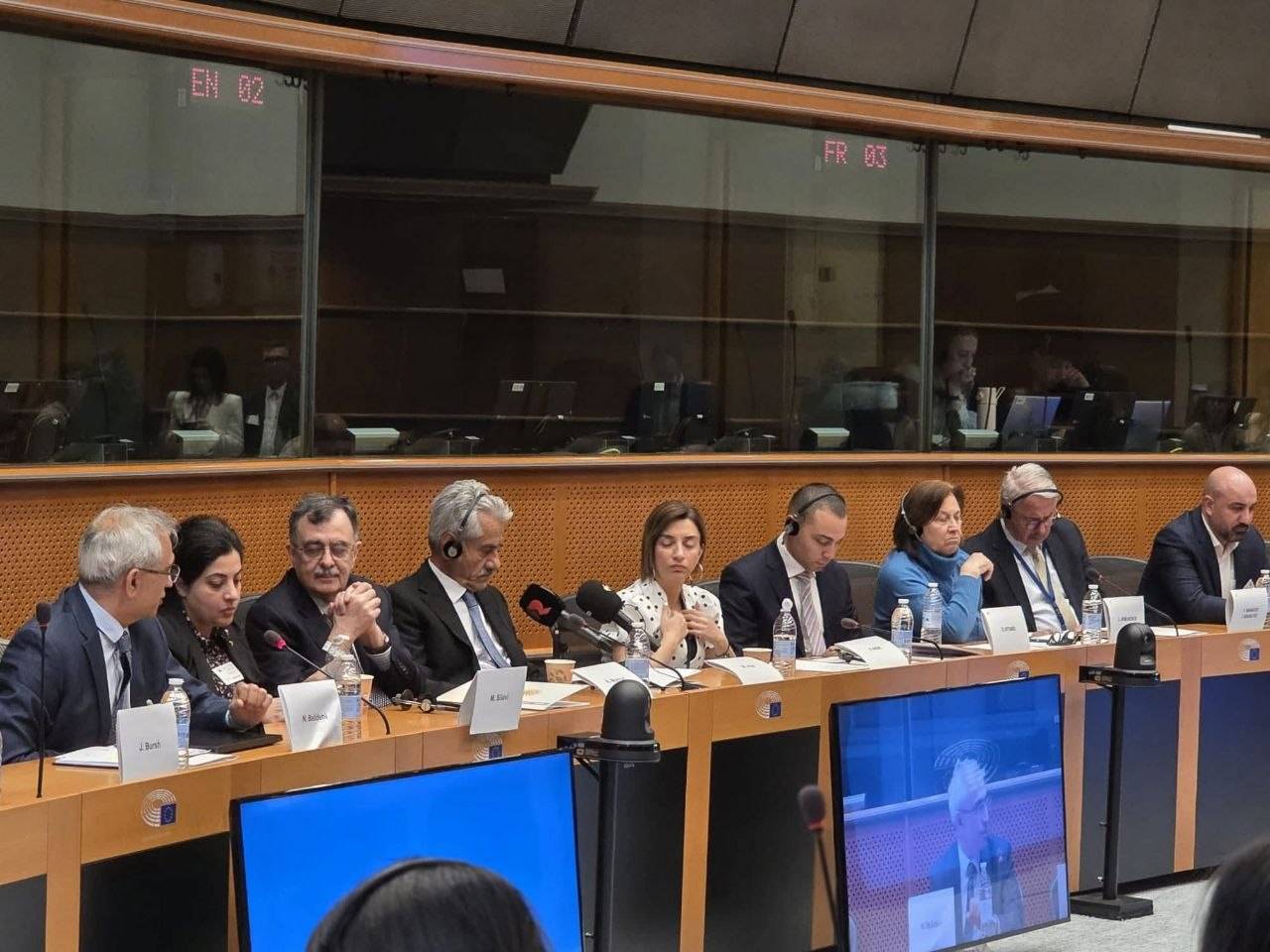
The recent session in the European Parliament, specifically within the Committee on Foreign Affairs—featuring individuals such as Abdullah Mohtadi, leader of the Komala militants, and Mostafa Hejri, leader of the Democratic Party of Iranian Kurdistan militants—has become a stage for a glaring contradiction between rhetoric and action in the international system, rather than a platform for strengthening human rights discourse.
The Iranian Kurdistan Human Rights Watch (IKHRW), relying on a collection of testimonies, field documentation, and recorded narratives of victims (all of which are available on the IKHRW website), declares that some of these individuals and their respective groups face serious and ongoing allegations regarding the violation of fundamental human rights.
Clear Violations of the Convention on the Rights of the Child
Documentary evidence points to the recruitment and use of children and adolescents in armed structures, the forced detention of individuals in inhumane conditions, and the exercise of organized violence by these groups. These actions, if substantiated, constitute a direct violation of obligations under the Convention on the Rights of the Child and its Optional Protocol on the involvement of children in armed conflict—documents that are legally binding, not merely advisory.
Furthermore, these groups have engaged with mechanisms such as Geneva Call, signing formal “Deeds of Commitment” to:
-
Prohibit the use of child soldiers;
-
Cease violence against civilians;
-
Refrain from using anti-personnel mines.
The violation of these commitments is not only a disregard for the fundamental principles of International Humanitarian Law but also an undermining of a recognized international mechanism designed to hold non-state actors accountable.
The Issue of Interpol Red Notices and Rule of Law
The matter of Interpol Red Notices carries double significance in this case. A “Red Notice” is an official international request to locate and provisionally arrest individuals pending extradition—one of the most vital mechanisms for international police cooperation.
Despite the fact that such notices have been issued by Interpol for some individuals present at this meeting, and that domestic Iranian courts have issued arrest and extradition warrants following complaints from private plaintiffs, judicial follow-ups have remained fruitless. Ignoring these warrants by European governments is not merely an administrative error; it is a blatant breach of international cooperation obligations and a weakening of the rule of law at a transnational level.
Critical Questions for the European Human Rights Conscience
In light of these circumstances, several legal questions arise:
-
How do individuals facing serious charges, and who are subject to international prosecution mechanisms, travel freely within European territories?
-
On what legal basis are these individuals granted access to official podiums within the European Parliament?
-
Most importantly, if human rights are the criteria, why are they applied selectively based on geopolitical considerations?
The Iranian Kurdistan Human Rights Watch explicitly states that the credibility of the European Union depends on a non-discriminatory adherence to the principles it claims to uphold. Human rights are not instruments of foreign policy to be applied or suspended according to geopolitical interests.
Responsibility of the Belgian Government and the UN Human Rights Council
As the host nation, the Belgian Government has an obligation under international cooperation frameworks, including Interpol, to transparently investigate the legal status of individuals within its territory and, if necessary, take appropriate judicial actions. Any leniency in this regard amounts to creating a “safe haven” for individuals who must be held accountable before the law.
Furthermore, the UN Human Rights Council must address independent, impartial, and evidence-based inquiries as an urgent necessity. Continued silence or the application of double standards effectively broadcasts a message of impunity to human rights violators.
Conclusion: The Victims’ Right to Justice
The IKHRW emphasizes that it holds no position in political conflicts and stands solely on one fundamental principle: The right of victims to access justice. These victims are often from marginalized backgrounds and rural areas, lacking effective access to legal mechanisms. Justice must not be sacrificed at the altar of politics.