
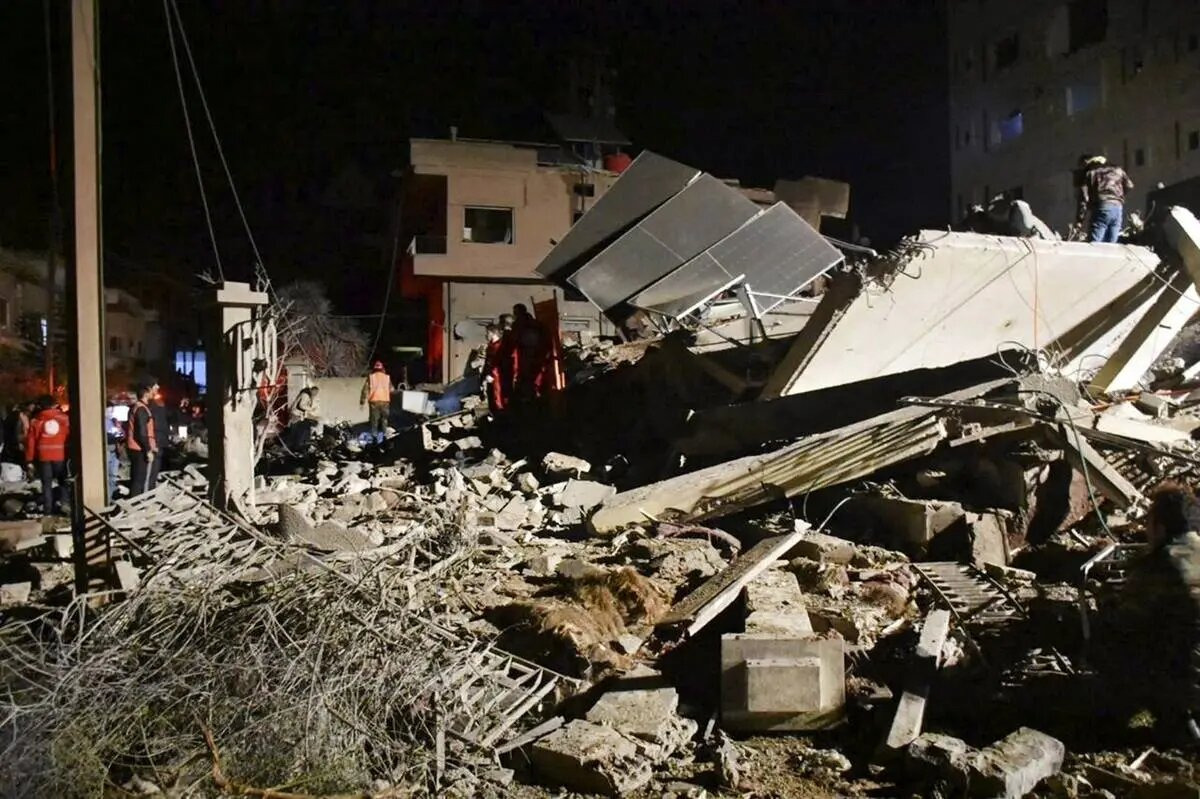
According to official reports, at 2:00 AM on Wednesday, March 25, 2026, airstrikes attributed to the United States and Israel targeted a residential complex belonging to Tabriz Railway employees. Under the definitions of International Humanitarian Law (IHL), this location is classified as a “Civilian Object” with residential-service utility. Preliminary data indicates that this incident resulted in the deaths of 9 civilians and extensive destruction of civilian infrastructure.
Violations of Peremptory Norms and Fundamental Principles of International Law
From the perspective of international treaties and IHL, this military action involves the following criminal titles and violations:
-
Violation of the Principle of Distinction: Pursuant to Articles 48 and 51 of Additional Protocol I (1977), the distinction between military objectives and civilian objects is mandatory. Targeting residential quarters that lack any proven military utility is a direct breach of this peremptory norm.
-
Violation of Common Article 3 of the Geneva Conventions (1949): This article emphasizes the absolute protection of persons taking no active part in hostilities. The intentional infliction of harm upon civilian life is a departure from the mandatory codes of conduct in the laws of war.
-
Immunity of Civilian Property (Article 52 of the Additional Protocol): Residential homes are explicitly excluded from the scope of military objectives. Attacking these premises without observing the principles of proportionality and precaution entails heavy international responsibility for the acting states.
Criminal Responsibility and Prosecution under the Rome Statute
At the level of international criminal law, Article 8 of the Rome Statute (International Criminal Court – ICC) defines the intentional targeting of civilians or civilian objects in the context of armed conflict as a “War Crime.” Furthermore, this incident stands in total conflict with Article 6 of the International Covenant on Civil and Political Rights (ICCPR) regarding the “inherent right to life” and the prohibition of the arbitrary deprivation thereof.
Legal Conclusion
The attack on the Tabriz Railway residential complex, due to the failure to observe the threefold principles of distinction, proportionality, and precaution, transcends a mere military act and constitutes a criminal offense. Under the rules of “State Responsibility,” the perpetrators are obligated to provide legal accountability and full reparation for both material and moral damages to the victims. Identifying the commanders and executors of this attack is an unavoidable necessity in the pursuit of international justice.