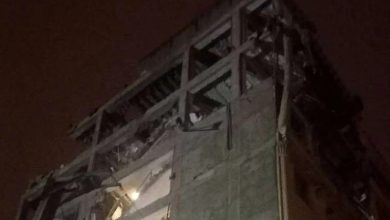

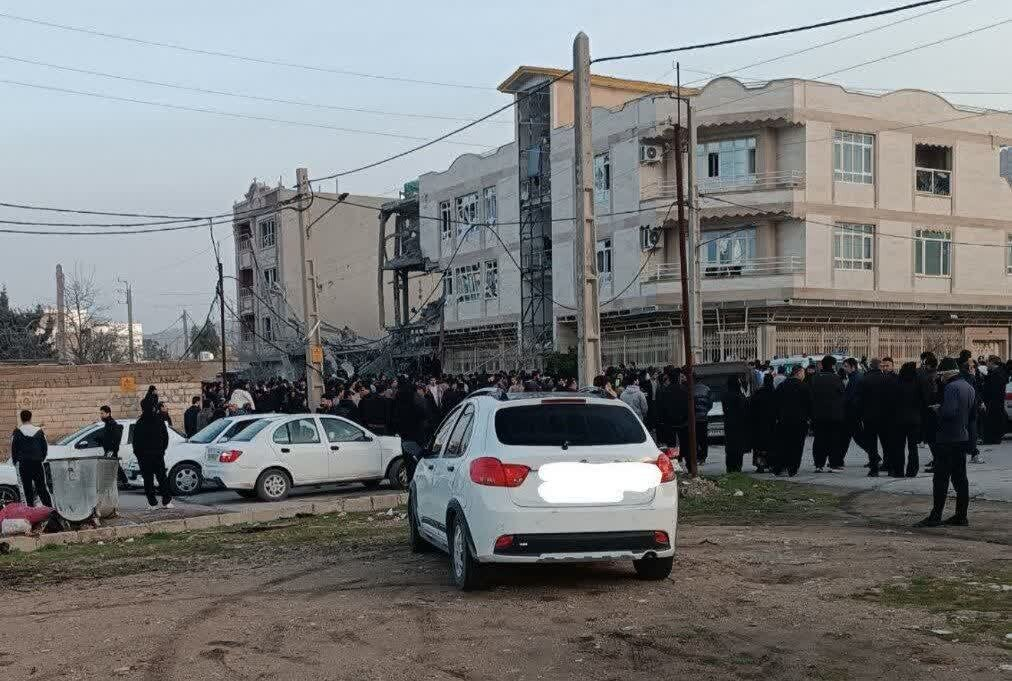
Around 3:00 AM on March 14 (23 Esfand), local sources reported an airstrike targeting a residential building in Eyvan, Ilam province. The massive explosion resulted in the total destruction of the building, claiming the lives of six family members.
Victims of the Eyvan Tragedy: From a Physician to a 6-Month-Old Infant
The victims of this tragic incident, who perished during the recent wave of attacks, are:
-
Ali-Nazar Mahmoudi
-
Maryam Mohammadi
-
Dr. Afshar Khosravi
-
Elham Mahmoudi
-
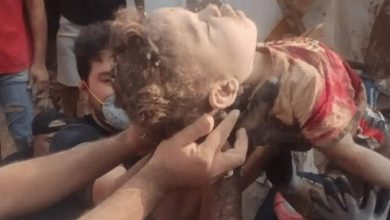
Two young children: Rayan Khosravi (5 years old) and Nila Khosravi (6 months old).
This event raises serious questions under International Humanitarian Law (IHL) that demand accountability from international bodies.
Legal Analysis: Violation of the Principles of Distinction and Proportionality
The principle of “Distinction,” as outlined in Article 48 of the First Additional Protocol to the Geneva Conventions (1977), requires parties to a conflict to distinguish between military objectives and civilians. Furthermore, Article 51(2) strictly prohibits any direct attack on civilians.
Additionally, the principle of “Proportionality” under Article 51(5)(b) forbids attacks where the incidental civilian loss would be excessive in relation to the concrete and direct military advantage anticipated. Article 57 also emphasizes the duty to take all feasible precautions to minimize civilian harm. Moreover, under Article 52(1), civilian objects—including residential homes—must not be the object of attack.
The Right to Life and the Convention on the Rights of the Child
Beyond these rules, Article 6 of the International Covenant on Civil and Political Rights (ICCPR) recognizes the inherent right to life. The Convention on the Rights of the Child also stresses special protection for children during armed conflicts. The presence of 5-year-old Rayan and 6-month-old Nila among the victims highlights the profound violation of these international conventions.
Is the Eyvan Attack a War Crime?
If this building was not a military objective, or if the civilian casualties were predictable and disproportionate, such an attack could constitute a violation of the fundamental rules of IHL. In some cases, it may be classified as a “War Crime” under Article 8 of the Rome Statute of the International Criminal Court (ICC).
The deaths of Ali-Nazar, Maryam, Afshar, Elham, and the young children, Rayan and Nila, in the very home that should have been their sanctuary, serve as a grim reminder of the vital importance of strict adherence to the rules designed specifically to prevent such catastrophes.