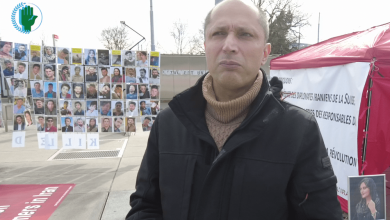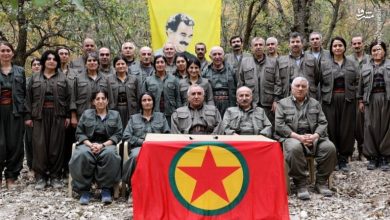

Images published from a border area in the Kurdistan Region of Iraq have raised serious questions about the activities of armed forces affiliated with the Democratic Party of Iranian Kurdistan (PDKI) along routes used by kolbars. In the footage, armed individuals identified as members of the party speak about their deployment in the area and collecting money from kolbars. Field inquiries and interviews with several kolbars also corroborate these reports. The matter requires an official, transparent, and independent investigation.
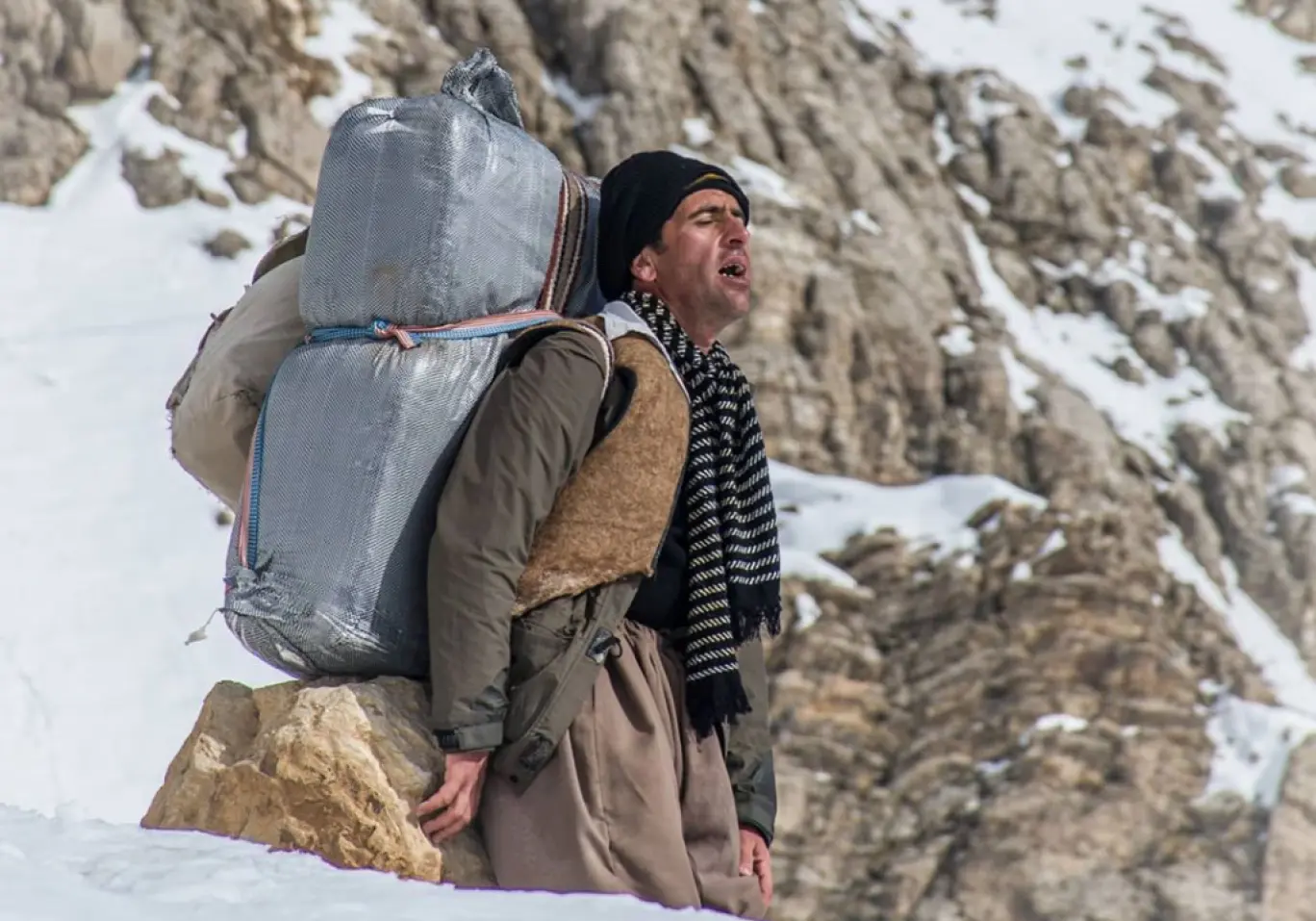
Whatever term is used to describe these payments, it does not change their nature. Taxes and lawful duties are collected by institutions vested with public authority, not by an armed group that, outside Iranian territory, exercises control over a border route solely through its armed presence. Nor are kolbars in a position where payments demanded from them can reasonably be regarded as customary commercial fees. Most come from border communities where a lack of economic opportunities has driven them to undertake arduous and dangerous work. Numerous human-rights reports have highlighted their vulnerability. The issue therefore goes beyond a financial matter: it concerns an armed group exercising power over people in a far more vulnerable position.
This is not unprecedented. Years ago, a member of the party’s Central Committee referred to these payments as “customs duties” in an interview and claimed that kolbars paid them willingly. This precedent adds significance to the newly published images and raises the question of whether the payments represent isolated incidents or an established practice.
From a legal perspective, international human-rights law and, where the relevant conditions are met, international humanitarian law protect people who are not participating in hostilities against coercive treatment. Determining the precise legal classification of this conduct requires an examination of the facts, the circumstances in which the payments are collected, and the degree of coercion involved. However, merely possessing weapons does not confer lawful authority to impose financial obligations on unarmed individuals.
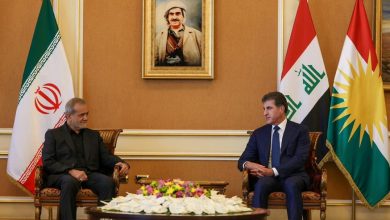
This situation raises a direct question for the Kurdistan Regional Government (KRG): Which authority within the Kurdistan Region is responsible for enforcing the law and controlling armed groups? If these authorities are responsible, how has an Iranian armed group been able to establish a presence along border routes and collect money from kolbars? If this has occurred without the authorization of regional authorities, why has it continued? And if local officials are aware of it, what is its legal basis?
The KRG cannot simultaneously emphasize the rule of law and border security while remaining indifferent to the emergence of informal systems for collecting payments by armed groups within its territory. The demand of Erbil is clear: an immediate and transparent investigation, an end to any coercive collection of payments, an examination of the responsibility of the individuals and institutions involved, and public disclosure of the findings.
The federal government of Iraq cannot treat this solely as a matter between the Kurdistan Region and an Iranian political group. The activities of a foreign armed group on Iraqi territory, and its exercise of control over citizens’ economic activities, also concern Baghdad’s sovereign responsibilities. The Iranian government likewise has a responsibility to protect the rights of its citizens. It should pursue this responsibility through formal diplomatic and legal channels, rather than limiting its response to political protests.
There is also a more fundamental issue: defending the rights of the people of Kurdistan has meaning only if those people are protected from the power of armed actors themselves. It is not possible to speak of freedom, social justice, and human dignity while demanding money, under the shadow of an armed presence, from people who have turned to kolbari to earn a living. One of the first tests of any claim to “defend the people” is how a group treats those same people when the balance of power is unequal.
The demand directed at the Democratic Party of Iranian Kurdistan is equally clear. If it confirms that payments are being collected, it should disclose their legal or other basis, the amounts involved, how they are determined, which authority makes the decisions, and what lawful authority it claims to exercise on the territory of the Kurdistan Region. If it denies that the payments are being collected, it should explain the published images and reports and explicitly prohibit the coercive collection of any money from kolbars.
The border must not become an area beyond the reach of the rule of law. Before being a “kolbar,” a person is a human being with dignity and rights. Poverty does not authorize the extraction of protection money, and vulnerability must not become a source of income for any armed group.