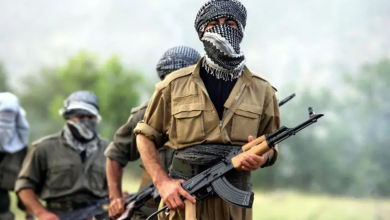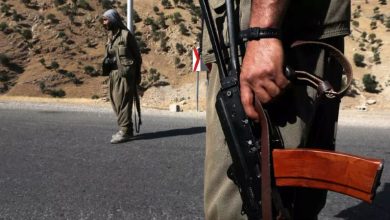

The interviewee’s name in this report has been changed to “Hira” to protect her life. Similarly, her city of residence has been altered, with “Marivan” serving as a pseudonym for her hometown. This report is based on an audio and video interview with Hira, conducted at her home in one of her city’s neighborhoods. In this interview, Hira recounts in detail her experience of encountering and connecting with members of the Kurdistan Freedom Party (PAK), leaving Iran at fifteen, being transferred to the group’s bases in the Kurdistan Region of Iraq, living within the organization’s military structure, facing threats, torture, solitary confinement, making repeated escape attempts, witnessing deaths and suicides among members, and ultimately making her own escape.
Summary of Part I: Hira, a young girl introduced under a pseudonym for her safety, met a member of the Kurdistan Freedom Party (PAK) via Instagram at the age of fifteen. A friendly interaction gradually turned into threats; she was pressured to join the group under the warning that her family’s safety would be compromised. Following two failed attempts to flee her home and being returned by the police, she eventually managed to escape and cross into the Kurdistan Region of Iraq through mountainous border routes. There, under a false identity with an inflated age, she entered the group’s primary base near Koye, was assigned an organizational alias, and witnessed the military structure, severe gender discrimination, mobile phone prohibitions, forced marriages, and the gradual collapse of her initial illusions regarding “freedom” within the organization.
Part II
Hira was fifteen years old at the time, while the man proposing to her was, according to her account, around thirty-two or thirty-three years old. She notes that whenever a proposal was rejected, the commanders’ behavior shifted systematically. Initially, they attempted persuasion; when that failed, they resorted to humiliation, insults, and profanity, ultimately escalating to physical beatings and torture. Officials deliberately targeted a recruit’s personal vulnerabilities, past history, and family background to force compliance.
According to Hira, many young girls eventually surrendered to these forced marriages out of terror of facing even more severe torture. One specific case Hira details involves a girl from Sanandaj named “Delzhin.” Her real name was Shooh, and she was from the same hometown as Hira.
Delzhin had confided in Hira about her intentions to escape and had previously attempted to flee the compound. Delzhin managed to reach a mountain peak, but group operatives dressed in local Kurdish attire ambushed and detained her along the route. Hira explains that because a senior commander harbored an interest in Delzhin, she was not killed, but she was brutally tortured, resulting in a broken arm.
Hira personally witnessed Delzhin being held in solitary confinement. Her broken arm hung unsupported, while her healthy hand was handcuffed to an iron bar welded onto a massive safe box, completely immobilizing her. Delzhin was provided only one meal a day. After enduring nearly a month of torture under these conditions, Delzhin succumbed to desperation and agreed to marry the commander.
Reflecting on the organizational environment, Hira states: “The PAK organization was truly like a Kurdish version of ISIS.” She explains that while the group publicly promoted freedom and free education, no trace of freedom existed in practice. Children who had entered the camp with their mothers as young as three or four years old and grew up in that environment were forbidden from attending local Iraqi schools or receiving an education.
Hira also describes the harsh physical conditions of the camp. Recruits were subjected to grueling military drills, forced labor in Hussein Yazdanpana’s agricultural fields and orchards, hauling heavy stones, and participating in night exercises known as “Night’s Wrath.” Failure to execute these tasks flawlessly resulted in severe penalties. For a fifteen-year-old adolescent with a frail build, these physical demands were agonizing.
After some time, camp officials recognized her athletic background in judo and reassigned her from regular Peshmerga duties to an administrative desk job managing and recording guard duty rosters. Hira accepted the role to alleviate the severe physical strain, maintaining her internal detachment and deep-seated resentment toward the organization.
While managing the guard duty rosters, an opportunity arose for Hira to see her family, who had traveled to Erbil in the Kurdistan Region of Iraq to find her. While the main bases were situated in the mountains around Koye, the group maintained a symbolic facility in Erbil to conduct family visits, creating a false impression that recruits were residing comfortably in the city.
Prior to the meeting, commanders issued strict instructions: “You have no right to mention that our bases are in the mountains; you must not say you regret your decision or that conditions are difficult. You must state that everything here is excellent and that you must remain for seven years before you can return.”
Hira emphasizes that the seven-year rule was merely a deception to instil false hope, as members were never permitted to leave. She cites the example of a woman named “Atousa,” who had been held in the organization for ten years, serving as a military supervisor and prison warden. Because of her exposure to sensitive operational knowledge, Atousa was strictly forbidden from leaving the group.
For the family visit, Hira was brought to Erbil. The wife of Hussein Yazdanpana was present during the meeting to project a propaganda image of warm, familial relationships between leadership and recruits. However, upon seeing her family, Hira immediately blurted out in front of Hussein Yazdanpana’s wife: “I want to go back! I don’t want to stay here anymore!”
To appease the family, Hussein Yazdanpana‘s wife claimed: “Do not worry, I will not let it take even three years; I will send her back home to you sooner.”
Hira had managed to save a small sum of money and intended to give it to her family, knowing they faced financial hardships and that traveling to Iraq had incurred significant expense. However, officials prohibited her from handing over the funds.
Immediately after returning from the visit, officials stripped Hira of her administrative responsibilities and confiscated her saved money. She was then subjected to hours of intense interrogation regarding why she had spoken against group policy during the family meeting.
(To be continued…)