
-
Women: The Equality Slogans and the Reality of Discrimination
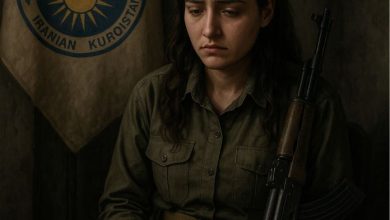
What was the situation of women in the Democratic armed group? I only saw one instance where a decision favored a woman: when a woman was having trouble with her husband, they supported her. Of course, even in that case, there might have been other motives. Perhaps they had their eyes on her and saw her as bait they wanted to keep for themselves. In that environment, a woman was sometimes viewed as a commodity, though they tried not to make this outlook and behavior too blatant. In the Central Committee, almost everyone was a man. Perhaps there were two women, but their number was very small. Whichever organ you visited, its official in charge was a man. Men did not allow women to become leaders. The bylaws outlined rules regarding the treatment of women, but in practice, they were not implemented. There was no one to say, “This is your own rule; you wrote it and held a congress for it.”
Did you experience discrimination against women in everyday interactions as well? Yes. For example, a woman said she needed something and went to accounting or security to request a loan, asking for monthly deductions from her salary. But the official reviewing the loan request told her, “Why do you need a loan? Come let me give it to you myself; be with me.” Such encounters demonstrated that women were not in an equal position. In places where loan or financial assistance requests were reviewed, personal positions were abused.
Did you know about violence against women in the camp? One of the girls was raped there. When it was discovered, their reaction was to expel that Peshmerga. But after a short time, he returned and became a Peshmerga again. The girl killed herself. This incident was extremely bitter for me. Whenever they spoke of “Woman, Life, Freedom”, women faced such a reality on the ground. The freedom they talked about did not mean security and respect for women.
Were concepts like equality, secularism, and federalism discussed in the training sessions? Yes, they talked about federalism, secularism, and various political concepts. Sometimes I wondered what these concepts meant in practice. For instance, a girl around 13 years old had come from remote villages of Marivan. She had fled from her 50-year-old fiancé. She could neither read nor write. Yet, they discussed complex political concepts with such a girl. My question was, how did these concepts help her real life? Before anything else, she needed security, freedom, education, and a normal life.
Were underage individuals there as well? Yes, very many. Most of them were under eighteen. Even thirteen-year-olds were present, and they faced very harsh treatments. Like everyone else, they were forced to stand guard and perform grueling, slave-like labor. However, if the individual was a girl, conditions were even harsher. Girls were placed in a vulnerable position and could become prey for commanders who coveted them, leaving their fate uncertain. Ultimately, they became victims of these conditions. On the other hand, lacking support or advocates, they dared not speak about what happened to them. Of course, this was against the law, but what law?! Was any law actually implemented at all?
Labor, Guard Duty, and Life Without Choice
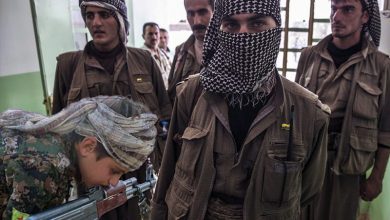
What constituted the major part of daily life for individuals? Guard duty, cooking, cleaning, and camp chores. There was political and military training, but another major part of life consisted of everyday tasks and responsibilities we had to fulfill. I call this part “slavery.” Not because I want to use a specific term, but because we were practically in a situation where we had to work, stand guard, and obey orders without any real right to choose or object. If they talked about equality, everyone was equal in enduring suffering and pressure; but commanders and specific individuals were separate from these conditions.
Did people come to the camp with different motives? Yes. Many came not for struggle or ideology, but for other reasons. Some struggled with addiction, and the camp resembled a rehabilitation center for them. Some had managed to overcome their addiction. For others, even a single warm meal or escaping their previous life conditions mattered. Alongside these individuals, others came due to financial problems, criminal records, or fear of arrest. Everyone was placed in the same environment without their conditions and needs being properly differentiated. I believe many who were there felt lonely and rejected in their own society even before coming to the camp. No one followed them or tried to secure their return.
Why Did I Leave?
What made you decide to leave? I had no fear of assault; I knew how to protect myself. I had no aversion to working or standing guard. For the price of three hot meals, it was worth it. However, when you reach a point where life itself becomes a trouble, food and work are no longer the only things that matter. Other things gain importance: existence, the sense of being, and justice. Not the kind of justice where they talk of equality, only for it to end in the same ideology and command structure. To me, justice meant Bita having a morsel of bread and being able to speak. If there is a law, it should apply to everyone; not a system where a commander does whatever he wants and you cannot even lodge a complaint against him.
After returning, did your perspective on that experience change? Yes. I am now studying law at university. After returning and experiencing harsh life lessons, I realized that if I am to claim any rights, I must fight for them right here. I decided to become a lawyer. During this time, I have learned a great deal about rights. Looking back from a distance, I view many of the behaviors I experienced there as humiliating and discriminatory.
Did you return to Iran on April 22nd? Yes. After returning, I spent some time dealing with my case files and then thought about continuing my education. Now I want to study law and change the course of my life.
Conclusion
Bita Hadi Ghoroukhi’s account of her time in the Democratic armed group begins with poverty and family vulnerability—conditions that made her hope for a better life in the camp. Yet what she recounts next is an experience of restricted individual liberty, forced obedience to orders, discrimination in task distribution, limited access to phones and free media, health challenges, and unequal treatment of women. In her narrative, a serious gap existed between slogans of equality and justice and the daily routines of the camp. Bita speaks of a structure where commanders held sweeping authority, individuals lacked effective means of protest, and personal relationships influenced responsibilities and living conditions. This experience raises fundamental questions regarding human dignity, individual freedom, the right to access information, healthcare rights, gender equality, and official accountability within armed structures.