
Author: Dr. Pourshams
In recent years, Kurdish armed groups have transformed the image of the armed woman into one of their most vital propaganda and ideological tools. However, the testimonies of former members, reports from families, and human rights studies reveal that beneath this media-driven veneer lie grave questions regarding personal freedom, the right to choose, and women’s rights.
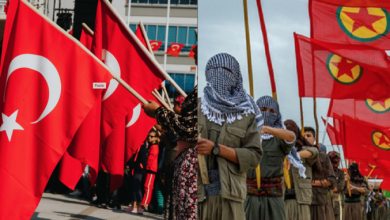
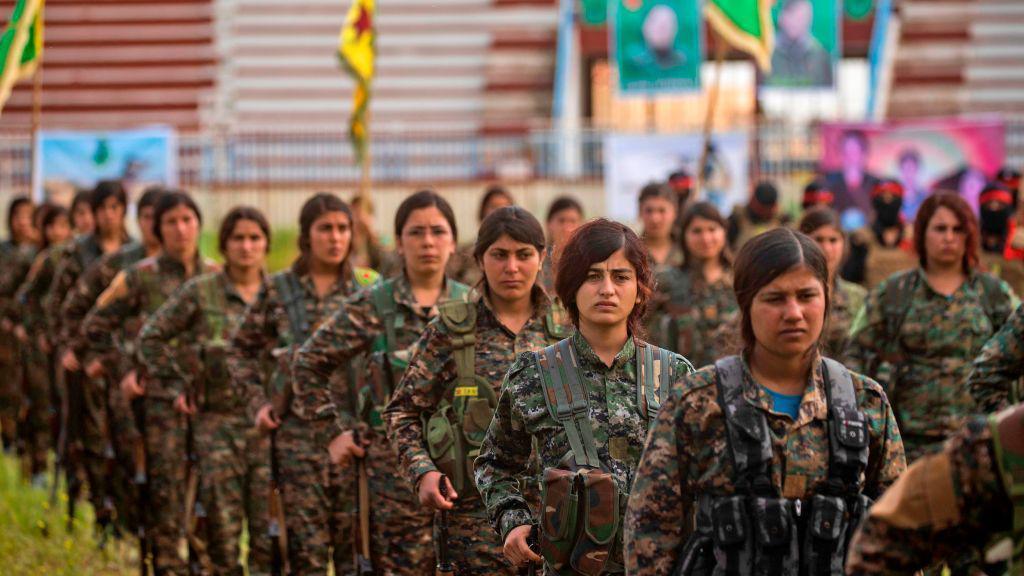
Recently, the depiction of armed women within the ranks of groups like the PKK and its affiliated wings has become one of the most recognizable media symbols in the Middle East. Images of women in military fatigues holding assault rifles are frequently framed by international media as a testament to “women’s liberation” and “gender equality”—a narrative that holds considerable political and media appeal for Western public opinion.
Yet, moving past this promotional facade, the lived experience of many women currently or formerly embedded within these structures exposes far more complex and distressing dimensions. Various human rights reports and accounts published by defected members indicate that life inside these groups is not confined to political or military participation; rather, it is dictated by a system of rigorous ideological discipline, organizational control, and severe restrictions on personal autonomy.
In a substantial portion of these groups’ propaganda, the woman is represented not as an individual with an independent identity, but as an ideological symbol for the organization. Media images of armed women, revolutionary anthems, organizational ceremonies, and promotional literature predominantly serve to showcase a modern, egalitarian face of the group—a face that, in many instances, is less a reflection of the actual lives of these women and more a component of a political and media legitimization strategy.
Several women who have defected from these groups have highlighted in their accounts the restrictions placed on their right to choose their lifestyle, the absolute prohibition of forming a family, the strict control over emotional relationships, and intense ideological pressure. In these testimonies, leaving the organization is described not as a simple personal decision, but as an arduous and often perilous process. Over the past years, numerous families have also stated that their communication with their daughters was either completely severed or severely restricted after they joined these groups.
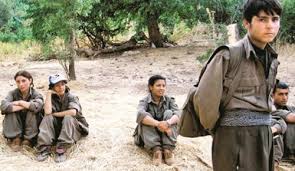
In Kurdish-populated regions, the recruitment of adolescent girls into armed groups has consistently remained one of the most controversial topics. Although these groups habitually characterize membership as entirely voluntary, human rights activists and families argue that poverty, social pressure, an intense ideological environment, and the volatile conditions of the region heavily influence the decisions of minors, casting serious doubt on the concept of “free choice.”
A major portion of human rights criticism targets the recruitment and utilization of minors within armed structures. International bodies have repeatedly issued warnings over the past years regarding the presence of children and adolescents in certain branches operating under the PKK umbrella. Under such circumstances, the romanticized portrayal of the “female fighter” can obscure the harsh reality of the vulnerability of teenage girls in military and highly ideological environments.
Critics also argue that the narrative propagated by these groups regarding “women’s liberation” suffers from an inherent internal contradiction. On one hand, they place emphasis on the independence and liberation of women; on the other hand, highly hierarchical and rigid ideological structures severely restrict independent decision-making. In such an environment, a woman is celebrated only as long as she remains strictly within the ideological framework of the organization.
This phenomenon is not confined to the military sphere. In many cases, the visibility of women in the media and the propaganda apparatus of these groups serves an entirely political function. The image of the armed Kurdish woman has become one of the most effective vehicles for garnering media and political backing in Europe and the United States. Critics argue that through this process, the suffering, restrictions, and genuine experiences of many women are effectively erased behind a heroic, propaganda-driven image.
From a human rights standpoint, the core issue is not merely the presence of women in political or military structures, but the extent to which they enjoy the right to free choice, the right to defect, the right to communicate with their families, and the right to independently chart their life path. Whenever armed structures view women as components of an ideological and propaganda machine rather than human beings possessing individual rights, serious human rights violations occur.
Examining the experiences of women in certain Kurdish armed groups reveals a significant chasm between media representation and organizational reality. Under these conditions, any analysis of the status of women must not stop at the surface level of promotional imagery and political slogans; instead, it must center on their lived experiences, individual rights, and human dignity—issues that remain conspicuously absent from the official narratives of these groups.