
The legal thesis titled “Rätten till internationellt skydd: Vem är flykting eller alternativt skyddsbehövande enligt utlänningslagen och vem ska uteslutas?” (The Right to International Protection: Who is a Refugee or Person in Need of Subsidiary Protection Under the Aliens Act, and Who Should Be Excluded?), authored by law scholar Donatello Grgić at Mid Sweden University, addresses a pivotal question in modern international law: How do legal systems distinguish between victims of persecution, war, and human rights violations, and individuals who have themselves participated in serious international crimes? Published in 2025, the research examines the Swedish Aliens Act, the 1951 Refugee Convention, the EU Qualification Directive, and relevant jurisprudence to analyze the criteria for granting international protection alongside the legal grounds for exclusion.
In recent decades, the escalation of internal armed conflicts, the expansion of non-state armed groups, and forced displacement have confronted refugee protection systems with a complex challenge: Is every individual fleeing a war zone automatically entitled to international protection, regardless of their past conduct? Under international law, the answer is negative. While designed to safeguard victims, the international refugee regime embeds explicit legal mechanisms to prevent the abuse of asylum status by individuals implicated in grave international crimes. Grgić’s research emphasizes that refugee law maintains a crucial balance between the need for protection and individual criminal responsibility.
According to the study, under Swedish law, an individual qualifies for refugee status if they are outside their country of origin and possess a well-founded fear of persecution based on race, nationality, religion, political opinion, gender, sexual orientation, or membership in a particular social group, and are unable or unwilling to avail themselves of the protection of that country. Furthermore, individuals facing a real risk of serious harm—such as torture, inhuman treatment, or generalized violence arising from armed conflict—may be granted subsidiary protection status.
However, this normative framework sets strict boundaries for individuals who have engaged in specific disqualified acts. Analyzing the exclusion provisions within the Swedish Aliens Act, the thesis explains that applicants may be barred from refugee or subsidiary protection if there are serious reasons to believe they have committed war crimes, crimes against humanity, crimes against peace, serious non-political crimes, or acts contrary to the purposes and principles of the United Nations.
This facet of refugee law carries vital implications for regions with long histories of armed conflict and non-state military operations. In many conflict settings, the distinction between victim and perpetrator is complex. An individual may be a victim of state suppression at one stage, yet simultaneously participated in armed structures that committed grave human rights abuses at another. International refugee law addresses this reality through individualized assessments, rigorous evidentiary standards, and a focus on specific personal conduct, rather than broad ethnic, political, or organizational affiliations.
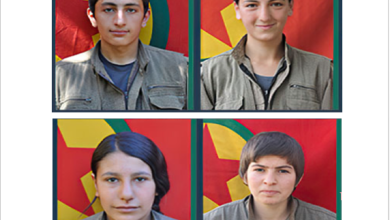
The documentation and reporting work of the Iranian Kurdistan Human Rights Watch (IKHRW) reflects the central importance of individual accountability in regional human rights monitoring. In its investigative reports covering the recruitment of minors, deaths of underage fighters, and civilian harm caused by armed groups, IKHRW has consistently emphasized the necessity of evaluating individual conduct and holding perpetrators of fundamental rights violations accountable. From the perspective of human rights advocacy, protecting victims of armed conflict must not come at the expense of ignoring the actions of human rights violators.
In the context of child soldier recruitment, IKHRW has repeatedly raised concerns regarding the military deployment of minors within non-state armed groups, stressing that the recruitment or use of children in combat constitutes a severe breach of International Humanitarian Law and the Convention on the Rights of the Child, regardless of the group’s political claims. From a refugee law perspective, when individuals affiliated with such armed structures apply for international protection host states must strictly evaluate their specific role, level of awareness, individual responsibility, and personal conduct.
Grgić’s study also highlights the role of domestic legislation in fulfilling international treaty obligations. Sweden, like other state parties to international protection conventions, is obligated to shelter those facing genuine persecution while maintaining legal mechanisms to prevent perpetrators of serious crimes from acquiring refugee status. Within this framework, national migration authorities are tasked not only with offering protection to genuine refugees but also with conducting thorough background screenings of applicants.
This obligation becomes especially critical regarding individuals linked to foreign armed groups who now reside in or seek asylum in European states. While residence or an asylum application in Sweden does not in itself constitute proof of wrongdoing, where credible evidence indicates involvement in war crimes or human rights violations, host authorities bear a legal responsibility under international law to investigate through established judicial channels.
The overarching insight from Grgić’s legal research for human rights organizations is that human rights advocacy must uphold two parallel imperatives: protecting individuals fleeing war, repression, and persecution, while ensuring that the international asylum framework does not become a safe haven for perpetrators of grave human rights violations. Without adhering to individual accountability, justice for real victims remains unfulfilled.