
By: Dr. Ali Farahmand
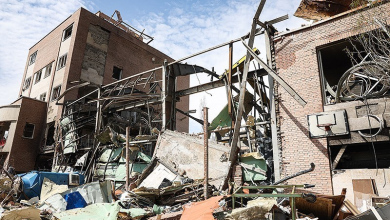
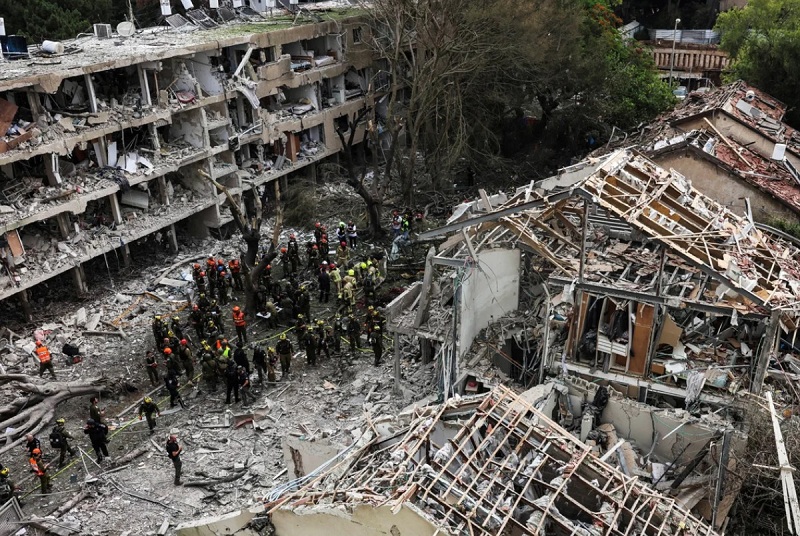
The tension that entered a new phase with the onset of the conflict involving the United States, Israel, and Iran is taking on broader, more devastating human and environmental dimensions every day. In the midst of this, what is most alarming is not merely the military developments, but the erosion of hope, psychological security, and a sense of the future among millions of ordinary people; people who neither decided on this war nor chose to live in its shadow.
For years, the world has repeated the slogans of defending human rights, human dignity, and peace. Yet, at historical turning points, what stands out most is the silence or selective responses to the suffering of civilians. Today, it is the children, women, the elderly, the sick, aid workers, and families waking up every day to the sound of sirens, explosions, and anxiety about tomorrow who are paying the ultimate price for this war.
I do not intend to discuss military strategies or political calculations; neither is my expertise in that area, nor is it the purpose of this note. My words are addressed to international organizations, human rights institutions, peace advocates, world leaders, and parliamentarians. Perhaps this voice will not reach them all, but the human conscience cannot remain indifferent to such suffering.
The experiences of Iraq, Afghanistan, Libya, and Syria are still vivid before the world. Regardless of differing political views, one truth remains unchanged: the biggest victims of wars are ordinary people. Children who trade their schools for bomb shelters, patients who lose access to medical treatment, families who lose their homes and futures, and a generation growing up with anxiety, insecurity, and profound psychological trauma.
International humanitarian law was drafted precisely for days like these. The four 1949 Geneva Conventions and their Additional Protocols emphasize the fundamental principle of distinction between military targets and civilians, the principle of proportionality, the principle of precaution in attacks, and the special protection of medical facilities, aid workers, and infrastructure essential for the survival of civilians. No military necessity justifies ignoring these principles.
Any attack that intentionally targets civilians or civilian objects, or an attack where the anticipated harm to civilians is disproportionate to the expected military advantage, can be investigated as a serious violation of international humanitarian law and, depending on the establishment of legal and factual elements, a war crime. This issue must be investigated by independent and impartial international mechanisms.
Based on documented reports of attacks on civilian, relief, medical, or educational centers, the international community has a duty to demand independent, transparent investigations and the accountability of potential perpetrators, free from double standards. Human rights are valid only when they are applied equally to all human beings across all geographies; not when victims are categorized based on political considerations.
The world must not reach a point where children are only seen in statistics, schools turn into military targets, hospitals lose their safety, and aid workers become victims of violence instead of being protected. If such events become normalized, it is not just buildings that will collapse; humanity’s trust in justice, international law, and the global conscience will also be destroyed.
Iran, like any other country, has the right to expect that the lives of its civilians will not be subject to political bargaining. No political or military dispute can diminish the value of a child’s life. No military victory, if built upon the ruins of ordinary people’s lives, will be a victory for humanity.
Today, more than ever, the world needs moral courage; the courage to condemn the violation of humanitarian rules regardless of the perpetrator’s power, to demand independent investigations, to support the victims, and to restore international law to the purpose for which it was written: protecting humans, not justifying war.
If we remain silent today in the face of civilian suffering, tomorrow we will no longer be able to speak of a world based on law, justice, and human dignity.