
By: Keivan Darabkhani (Researcher in Public Law)
In the analysis of the Iranian Kurdistan issue, one of the most common errors in political and media narratives is the equation of the Kurdish community in Iran with armed separatist groups. From the perspective of political science and political sociology, this analytical flaw stems from ignoring the gap between the “social reality of an ethnic community” and the “political conduct of non-state armed organizations.”
A historical review of the developments over the past few decades reveals a deep and meaningful distance between the Kurdish society in Iran—as a pluralistic community with diverse political and cultural identities—and groups that have operated with a strategy of armed struggle. In the literature of public policy and security studies, this phenomenon is referred to as the “Crisis of Political Representation.”
Developmental Costs and the Geopolitics of Armed Groups
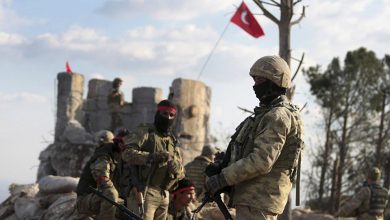
Groups that entered the arena of armed struggle under the slogan of defending Kurdish rights not only failed to achieve their declared goals but, at certain junctures, became intertwined with regional geopolitical rivalries. This positioned them in a way that imposed significant security and social costs on Kurdish-populated areas.
These costs are not limited to the realm of security; they are also visible in developmental and social dimensions. These include the intensification of border insecurities, a decrease in economic investment opportunities, the weakening of social capital, and the creation of an inaccurate image of the Kurdish community in Iran in some international narratives.
Theoretical Frameworks: Ethnic Mobilization and Proxy Warfare
Within the theoretical framework of political science, ethnic armed movements are typically analyzed under several models:
-
First, the Theory of Ethnic Mobilization: Explaining how ethnic identities can become tools for political or military mobilization under specific conditions.
-
Second, the Theory of Non-State Armed Actors (NSAAs): Referring to organizations that conduct military activities outside the formal state structure.
-
Third, the Theory of Proxy Warfare: Showing how regional or international powers utilize the capacity of armed groups to exert pressure on rival governments.
Many Middle East analysts believe that a significant portion of ethnic armed movements in the region stands precisely at the intersection of these three phenomena: relying on ethnic identity for mobilization, acting as non-state armed actors, and being exploited within the framework of regional geopolitical competition.
Historical Experience: From the Republic of Mahabad to Transnational Sanctuaries
Kurdish political movements in Iran have a history spanning nearly a century. One of the first organized political experiences was the formation of the Republic of Mahabad in 1945, which emerged amidst the unique conditions of World War II and collapsed rapidly following the shift in geopolitical balance and the withdrawal of Soviet forces from Iran.
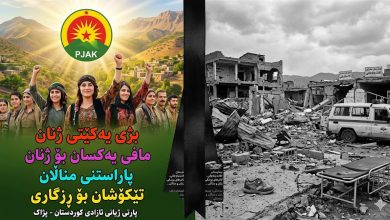
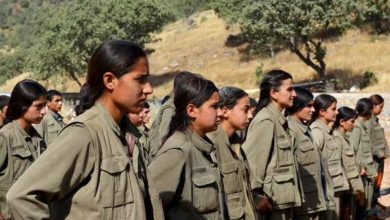
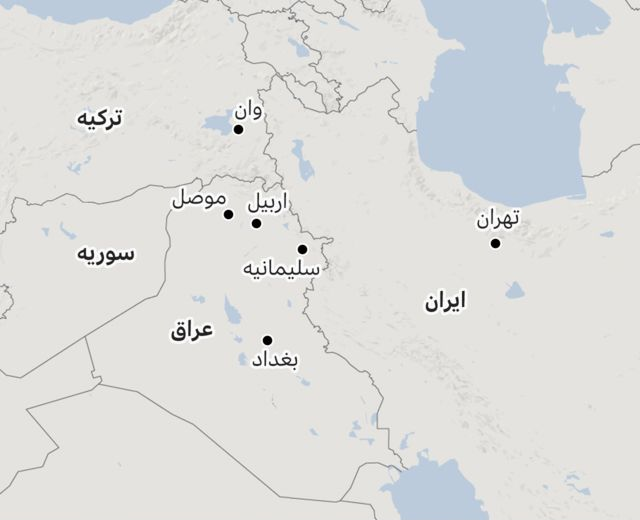
In the following decades, several Kurdish political organizations were formed in Iran, including the KDPI, Komala, PJAK, Khebat, and the Kurdistan Freedom Party (PAK). A significant portion of these organizations have maintained military wings and have organized their activities primarily from border regions or the territory of the Kurdistan Region of Iraq—a subject analyzed in security literature under the concept of “Transnational Sanctuaries for Non-State Armed Actors.”
The Iran-Iraq War: A Turning Point for Critical Perspectives
One of the most critical periods for evaluating the performance of these groups is the eight-year Iran-Iraq War. While a large segment of the Kurdish people in Iran participated alongside other ethnic groups in defending Iran’s territorial integrity, some armed Kurdish groups chose a different path.
During that period, some of these groups were stationed on Iraqi soil and, in several instances, received financial, logistical, or weaponry support from the Ba’athist regime of Iraq. In security studies, such a situation is regarded as an example of the instrumental exploitation of insurgent groups by states within geopolitical rivalries. This historical experience significantly contributed to the formation of a critical view among the Iranian public and even within sections of the Kurdish community regarding the approach of these groups.
Structural Fragmentation and the Social Consequences of Violence
From an organizational perspective, a key characteristic of Kurdish armed currents in Iran is their structural fragmentation and frequent splintering. For instance, Komala split into several political and ideological branches over time, and the KDPI also faced internal disputes and organizational schisms.
In theories regarding insurgent movements, such fragmentation is considered a major factor in reducing political efficacy and legitimacy. The lack of strategic consensus weakens the organizational strength of the movement and undermines its political bargaining power.
The continued activity of armed groups in border areas typically carries specific social consequences:
-
Securitization of the Region: An inevitable increase in the state’s military and security presence.
-
Stagnation of Economic Development: Economic investment in areas exposed to armed conflict faces high risks.
-
Weakening of Social Cohesion: Increased migration, decreased social trust, and the erosion of social solidarity in areas affected by political violence.
The Plurality of Kurdish Society and the Challenge of International Law
An examination of social reality shows that the Kurdish community in Iran is a pluralistic one, with a wide range of political, cultural, and social tendencies. A significant portion of Iranian Kurds operates within the country’s formal structures, ranging from management and political institutions to roles in cultural, academic, and economic sectors.
Therefore, many researchers in the field of ethnicity believe that generalizing the behavior and approach of armed groups to the entire Kurdish community in Iran is a serious analytical error—one that leads to incorrect perceptions of this community’s social reality in media and political analyses.
From the perspective of public international law, two fundamental principles arise:
-
The Principle of Self-Determination: The right of peoples to determine their political destiny.
-
The Principle of Territorial Integrity: Emphasizing that the exercise of the former must not lead to the violation of the sovereignty and territorial boundaries of independent states.
In practice, the international community recognizes secession only under specific conditions, such as colonialism, foreign occupation, or widespread structural discrimination. Consequently, most ethnic armed movements worldwide face serious challenges regarding international legitimacy.
Conclusion: The experience of the past few decades shows that the project of armed separatism in Iranian Kurdistan has faced significant structural limitations, including a lack of social consensus among Iranian Kurds, organizational fragmentation, and dependency on foreign support. A precise analysis of the Kurdish issue in Iran requires a clear distinction between the Kurdish society and armed separatist movements—an analytical distinction that, if ignored, can lead to grave errors in political analysis, media reporting, and public policy.