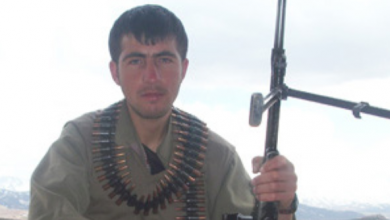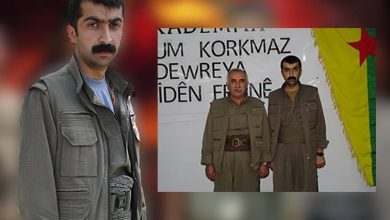

Saman Hamidinejad lives in a village near one of the border cities of West Azerbaijan Province. He was born in the same village and spent his childhood and adolescence there. Saman has a strong regional accent and, according to his own account, attended only five years of school before ending his education. His account of his adolescence and his brief experience among PJAK forces is a story of extreme cold, isolation, fear, deprivation, and an attempt to return to his family.
It was the winter of 2015, and snow had covered everything. Saman Hamidinejad was no more than seventeen years old. He had recently installed Facebook and spent his nights browsing Kurdish groups. It was there that he received a message. Someone repeatedly contacted him, spoke with him every day, and urged him to go there. At the time, Saman had no information about PJAK and did not know what conditions he would encounter. He had no image of the mountains, caves, underground rooms, or living conditions there. He imagined that leaving would be almost as easy as returning.
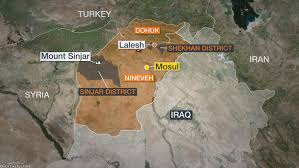
He made his way to Baneh, one of the border cities of West Azerbaijan Province. Someone came to pick him up, took him in a vehicle, and smuggled him across the border through an illegal route. On the other side of the border, there was no longer any road—only snow, mountains, and extreme cold.
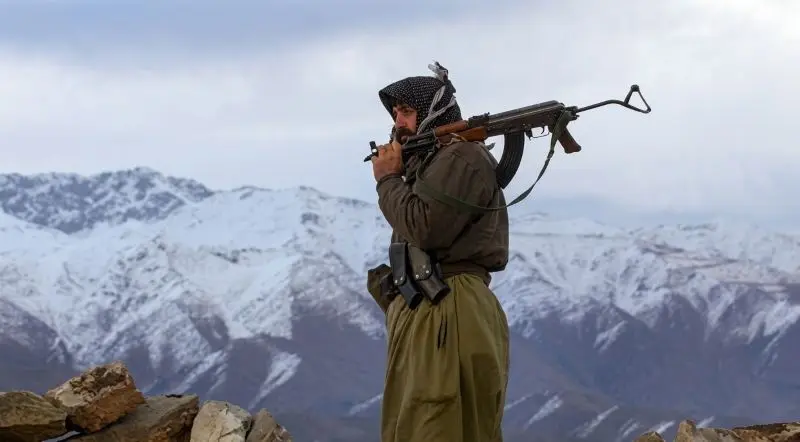
According to Saman, he was taken to a cave in the mountains. It was a damp underground room, with some sections of its walls made of concrete and others covered with plastic sheeting. Approximately two to three meters of snow had accumulated on the ground, and there was no heater to keep the room warm. There was no television, telephone, or any other means of communicating with the outside world. He was given a blanket and something to place beneath his head and told to sleep there, on the bare floor.
Training was supposed to begin three or four months later, after the snow season ended. But before any training began, Saman realized that he could not remain in those conditions.
He says several other boys were also in the room, all approximately his age—fifteen and sixteen years old. According to him, they were not allowed to speak to one another. Saman says that during the thirteen or fourteen days he spent there, he went to the authorities six or seven times and said that he wanted to return and that his family did not know where he was. Each time, he received an increasingly harsh response.
According to Saman, one of the commanders responded to his repeated requests by saying: “Did you think you came to a shop to buy something and now you want to leave? We’re not going to let you go that easily.”
Saman says he had grown up in Iran and had never before experienced hardships of this kind. Missing his family placed enormous pressure on him, and he had come to the conclusion that someone who has a family cannot easily endure such conditions.
He describes those days as involving far more than extreme cold, speaking of “endless pain and suffering” among PJAK forces. According to him, “That is what armed groups are like: pain and misery.”
Saman also says that many children and adolescents were present at the site, including twelve-, thirteen-, and fourteen-year-old girls and boys who, according to him, were armed. He also recalls a number of sixteen- and seventeen-year-old teenagers from among Turkey’s Kurds, saying that they too were very young and lived under the same conditions.
According to Saman, there was inadequate food and a lack of proper facilities. Having lost his spleen in an accident during his adolescence, before this episode, he says he felt that his body was unable to withstand such conditions and believed that if he remained there, he might not survive: “If I had stayed, I definitely would not have survived.”
Referring to claims about the facilities available within such groups, he says that whenever anyone spoke about the available amenities, he found it laughable and would say: “There wasn’t even a heater there.”
Throughout his account, Saman repeatedly emphasizes that his experience bore no resemblance to military service. He says: “I thought it was like military service, but military service and that place—how could you even compare them?”
According to him, during military service a person has a family; their parents can see them; a soldier has leave; there is an opportunity to contact family; there is a designated uniform; they receive food; and the place of service has basic facilities such as heating. By contrast, he considered the conditions he experienced among PJAK forces to be entirely different.
During the interview, Saman also attempts to emphasize that, in his view, there is no fundamental difference between PJAK and the PKK, and he describes the groups within a connected framework. He also characterizes the conditions there as entirely military and warlike, saying that the forces were engaged in fighting various parties and referring to conflicts involving Iran, Iraq, Turkey, and Syria.
He says it “was nothing like military service at all,” and that what he experienced was life in the midst of war; a place where, in his words, “the enemy was people, and they were enemies of people.”
One day, when Saman’s distress intensified, the authorities took his photograph and asked for his family’s telephone number. They sent his photograph to his family. Saman does not know exactly what their purpose was—perhaps to calm him down, or perhaps to let his family know that he was still there. But this action did not change his decision to return.
Saman says he insisted so strongly and, in his words, protested and pleaded so persistently to return that eventually, one day, he was told he could leave. At the same time, however, he was warned that whatever happened to him along the way would be his own responsibility and that they would bear no responsibility for him.
Saman says he had heard that they might shoot him from behind while he was escaping. For that reason, as soon as he moved away from the site, he began running through the snow. He ran for approximately five or six hours and continued moving the entire time without looking back.
Eventually, in the darkness of night, he reached a village. He knocked on several doors until an elderly man opened the door. He spent that night in the man’s home, and the following morning, the elderly man handed him over to Asayish, the police force of the Kurdistan Region of Iraq.
After returning to Iran, a case was opened against Saman for illegally leaving the country, as he had crossed the border through a smuggling route. However, according to him, after reviewing the case and learning that he had been underage when he left the country, the judge acquitted him.
During part of the interview, Saman speaks about his family and says that his father’s name is “Safar.” He now works for a steel company. Previously, he worked in livestock farming and still has a small cattle farm. He recently became engaged, and his wedding ceremony has not yet taken place.
He compares his current life with his experience in the mountains and says that he now has work and employment in Iran and can make plans for his future. From his perspective, even military service in Iran, despite its difficulties, offers entirely different conditions: a soldier serves for two years, has leave, can contact family, receives a salary, and their family and community know about their situation.
By contrast, Saman describes the conditions he experienced among PJAK forces as life in an environment far from his family, in another country, without contact with the outside world, without pay, and in the cold of the mountains.
He says: “We weren’t raised this way.”
In Saman’s account, this sentence summarizes his fourteen-day experience at the site: an adolescent who set out believing that leaving and returning would be straightforward, only to encounter conditions that, from his perspective, bore no resemblance to what he had imagined. He repeatedly asked to return, faced opposition, and eventually, after being allowed to leave, ran for hours through the snow, fearing pursuit and being shot from behind, until he reached a village.
From Saman’s perspective, his account is an experience of pain, deprivation, isolation, and misery within an armed group—an experience that, according to him, was fundamentally different from his initial understanding of “military service.”
The audio recording of this interview is held in the archives of the Iranian Kurdistan Human Rights Watch and, subject to confidentiality, may be made available upon formal request to researchers, academics, students, human rights activists, and documentary filmmakers.