
In the shadow of Kurdish armed groups operating in the border regions of western Iran, one of the most overlooked dimensions is the fate of adolescents drawn into militant ranks before reaching the legal age of majority. What follows is the documentation of one such case: the testimony of an individual named Arian Alizadeh, who was recruited by the outlawed Kurdistan Democratic Party of Iran (KDPI) through social media at the age of 14 to 15, spending seven seasons in their ranks.
According to Arian, who hails from a village near Paveh, the ordeal began during his early adolescence amidst family disputes. His connection to the group did not occur through a physical intermediary, but rather through messaging apps like Instagram, WhatsApp, and Telegram; initiated by fellow villagers who had previously joined the faction. He states that the recruiters were fully aware of his actual age ; a detail that, if accurate, clearly demonstrates that age was no barrier to child soldier recruitment.
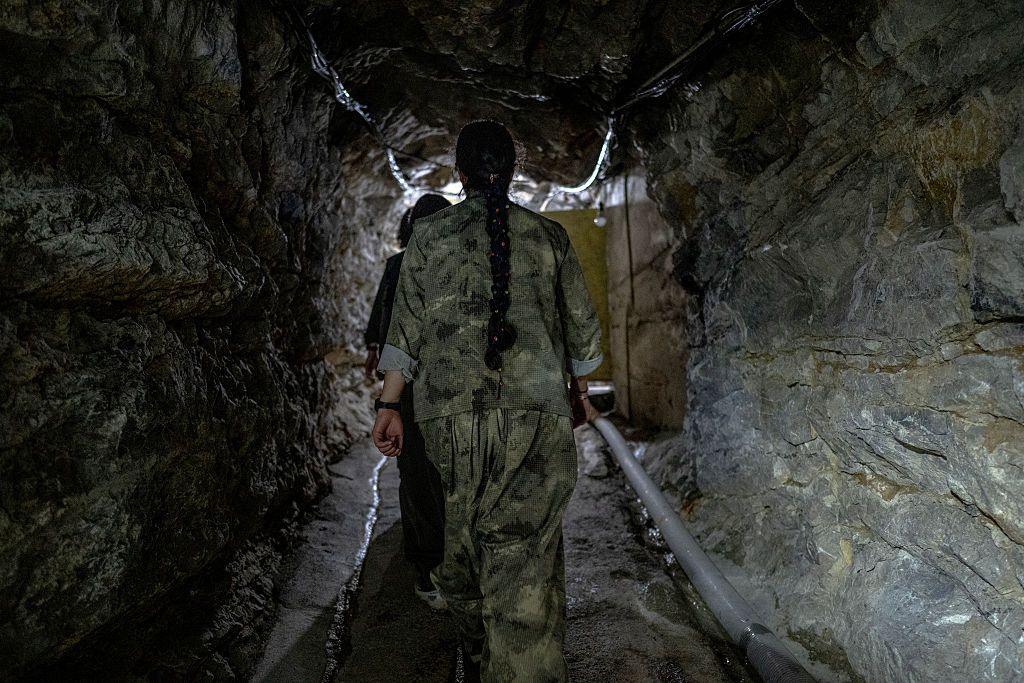
His account of daily life within the group paints a picture of strict military discipline and constant peril: political indoctrination in the mornings, brief rests at noon, evening assemblies, and nights spent sleeping in dugouts to evade aerial surveillance. Drones hovering overhead and wild mountain animals posed two perpetual threats during their rotating guard duties. He emphasizes that he did not experience torture or imprisonment during this period, though food rations were barely enough to sustain one person ; these nuanced details show that his narrative does not present a one-dimensional picture of his experience, thereby adding credibility to his testimony.
The most crucial part of this testimony relates to military instruction: he states that the criterion for bearing arms was “physical capability,” not age ; and individuals under 18, including himself, received training in marksmanship, ambush, and counter-ambush tactics. This exact practice is unconditionally prohibited by international law. Under the Optional Protocol to the Convention on the Rights of the Child on the Involvement of Children in Armed Conflict (2000), non-state armed groups—unlike official state armed forces—are forbidden under any circumstances from recruiting or using persons under 18, even if they purportedly join “voluntarily”. Furthermore, according to the Rome Statute of the International Criminal Court, conscripting or enlisting children under the age of 15 into armed groups constitutes a war crime.
Arian eventually left the group voluntarily, but his return did not mark the end of his ordeal: his education was left incomplete, attempts to start over professionally failed, and today he barely scrapes by working as a laborer alongside his father ; meanwhile, he admits he has spent nearly a year trying to “put everything behind him,” living in fear that his past might create trouble for him again. According to the Paris Principles (2007), any person under 18 associated with an armed group in any capacity is considered a victim under international law, not a perpetrator ; a framework designed exactly for cases like Arian’s story.
This report is based on the transcript of a telephone interview that was fully recorded and documented, with the complete version held by the interviewing organization. The full audio file of this conversation is preserved in the archives of the Iranian Kurdistan Human Rights Watch (IKHRW) and, subject to strict confidentiality of identities and only upon official request, can be made available to researchers, legal scholars, documentary filmmakers, and human rights activists.