
Author: Dr. Farahmand
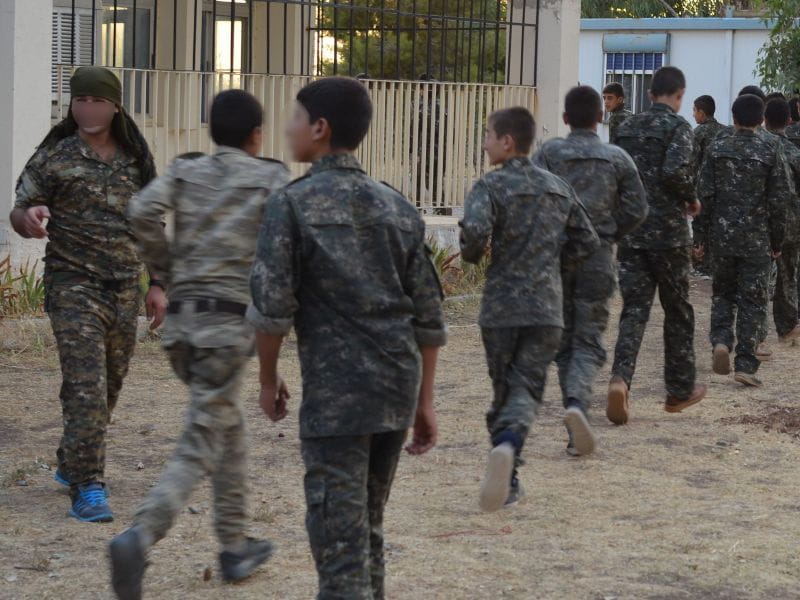
In contemporary human rights literature, the term “child soldier” is usually linked with images of groups such as Al-Shabaab in Africa or ISIS in the Middle East. However, in the border regions of Iran, Iraq, Turkey, and Syria, the issue of recruiting and utilizing individuals under the age of 18 by certain Kurdish armed parties has taken on more complex dimensions—dimensions in which the problem is not merely limited to the direct use of children in conflicts, but is also related to the methods of recruiting, training, and preparing adolescents for military and paramilitary activities.
This issue places a fundamental question before human rights observers: How does the phenomenon of child soldiering continue to reproduce in various forms despite the existence of international instruments and declared commitments by armed groups?
In recent years, a number of Kurdish parties have signed memorandums of understanding with international non-governmental organizations, including “Geneva Call,” declaring their commitment to not utilizing individuals under the age of 18. These agreements have been presented by their supporters as a step toward compliance with humanitarian law standards.
However, critics believe that these agreements, in addition to their legal aspect, also serve a political and reputational function. From this perspective, signing such documents allows armed parties to present themselves to Western public opinion as law-abiding, secular actors committed to international norms, thereby engaging in a sort of “political branding” to highlight their distance from extremist groups.
At the same time, one of the challenges raised by human rights observers is the lack of independent mechanisms to verify the implementation of these commitments, as well as the absence of criminal enforcement guarantees in many of these agreements. According to these critics, accepting declared commitments without an effective system of monitoring and accountability can provide the ground for the continued presence of adolescents within structures affiliated with these groups, albeit under different titles and frameworks.
One of the common arguments made by armed parties in response to human rights reports is the emphasis on the “voluntary nature” of adolescents joining these groups. These parties usually state that a portion of adolescents, influenced by discrimination, poverty, social pressures, or ideological motivations, approach these organizations on their own accord.
Nevertheless, from the perspective of international law, and particularly the “Optional Protocol to the Convention on the Rights of the Child on the Involvement of Children in Armed Conflict” (OPAC), the issue of consent for individuals under 18 in military contexts is a highly controversial subject. Many legal scholars argue that under such conditions, the concept of consent cannot be evaluated independently of the social, political, and propaganda environment surrounding the adolescents.
Within this framework, some child rights researchers emphasize the role of media propaganda, heroic representations of armed struggle, and the symbolization of weapons in the process of recruiting adolescents. In their view, when an adolescent is continuously exposed to epic, identity-driven, and ideal-centric messages, the boundary between free choice and organized influence blurs—a phenomenon referred to as “soft recruitment.”
International Jurisprudence: Rulings issued by the International Criminal Court (ICC), including in the Thomas Lubanga case, have explicitly shown that the recruitment and enlistment of children in armed conflicts, independent of political motivations, collective ideals, or claims of voluntary participation, carries severe criminal responsibility and constitutes a war crime.
Another question raised in this regard is the international community’s limited response to reports related to child soldiers within certain Kurdish armed structures. Some analysts look for the answer to this issue in geopolitical considerations. During the years of the war against ISIS, a number of these parties and their affiliated forces were recognized as field allies of the international coalition. According to critics, this security and military cooperation resulted in reports concerning potential violations of children’s rights being relegated to lower diplomatic priorities.
This situation has been described by some observers as an instance of the “geopolitics of silence”—a situation where the implementation of human rights principles is influenced by political considerations and the balance of power. From the viewpoint of these critics, ignoring cases related to the recruitment of children can send a message to other armed groups that aligning with the goals of powerful international actors reduces the costs resulting from the violation of certain international norms.
On the other side of this debate, some Kurdish parties justify the recruitment of adolescents within the framework of the right to self-determination. However, this argument also faces a fundamental question: Can collective goals and ideals restrict the fundamental rights of individuals? Child rights experts believe that the right to a childhood, education, and safe development must take priority over any political or military consideration. Replacing an educational environment with military structures will bring profound and long-term consequences for local communities and future generations.
Consequently, confronting the phenomenon of child soldiering in Kurdish regions requires moving beyond symbolic approaches and toward effective accountability mechanisms. It is proposed that international bodies make the signing of any memorandum of understanding with armed groups conditional on the ability to conduct independent and unannounced inspections of training centers and affiliated camps. The fundamental reality is that legal and moral responsibility for utilizing children in military structures is not absolved by invoking political motivations; because the rights of the child are a universal concept and must not be subject to ideological boundaries.