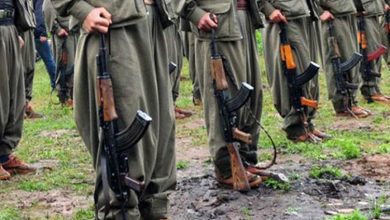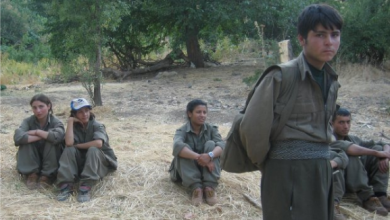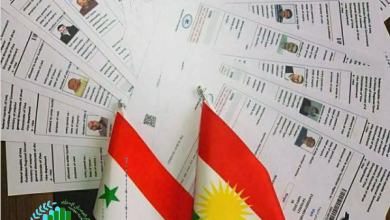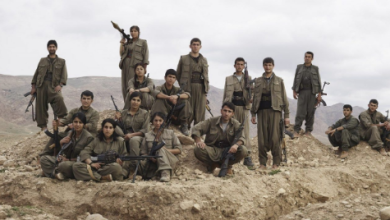

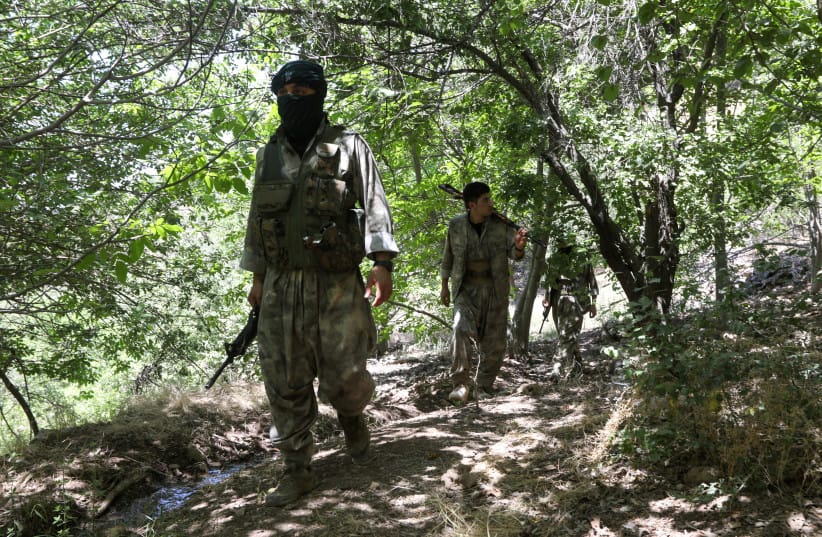
Leather folders and official letterheads of the “Geneva Call” organization in Geneva now contain signatures that were meant to broadcast a “law-abiding” and “humanitarian” face of Kurdish militants to the world. Since 2007, leaders of Komala, the Democrat Party (KDPI), PAK, and PJAK have placed their ink on “Deeds of Commitment,” voluntarily agreeing to abide by the standards of international law. But were these signatures an end to the tragedy, or merely a legal cover for institutional survival? The Iranian Kurdistan Human Rights Watch (IKHRW), in an explicit and specialized conversation with Dr. Rozhin Sarmadi, an international law researcher, has critically re-examined these documents. In this interview, we step away from Geneva’s diplomatic storefronts to penetrate the hidden layers of commitments that, on paper, claim to have eradicated child soldiering, violence against women, and landmining, but continue to claim victims in the border mountains. This analysis is an effort to transform these “ceremonial signatures” into “indictment documents” before the public conscience and international oversight bodies.
This interview was recorded in two separate sessions by the Iranian Kurdistan Human Rights Watch, featuring Dr. Rozhin Sarmadi (an international law researcher and human rights activist). In this dialogue, the “Deed of Commitment” documents of Geneva Call signed by various Kurdish groups (Komala, Democrat, PAK, and PJAK) are put to the challenge.
Iranian Kurdistan Human Rights Watch: Dr. Sarmadi, welcome. Today, we are faced with a mountain of documents showing that Kurdish armed group leaders signed multiple deeds of commitment with the “Geneva Call” organization between 2007 and 2015. To begin, could you explain exactly what obligations these documents impose on these groups?
Dr. Rozhin Sarmadi: Hello. These documents are structured across three key areas: 1. Banning the use of anti-personnel mines: First signed in 2007 and 2009 by different factions of the Democrat and Komala parties (including the Komala Party of Iranian Kurdistan and the Kurdistan Democratic Party of Iran). 2. Protecting children from the effects of war: Which includes an absolute prohibition on the recruitment and use of individuals under 18 years of age (signed by PAK, Komala, and PJAK). 3. Prohibiting sexual violence and gender discrimination: Signed by groups such as PAK (Hussein Yazdanpanah) and Komala (led by Mohtadi and Ilkhanizadeh). The critical point here is that by signing these documents, these groups have effectively acknowledged that they are “armed non-state actors” and have voluntarily committed to respecting international standards (such as the Geneva Conventions). This means they can no longer claim ignorance of the laws of war.
IKHRW: Very strong language is used in the text of these deeds, especially concerning children. Could you dissect these specific clauses?
Dr. Sarmadi: Yes. For instance, in the document related to the “Kurdistan Democratic Party of Iran” or “PJAK,” Article 1 explicitly states: “Adherence to a total ban on the use of children in hostilities.” Article 2 states: “To ensure that children under 18 are not recruited.” However, what is revealed upon analyzing these texts is the existence of a “deliberate loophole.” In private meetings with Geneva Call, they sometimes claim that these individuals joined them for “education” or “asylum,” not for combat. Yet, the spirit of the Geneva Call deed prohibits any presence of a child within a military structure, whether armed or unarmed.
IKHRW: What about the documents concerning sexual violence? What does the signature of individuals like Hussein Yazdanpanah or Nahid Bahmani under these documents signify?
Dr. Sarmadi: This is one of the most paradoxical parts. In these documents, they have committed not only to prohibiting sexual violence but also to eliminating “gender discrimination.” Nevertheless, the structure of these groups remains deeply rooted in a patriarchal hierarchy. For these groups, signing these deeds is less about implementation and more about a tool for “gaining international legitimacy.” They want to tell the global community: “We are not terrorists; we are responsible actors who respect human rights.” But the text of the document goes far beyond mere slogans; they have consented to direct monitoring and inspection.
IKHRW: Now the main question: After all these signatures and photo opportunities with Geneva Call officials, what happened in practice? Did child soldiering stop within these groups?
Dr. Sarmadi: Unfortunately, field reports and the documentation compiled by you at the “Iranian Kurdistan Human Rights Watch,” alongside reports from international bodies, demonstrate that the situation has not improved and has, in some instances, become more complicated. We are still confronted with the phenomenon of “missing children“—adolescents separated from their schools or families in Iran who end up in the camps of these groups in the northern region of Iraq. Cases like Fardin Salehi, Asrin Mohammadi, and dozens of similar files are documented in IKHRW reports.
IKHRW: Why is it that despite signing the deed “banning landmines,” there are still reports of some of these groups using improvised explosive devices (IEDs) or mines?
Dr. Sarmadi: The problem lies in the “definition.” They might not deploy standard anti-personnel mines, but they utilize “improvised explosive devices (IEDs)” which serve the exact same purpose and are prohibited under the Geneva protocols. This is a legal deception. They adhere to the letter of the text but violate the spirit of the commitment.
IKHRW: What is the role of the “Geneva Call” organization in this? Do they merely collect the documents? Why is there no serious follow-up or oversight?
Dr. Sarmadi: This is where a serious critique must be directed at “Geneva Call.” Geneva Call is a non-governmental organization, not an international court. Their tools of pressure are “dialogue” and “training.” My critique of Geneva Call is this: You got the documents signed, but where is your “verification mechanism“? Article 9 of most of these deeds stipulates that the groups must allow “monitoring and inspection.” Has Geneva Call ever published a public report stating that a certain party (such as PJAK or Komala) failed to fulfill its commitment regarding the non-recruitment of children? No. To maintain its access to these groups, Geneva Call typically relies on “backchannel diplomacy.” In the case of Kurdish armed groups, this approach has effectively resulted in an evasion of accountability.
IKHRW: So, are these documents merely worthless pieces of paper?
Dr. Sarmadi: Operationally, they have been very weak so far, but legally, absolutely not. These documents now serve as an “affidavit of guilt” against these very leaders. When Mustafa Hijri, Abdullah Mohtadi, or Hussein Yazdanpanah sign a document stating “we do not accept anyone under 18,” any child seen in their camps today—as reported in cases of enforced disappearances and the recruitment of border youth—constitutes evidence of a crime of “forced recruitment” that can be weaponized against them in international tribunals.
IKHRW: What is your recommendation for families whose children have been abducted or recruited by these “signatory” groups?
Dr. Sarmadi: Families must write directly to “Geneva Call” in Switzerland and file a complaint, citing these exact documents which bear the dates and signatures of their leaders. They must ask: “You extracted these commitments, so why are you not monitoring them?” By signing the Geneva Call deeds, these groups have locked themselves into a legal cage. They can no longer claim they have no obligations. Now is the time for civil society and organizations like IKHRW to cash these outstanding legal bad checks.
IKHRW: Thank you, Dr. Sarmadi, for dissecting these documents. These deeds expose a profound hypocrisy between the “international showcase” and the “military conduct” of these groups.
Dr. Rozhin Sarmadi: Thank you as well. I hope this critical re-examination opens a path for these children to return to the embrace of their families.