
Khalid Azizi, the spokesperson for the Kurdistan Democratic Party of Iran (KDPI), discussed military strikes and Iran’s political future in his recent interview; however, serious questions regarding the transparency of organizational structures, the status of civilians in deployment zones, and human rights accountability standards remain unanswered.
Rather than merely being a political stance on regional developments, the recent interview with Khalid Azizi, the spokesperson of the Kurdistan Democratic Party of Iran, contains critical human rights questions concerning the status of civilians, the accountability of non-state armed groups, and the boundary between political activity and security frameworks. These are questions that have been repeatedly raised in recent years regarding armed parties based in the Kurdistan Region of Iraq (KRI) but have yet to receive a clear answer.
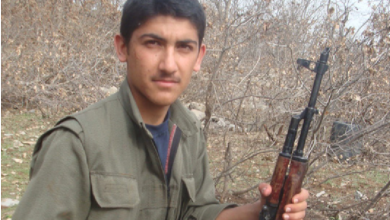
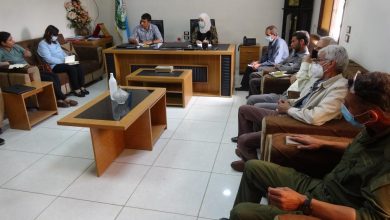
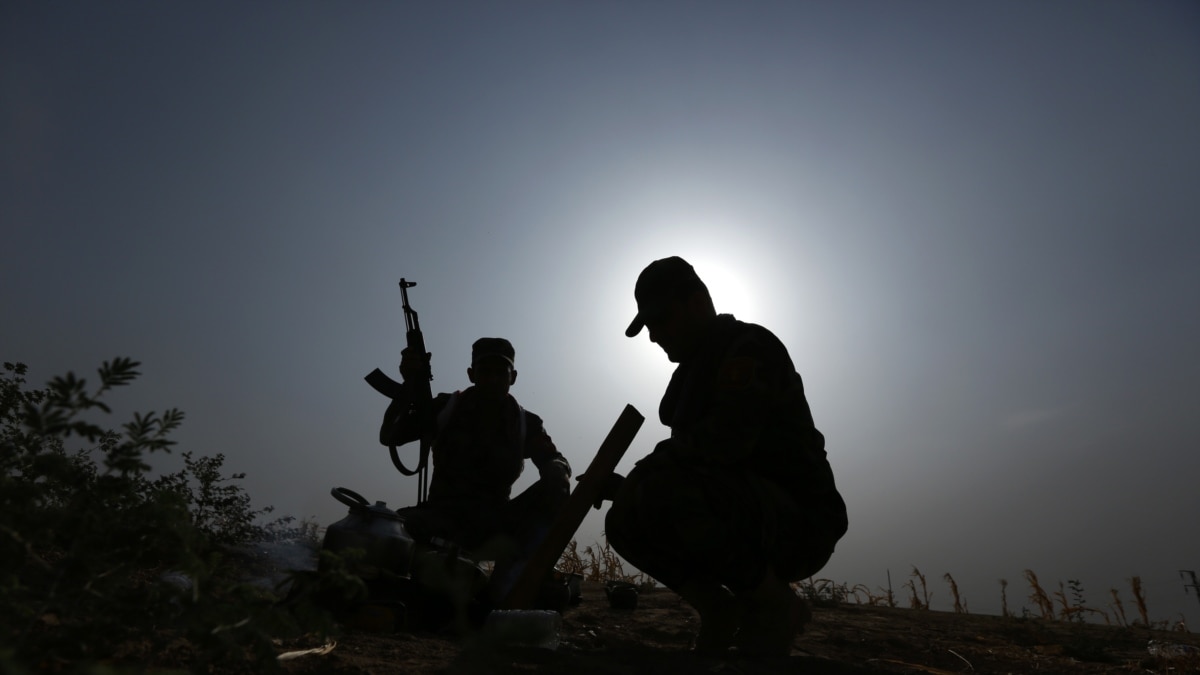
Throughout this conversation, Khalid Azizi repeatedly emphasizes that the camps housing the forces and members of Kurdish parties in the Kurdistan Region of Iraq are not “military headquarters” and that a segment of their residents consists of Iranian Kurdish refugees and families. Simultaneously, however, he speaks of the existence of the KDPI’s “military wing” and the necessity of armed defense against attacks by the Islamic Republic. This duality introduces a serious issue from the perspective of international humanitarian law (IHL): under conditions where the boundary between political structures, refugee spaces, and security setups is blurred, how can civilian safety be guaranteed?
In many regional conflicts, a primary driver of rising human casualties has been the concurrent utilization of civilian and organizational spaces. When camps housing refugees, families, or civil activists are situated adjacent to structures affiliated with armed groups, the risk of these areas becoming targets of military strikes exponentially increases. In such scenarios, the primary victims are not political leaders but ordinary residents, women, children, and unarmed individuals—people who are effectively trapped in the midst of a cross-border conflict.
On the other hand, the interview places profound emphasis on concepts like “democracy,” “dialogue,” and “political diversity,” yet it contains almost no mention of internal human rights standards. In human rights discourse, merely opposing a government or advocating for concepts like democracy is insufficient to legitimize a political movement. What truly matters is a group’s practical adherence to principles such as transparency, accountability, the right to internal dissent, respecting members’ rights, and protecting vulnerable individuals.
Fundamental questions remain unanswered in this dialogue: What is the mechanism for independent oversight over the performance of these parties? How are the legal and security statuses of camp residents defined? What guarantees exist that individuals within these spaces, particularly adolescents and youth, are not subjected to organizational or security pressures? Most importantly, which body is responsible for investigating allegations of rights violations against members or residents of these camps?
Another segment of Khalid Azizi’s remarks warrants contemplation, specifically where he asserts that in politics and dialogue, “there should be no red lines.” While dialogue among political currents is part of democratic processes, the absence of clear benchmarks in the human rights sphere can lead to ambiguity in accountability. The experience of many non-state armed groups in the region has demonstrated that a lack of transparent human rights frameworks creates a breeding ground for weakening members’ rights, restricting individual freedoms, and fostering unaccountable structures.
Furthermore, the distance between political leadership and the actual field of crisis is noteworthy. A portion of the leaders and spokespersons of Kurdish parties have been conducting media and political activities outside conflict zones, residing in Western countries or safer areas for years, while the primary cost of security tensions, missile strikes, and border insecurity is borne by local residents, families, and personnel present in the camps. From a human rights standpoint, this situation provokes an important question: What is the level of accountability of political leaders stationed outside the crisis zone regarding the humanitarian consequences of organizational decisions and strategies?
The reality is that attacks on areas hosting Kurdish parties, regardless of political disputes, can jeopardize civilian lives and demand independent, transparent investigation under international law. Yet, at the same time, non-state armed groups cannot place themselves outside the realm of human rights accountability. Any political movement claiming to defend democracy and people’s rights must inevitably answer for the state of its internal structures, military conduct, camp security, and the rights of civilian residents; because human rights are not merely a tool for criticizing states, but a benchmark for measuring the conduct of all actors involved in a conflict.