
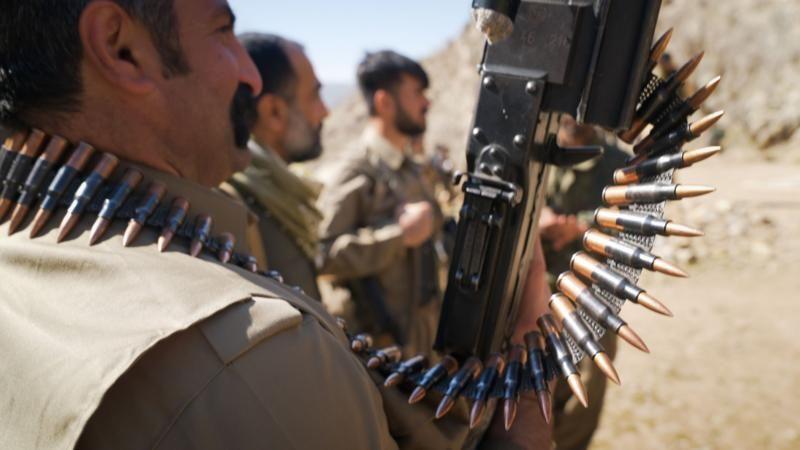
The recent report by BBC Persian regarding Donald Trump’s claims about smuggling weapons to Iranian protesters “through the Kurds”—regardless of the accuracy or inaccuracy of its details—once again exposes a deeply troubling reality: in most regional security and geopolitical scenarios, Kurdistan is viewed not as a home to millions of civilians, but merely as an operational geography.
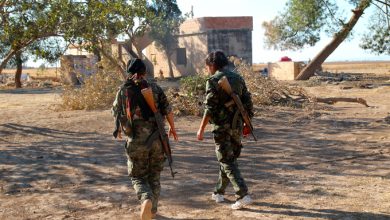
In these narratives, the people of Kurdistan are fundamentally absent. What remains visible are border routes, armed groups, military vehicles, outposts, tunnels, and war contingencies. It is as if Kurdish towns and villages are nothing more than coordinates on a broader operational map.
Jiyar Gol’s report, much like many security-centric analyses of the region, is heavily saturated with references to “informed sources,” “intelligence reports,” and “knowledgeable officials”—ranging from the procurement of four-wheel-drive vehicles and weaponry to potential invasion blueprints by the US, Israel, and certain Kurdish factions to engage in a conflict with Iran. Yet, even if parts of these scenarios were grounded in reality, the core question remains entirely unanswered: who was meant to bear the human cost of these projects?
Throughout these analyses, the ordinary inhabitants of border regions are rarely mentioned. There is a glaring silence regarding the families who become the immediate casualties of any armed conflict, the kolbars (border couriers), the children, the schools, the urban infrastructure, and the villages that systematically transform into danger zones during such escalations. Past experiences in the Middle East have repeatedly demonstrated that turning ethnic and border territories into a playground for regional and international power struggles ultimately decimates the human security of the local population before anything else.
In certain segments of the report, the potential entry of Kurdish parties into Iranian Kurdish cities following the onset of military strikes is discussed, operating under the assumption that the fall of specific military bases could trigger a wave of protests or a systemic collapse. However, these scenarios routinely gloss over the immediate aftermath: urban warfare, internal strife, mass detentions, security retaliations, civilian displacement, and the unchecked proliferation of armed violence. It is precisely this calculated silence that demands the urgent attention of human rights organizations.
The reality is that in many regional architectures, armed Kurdish factions are repeatedly placed in a position where they become trapped between major global powers, regional governments, and security rivalries. One day they are leveraged as a “field ally,” and the next, that very same support is abruptly severed due to shifting political alignments or regional accords. The historical precedents of Syria, Iraq, and even recent regional dynamics have proven that foreign powers generally sustain local forces only as long as they align with their short-term geopolitical interests.
Furthermore, a segment of the media landscape inadvertently facilitates the normalization of this paradigm—acting as though weaponizing factions, shifting battlefields to border communities, or weaponizing social grievances into military projects are standard, manageable affairs. From a human rights standpoint, the foundational principle must always be the preservation of civilian lives and halting the cycle of violence, rather than engineering scenarios that reduce an entire society to a tool for geopolitical leverage.
Even public feedback on social media platforms indicates that anxieties over the “instrumentalization” of the Kurdish population are not confined to political analysts. Numerous Kurdish and Iranian netizens have voiced profound fears regarding the risk of Kurdistan mutating into a proxy war zone, only for its people to be abandoned once the geopolitical dust settles.
Ultimately, the core issue extends far beyond the mere allegation of arms shipments or clandestine backchannel communications. The real question is why, in almost every blueprint designed to exert pressure on Iran, Kurdistan is framed as a potential “frontline” long before it is ever acknowledged as a living human society.
As long as the human security of the people of Kurdistan is not anchored at the absolute center of these calculations, any project—whether executed under the banner of regime change, security containment, or geopolitical confrontation—will carry the catastrophic risk of sacrificing ordinary citizens to the competitive interests of larger global actors.