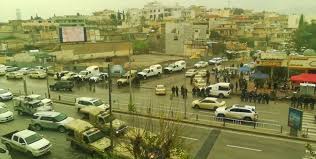

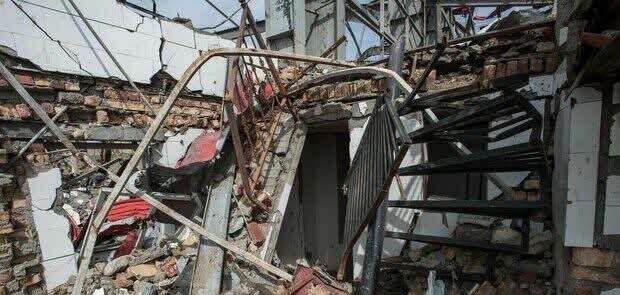
On the afternoon of Tuesday, March 31, 2026, the Shariati neighborhood of Kermanshah was targeted by missile strikes attributed to the United States and Israel. This attack occurred in a purely residential area, resulting in a human and material catastrophe:
-
Human Casualties: The bodies of 3 deceased citizens were recovered from the rubble, and 2 residents were successfully rescued alive by emergency teams.
-
Material Destruction: 9 residential units were completely leveled, and approximately 30 other units sustained serious structural and architectural damage.
Analysis of Violations of International Humanitarian Law (IHL)
Targeting the residential fabric of Kermanshah is a direct violation of several international peremptory norms:
-
Violation of the Principle of Distinction: Pursuant to Article 48 of Additional Protocol I (1977), parties to a conflict must at all times distinguish between the civilian population and military objectives. Attacking the Shariati neighborhood in the absence of any reported military objective is a fundamental breach of this principle.
-
Prohibition of Disproportionate Attacks: According to Article 51 (5) (b), attacks which may be expected to cause incidental loss of civilian life or damage to civilian objects which would be excessive in relation to the concrete and direct military advantage anticipated are prohibited. The destruction of 39 homes for an unverified objective is a textbook case of disproportionality.
-
Immunity of Civilian Objects: Article 52 of Additional Protocol I provides specific protection for residential dwellings. Targeting these objects, unless they have been converted into legitimate military objectives (which is not the case here), is illegal and constitutes a crime.
Criminal Responsibility and War Crimes
Under Article 8 of the Rome Statute of the International Criminal Court (ICC), intentionally directing attacks against the civilian population or civilian objects not taking part in hostilities is classified as a “War Crime.” The failure to observe the principles of precaution and proportionality in the attack on the Shariati neighborhood places heavy international and criminal responsibility upon the perpetrators.
Conclusion
The attack on Kermanshah, given the scale of destruction within the urban fabric, is a serious and flagrant violation of humanitarian law. The perpetrators are legally accountable not only to public conscience but also under international law for the deprivation of the right to life and security of citizens, and they are obligated to provide reparations for the material damages inflicted upon the residents of the Shariati neighborhood.