
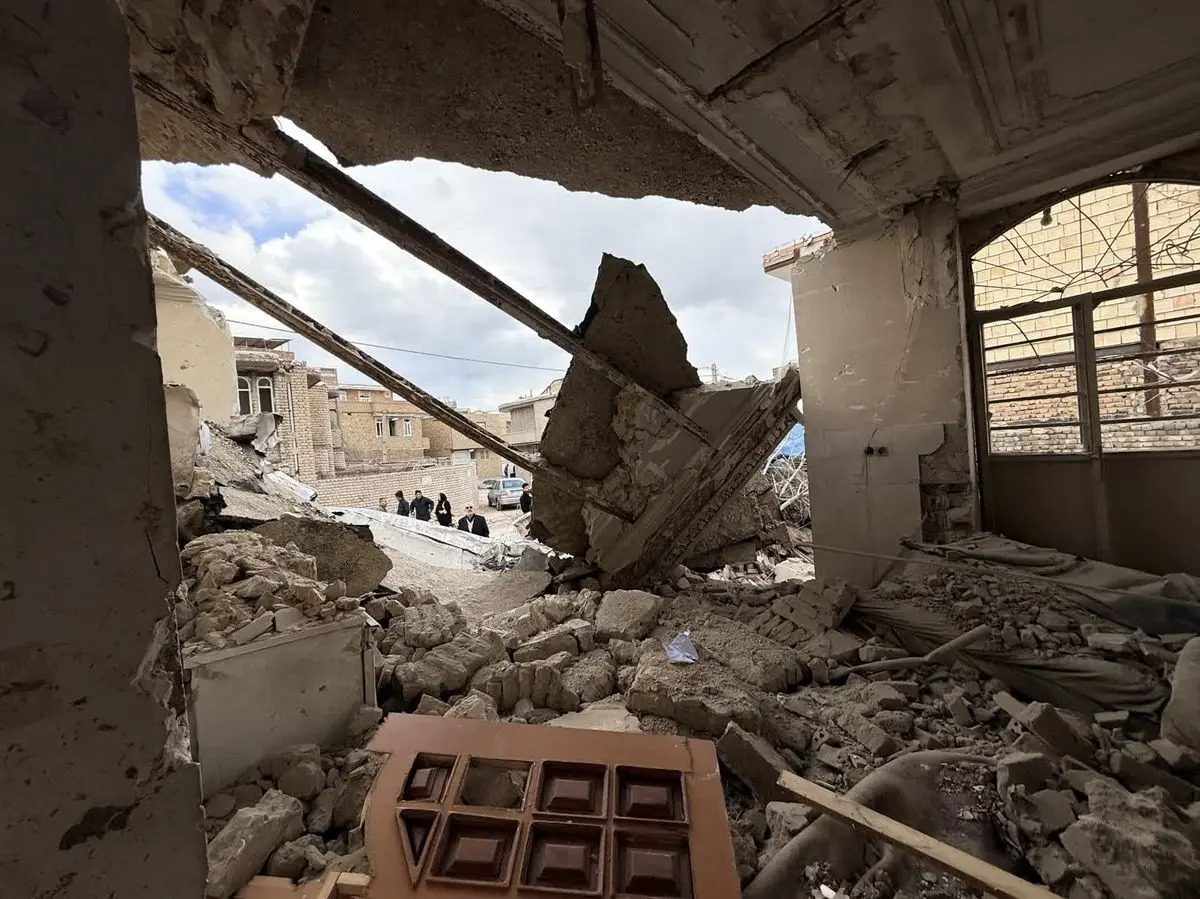
According to official reports from the Oshnavieh Governorate, on March 2, 2026, airstrikes attributed to the United States and Israel targeted locations within this county. The human and material consequences of this attack are staggering:
-
Human Casualties: A civilian identified as “Delshad Rashidi” was killed in front of his paternal home, and 12 others were injured—all of whom were confirmed to be civilians.
-
Material Damage: A total of 312 residential units sustained damage, of which 4 units were completely destroyed and require full reconstruction.
Analysis of Violations of Fundamental Principles of International Humanitarian Law (IHL)
This incident, within the framework of the 1949 Geneva Conventions and the 1977 Additional Protocols, constitutes a breach of the following peremptory norms:
-
Violation of the Principle of Distinction: Under Article 48 of Additional Protocol I, parties to a conflict must at all times distinguish between combatants and civilians. The death of a citizen in front of a residence and the damage to hundreds of homes signify a deliberate disregard for this foundational principle.
-
Prohibition of Indiscriminate Attacks: Pursuant to Article 51 (Paragraph 4), attacks which are of a nature to strike military objectives and civilians or civilian objects without distinction are prohibited. The scale of destruction in Oshnavieh indicates the use of methods of warfare without humanitarian consideration in an urban fabric.
-
Immunity of Civilian Objects (Article 52): The residential homes in Oshnavieh, which served no military purpose, are under the explicit protection of this article. The total destruction of 4 residential units is a direct violation of protective protocols for civilian objects.
-
Violation of the Principle of Proportionality: According to Article 51(5)(b), an attack which may be expected to cause incidental loss of civilian life or damage to civilian objects which would be excessive in relation to the concrete and direct military advantage anticipated is prohibited. Massive destruction in the absence of a verified military target is in absolute conflict with this principle.
Assessment of Criminal Responsibility under the Rome Statute
Under Article 8 of the Rome Statute of the International Criminal Court (ICC), intentionally directing attacks against the civilian population or civilian objects not taking part in hostilities is classified as a “War Crime.” The Oshnavieh case, involving the direct targeting of a citizen (Delshad Rashidi) and private property, falls within the jurisdiction for prosecution in international tribunals.
Legal Conclusion
The attack on Oshnavieh is more than a military operation; it is a flagrant violation of human rights and the rules of war. Under the doctrine of “State Responsibility,” the perpetrators are legally accountable for the deprivation of the right to life and are obligated to compensate for the material damages inflicted upon the county’s residential infrastructure.