

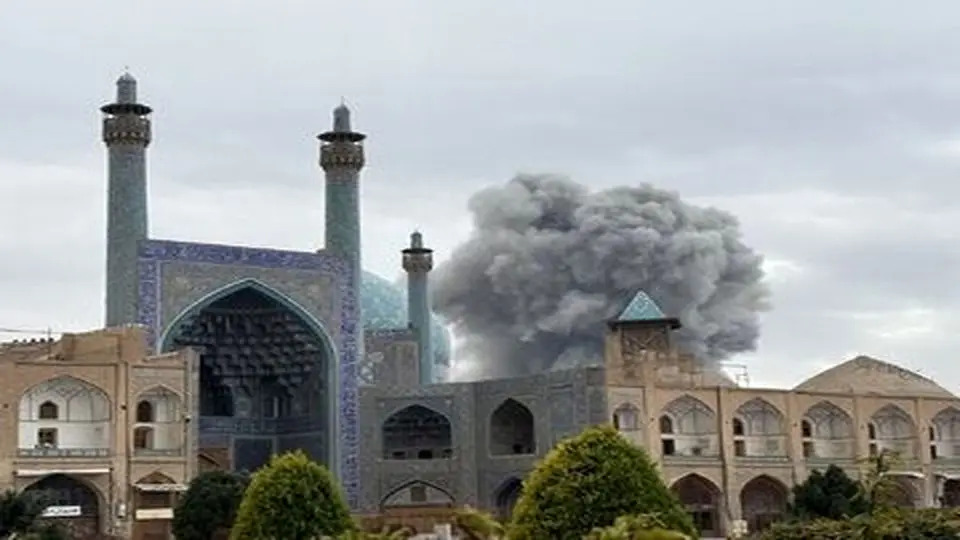
According to the official report by the Director General of Cultural Heritage, Tourism, and Handicrafts of West Azerbaijan Province, the shockwaves from airstrikes attributed to the United States and Israel in the city of Urmia caused serious damage to the directorate’s building located on Shahid Beheshti Street. Field documentation indicates:
-
Window panes and security glass at hallway entrances were completely shattered.
-
Portions of the internal walls and the building’s ceiling have collapsed.
-
Significant damage was inflicted upon the railings and the exterior facade of this historically significant structure.
Analysis under International Humanitarian Law (IHL)
The damage to this cultural and administrative institution conflicts with several peremptory norms of international law:
-
Violation of the Immunity of Civilian Objects (Article 52 of Additional Protocol I): Pursuant to this article, civilian objects shall not be the object of attack. Administrative and cultural buildings with no military function enjoy absolute protection under international law. Damaging this structure without a definite military advantage is a clear breach of this rule.
-
Violation of the 1954 Hague Convention (Protection of Cultural Property): This international treaty, along with Article 53 of Additional Protocol I, prohibits any act of hostility directed against cultural property and centers associated with cultural heritage. The indirect damage caused by blast waves in an urban area signifies a disregard for these protective obligations.
-
Prohibition of Bombardment of Undefended Places (Article 25 of the 1907 Hague Regulations): The attack or bombardment of towns and buildings which are undefended is prohibited. The occurrence of this damage within the urban fabric of Urmia constitutes a violation of the Principle of Distinction.
Assessment of International and Criminal Responsibility
From the perspective of international criminal law, inflicting disproportionate damage on cultural and civilian centers is subject to prosecution:
-
The Rome Statute (Article 8): Intentionally directing attacks against buildings dedicated to religion, education, art, and historic monuments (provided they are not military objectives) is classified as a War Crime.
-
State Responsibility: Under this doctrine, the acting states are legally accountable for violating treaties concerning the preservation of cultural heritage and are required to compensate for the material damages caused to the cultural infrastructure of the province.
Legal Conclusion
The damage to Urmia’s Cultural Heritage building is not merely “collateral damage”; it is an example of the failure to observe the principles of Proportionality and Precaution in military operations. The protection of cultural heritage is an Erga Omnes obligation (an obligation toward all), and any assault upon it is an assault on the history and identity of a nation, necessitating recourse through international tribunals.