
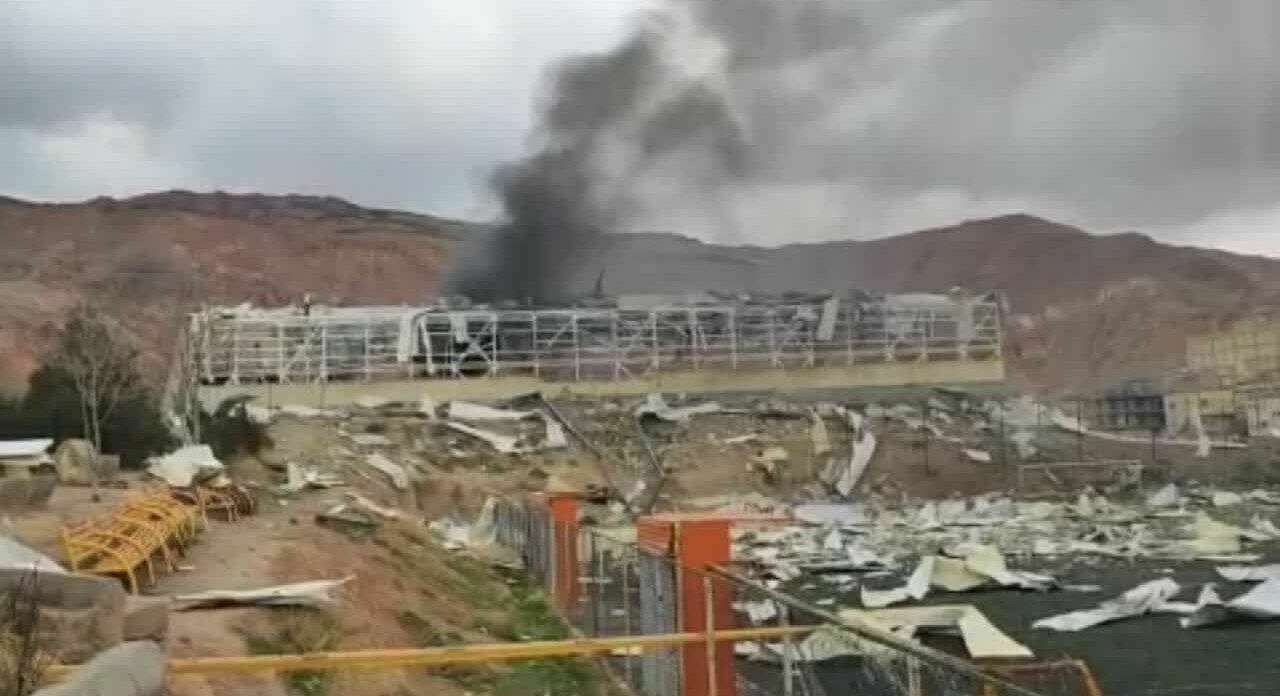
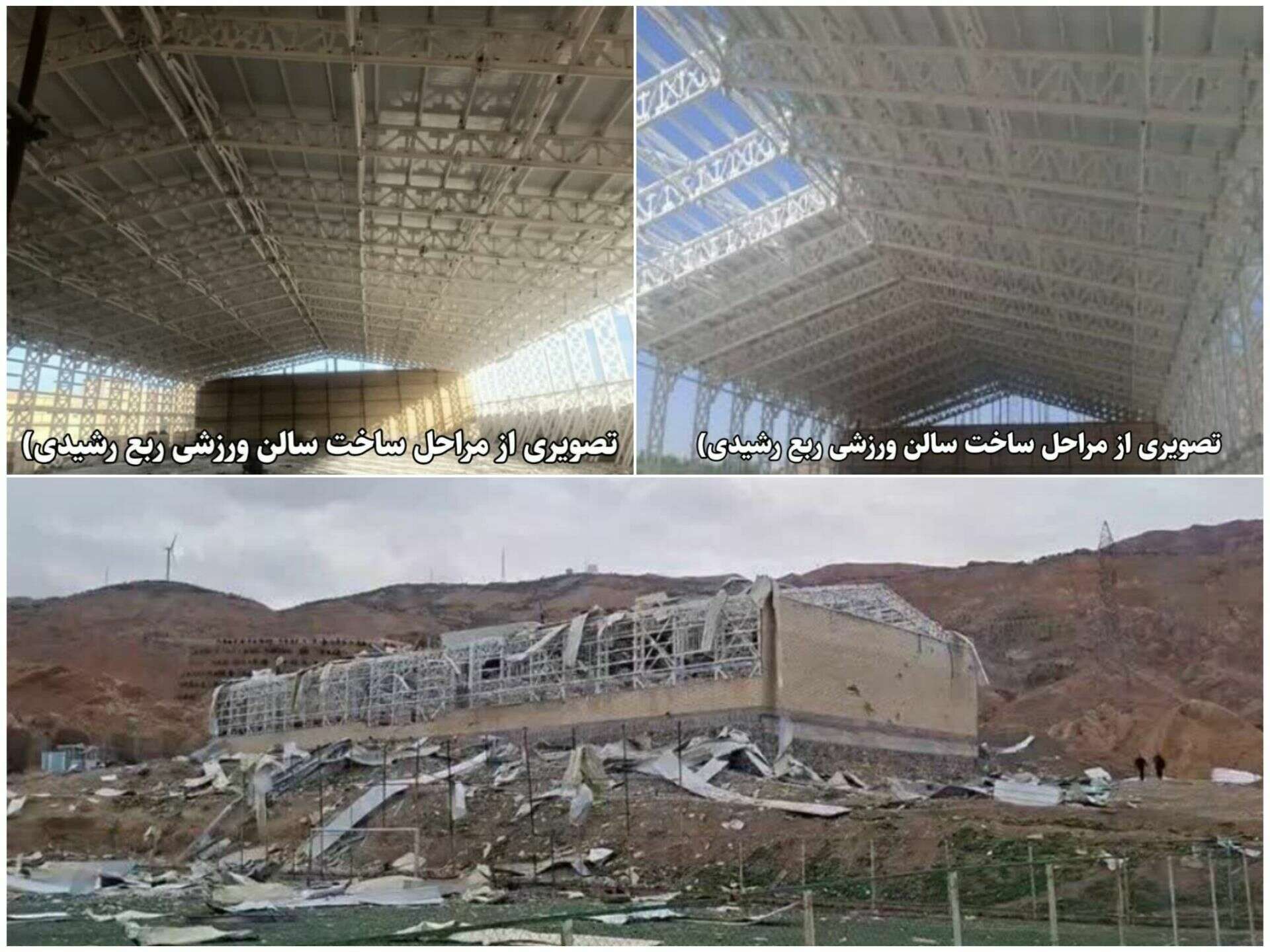
On March 24, 2026, the Rab-e Rashidi sports hall, currently under construction on the outskirts of the Pasداران Expressway in Tabriz, was targeted during airstrikes attributed to the United States and Israel. This complex, covering 1,500 square meters, was a public-interest project by the Tabriz Municipality aimed at expanding urban social and athletic spaces. Under the definitions of International Humanitarian Law (IHL), this building is classified as a “Civilian Object” with purely social and athletic utility, possessing no documented military or security use.
Violations of Fundamental Principles of the Law of Armed Conflict
The destruction of this urban facility constitutes a clear breach of international peremptory norms, manifested in the following:
-
Violation of the Principle of Distinction: Pursuant to Article 48 of Additional Protocol I to the Geneva Conventions, parties to a conflict are required to strictly distinguish between military objectives and civilian objects. Attacking a sports hall is a direct departure from this legal obligation.
-
Prohibition of Attacks on Civilian Objects (Article 52 of the Additional Protocol): This article prohibits any attack on civilian objects and emphasizes that only legitimate military objectives may be targeted. The total lack of military advantage in this target proves the illegality of the attack.
-
Breach of Proportionality and Precautionary Principles: According to Articles 51 and 57 of the Additional Protocol, attacks that cause civilian harm disproportionate to the expected military advantage are prohibited. The destruction of citizen welfare infrastructure without taking necessary precautionary measures violates these standards.
Assessment within the Framework of International Criminal Law
From a criminal law perspective, Article 8 of the Rome Statute (International Criminal Court – ICC), specifically under paragraph 2(b)(ii), defines intentional attacks against civilian objects which are not military objectives as “War Crimes.” The destruction of the Rab-e Rashidi hall is not only a material loss to the municipality’s public property but also a deprivation of the citizens’ right to health and social vitality, leaving deep social and cultural impacts on the local community.
Legal Conclusion
The attack on the Tabriz Rab-e Rashidi sports hall is a definitive example of targeting civilian infrastructure. Given the absence of military utility, this act is a criminal offense under the Rome Statute and a violation of customary laws of war. Under the doctrine of “State Responsibility,” the acting states are obligated to provide legal accountability for the destruction of public property and to compensate for the damages inflicted upon Tabriz’s urban infrastructure.