
Iranian Diplomacy: As the final days of the year 1404 (March 2026) approach, the war and attacks by the United States and Israel continue with intensity. No realistic plan or initiative for a ceasefire is currently on the international or regional table. Beyond calls for de-escalation from certain countries, no clear voice for effective mediation is being heard. Does this mean a total diplomatic dead-end? Not necessarily. The continuation of this situation could provide the groundwork for an effective initiative to manage these difficult wartime conditions.
Speculations on the Role of Armed Parties in the Kurdistan Region
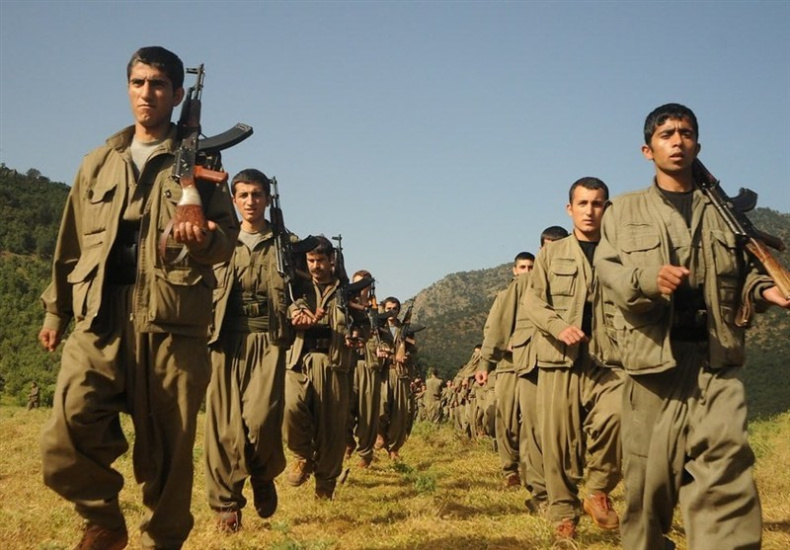
In the current volatile climate, the potential instrumental use of armed Kurdish parties based in the Kurdistan Region of Iraq (KRI) by the U.S. and Israel has once again gained attention in international media. Although Donald Trump has stated in recent remarks that he is not interested in utilizing these organizations, his inconsistent track record makes such claims difficult to take seriously.
Notably, some officials of these organizations have explicitly told Western media: “If the United States decides to support and protect Kurdish parties, we can play a very important role. We can be the initiators of freedom—not in the classic sense—and we can push back Iranian forces to take control of cities in Kurdish-populated areas.” These stances are significant for several reasons:
1. Disregard for the Public Opinion of Iranian Kurds
For these armed organizations—who openly declare their intent for military cooperation with the U.S. and Israeli armies to enter Iran under their protection—the public opinion of Kurdish citizens in the provinces of Kurdistan, Kermanshah, Ilam, and West Azerbaijan holds no value. Despite claiming representation, they ignore the decisive opposition of the majority of Iranian Kurds to armed activities, prioritizing foreign-backed border infiltration over the lives, property, and security of the people.
2. Violation of the Iran-Iraq Security Agreement
The local government of the Kurdistan Region (KRG) has repeatedly claimed that these organizations have been disarmed in accordance with the security agreement between Iran and Iraq. However, the explicit statements of these group leaders prove that the claim of disarmament is inaccurate. The re-activation of these armed parties offers no security to the region; instead, it places the Kurdistan Region further under the shadow of threat and severe retaliation from Iran and its aligned groups in Iraq.
Strategic Questions: What are the Consequences of Armed Presence?
As in past decades, these positions lack foresight and rational calculation. The leaders of these organizations must answer these critical questions:
-
If a ceasefire is established between Iran and the U.S., what fate awaits your headquarters in Northern Iraq?
-
Does your armed presence not drag the scope of war into civilian areas? Who bears responsibility for the destruction and the deaths of fellow citizens?
-
Have you accounted for the cost of Takfiri and fundamentalist movements gaining a foothold in Western Iran should the region become unstable?
Lessons from History: Testing the Proven is a Mistake
It appears these organizations have failed to learn from the past. The Kurdish people have not lost their historical memory; they remember how armed conflicts in the early decades after the Revolution halted development and reconstruction in these regions for years. Waiting for foreign intervention and living in camps is a strategy that has failed before. As the Persian proverb says: “Testing the proven is a mistake.”
/ Source: Shargh Daily