
Nelson González Sánchez, a Colombia research assistant, and Martina Rapido Ragozzino, an Andean-region researcher in the Americas Division of Human Rights Watch (HRW), conducted the research and wrote the report. The research was supervised by Juan Pappier, Deputy Director of the Americas Division, while Brian Root, the organization’s senior quantitative analyst, prepared the statistical analysis sections.
The report, titled “I Thought I Would Never See My Mother Again: Recruitment and Use of Children by Armed Groups in Colombia,” was published in English and Spanish on August 24, 2026, on the Human Rights Watch website. The research draws on 184 interviews, group sessions with five children who had been recruited and five children who had been threatened but rescued before recruitment, official data, and an examination of 72 accounts and 41 posts on TikTok and Facebook. To reduce security risks and the possibility of retraumatization, the researchers favored group discussions and lower-risk engagement over individual interviews with children.
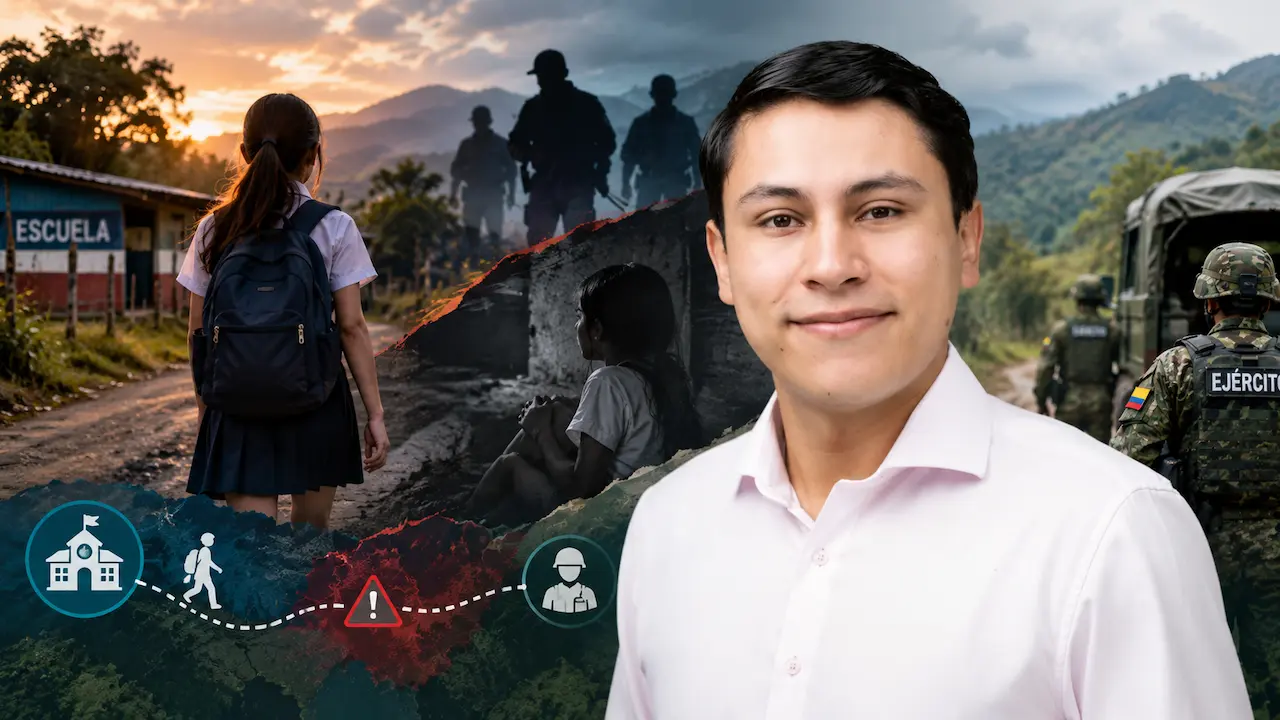
The report’s title comes from the account of a 16-year-old girl who was recruited by armed men while walking home from school at night in a rural area. After one week, she managed to escape during a confrontation and reach the Colombian army. The report connects her experience to the lack of school transportation and the dangers children face when traveling long distances along unsafe routes.
According to data from Colombia’s Office of the Ombudsman examined in the report, approximately 1,500 children and adolescents have been recruited by armed groups since 2021. The research documents an increase in this practice since 2023. Nearly half of the recorded cases involved Indigenous children, even though Indigenous people account for approximately four percent of the country’s population. Girls represent about 40 percent of the cases, while children aged 10 to 14 account for more than 30 percent of reported cases. Child-protection officials have also reported an increase in the recruitment of children as young as nine or ten. According to Indigenous leaders, the recruitment of younger generations threatens not only individuals but also the continuity of their communities’ cultures and social life.
The report explains that child recruitment does not always begin with direct abduction. Armed groups exploit poverty, lack of access to education, and domestic violence, presenting themselves as sources of income, protection, and social belonging. Some children approach these groups to escape abuse at home. Group members initially act as friends and confidants, gaining their trust with gifts, clothing, or mobile phones. In other cases, a promise of agricultural work leads a child away from home. Once the child arrives at the destination, however, they are told they have become a member of the group and must undergo training and perform assigned duties.
One notable aspect of the report is the role of civilian intermediaries, classmates, and emotional manipulation in recruitment. According to a prosecutor and an official from the Office of the Ombudsman, the Estado Mayor Central (EMC), one of the coalitions that emerged from dissident factions of the Revolutionary Armed Forces of Colombia (FARC), pays some intermediaries up to US$1,000 for each child they recruit. The report also describes the use of recruited children to persuade their classmates to join. In some cases involving girls, group members encourage them to join by creating the impression of a romantic relationship. The girls realize their actual situation only after they have effectively become part of the group’s structure.
On social media, displays of weapons, military clothing, money, and motorcycles portray life in armed groups as attractive. Researchers identified accounts that openly solicited recruits, invited interested users to send private messages, or offered to cover their transportation costs. Some of this content remained active for more than a month and attracted numerous comments from people expressing interest in joining. The report also describes suspended accounts being replaced with new ones and the use of altered symbols and names to evade detection. Meta and ByteDance, meanwhile, told the researchers that they prohibit child recruitment and the activities of violent groups and use monitoring tools, content removal, and cooperation with relevant authorities to address these issues.
Schools and social activities are also examined as environments vulnerable to recruitment efforts. Armed groups use sports competitions and local events to identify adolescents and, in some cases, enter schools and student dormitories. The report recounts cases in which adolescents were taken from educational settings and families refrained from filing complaints for fear of retaliation. The data reviewed also indicate that, during the five years studied, the months coinciding with school holidays had the highest number of recruitment cases.
After recruitment, transferring children to more distant areas is one way to sever family ties and make escape more difficult. According to Colombian Ministry of Defense data, 35 percent of children separated from armed groups in 2024 and 2025 were found in a department other than the one where they had been recruited. Their assigned duties are not limited to fighting. They include carrying messages, gathering intelligence, guarding hostages, extortion, activities linked to drugs, and working with explosives and drones. According to child-protection officials, some children who left armed groups explained that operating armed drones had been presented to them as a “game.”
The report also documents various coercive mechanisms used to keep children in armed groups. According to some interviewees, children are required to sign agreements committing to remain for three or six months. These documents are later used to threaten them and their families if they try to escape. Girls face the risk of sexual violence, forced relationships with commanders, and coercion to use contraception. Some accounts describe sexual violence being used as punishment against girls deemed disobedient. The report also recounts cases of children being killed after escaping and describes the psychological harm suffered by children who witnessed the deaths of their friends.
In response to this situation, families, women’s groups, and Indigenous organizations have taken a direct role in searching for and rescuing children. The Indigenous Guard, a voluntary, unarmed organization, accompanies families in discussions with commanders and sometimes hides children who have escaped to prevent their forced return or retaliation. The report also highlights initiatives led by Indigenous, Afro-descendant, and rural women to find children. These efforts carry serious risks, and several local leaders have been killed in connection with child-rescue activities. In one case, armed men attacked vehicles carrying two rescued girls aged 14 and 15 and took them back. The girls were released after public pressure.
The report’s criticism of the government concerns not only the absence of policies and regulations but also the gap between formal mechanisms and practical protection. Some local authorities lack the funding to relocate a child facing immediate danger. One mayor said municipal employees had pooled their own money to cover the cost of moving children to safety. Rehabilitation services also vary according to which group recruited the child. Children recruited by groups recognized as parties to the conflict qualify for specialized programs and reparations, while those exploited by other groups may be referred to general programs and face criminal prosecution. The report also highlights a shortage of specialized services for survivors of sexual violence and the difficulties Indigenous children experience when adapting to cities where the language and culture differ from their own.
Judicial accountability remains limited. According to the report, over the past decade, approximately one percent of criminal complaints concerning child recruitment led to investigations, and only 0.2 percent resulted in convictions. The report’s recommendations focus on strengthening protection and rescue efforts, supporting local initiatives, providing adequate resources, pursuing commanders and recruitment networks, and preserving digital evidence. One specific proposal is to establish a common protocol for recording children’s testimony so that, while respecting evidentiary standards and psychological safeguards, their accounts can be collected as far as possible in a single session, avoiding repeated recounting of traumatic experiences.
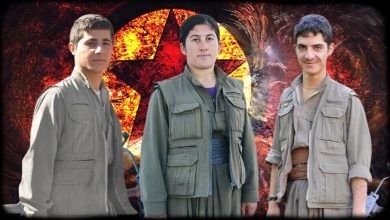
Compared with cases documented by Iranian Kurdistan Human Rights Watch (IKHRW), Kaveh Shahbazi’s account of being recruited as a teenager through Instagram, promises of money and employment, restrictions on family contact, and violent opposition to his return can be compared with the Colombian report’s themes of deceptive recruitment, isolation, and barriers to leaving. The social and employment difficulties he experienced after returning, as well as his lack of knowledge about complaint procedures, also relate to the report’s discussion of reintegration and access to justice.
In Hira’s account, her initial contact with Pak at age 15, the appeal of the image of an armed woman, the transformation of friendly contact into threats, her transfer to the Kurdistan Region of Iraq, and pressure to marry bear similarities to digital recruitment and the vulnerabilities faced by girls. Likewise, the account attributed to Shilan, in which a promise of marriage was reportedly used to draw her into the group, can be compared with the report’s discussion of emotional manipulation. These comparisons are limited to the patterns described and do not imply that the authors of the Colombian report investigated or endorsed IKHRW’s case findings.
Primary source: Human Rights Watch, “I Thought I Would Never See My Mother Again: Recruitment and Use of Children by Armed Groups in Colombia,” August 24, 2026.
Spanish-language report: https://www.hrw.org/es/report/2026/08/24/pense-que-nunca-volveria-a-ver-a-mi-mama/reclutamiento-y-uso-de-ninos-ninas-y
Related IKHRW interview: https://www.ikhrw.com/en/interview/from-cyberspace-deception-to-camp-escape