
By Tilman Rodenhäuser and Ximena Londoño
Tilman Rodenhäuser and Ximena Londoño, legal advisers at the International Committee of the Red Cross (ICRC), are the authors of the report Non-State Armed Groups and Persons Separated from Their Families, Missing Persons and the Dead: Obligations Under International Humanitarian Law and Examples of Their Implementation. The work was published by the International Committee of the Red Cross in Geneva. The formal citation inside the book gives 2025 as the publication year, while the publisher’s webpage is dated February 5, 2026. The report examines the legal obligations of armed groups, together with practical examples concerning the preservation of family contact, clarification of the fate of missing persons, and respect for the dead.
The study draws on several years of reviews of the ICRC’s operational reports, interviews with representatives of armed groups, examinations of their internal regulations, and publicly available and academic sources. The authors compiled examples involving 64 armed groups that have been parties to non-international armed conflicts since the 1960s. Most examples are presented without naming the groups in order to preserve the confidentiality of humanitarian dialogue.
The authors explicitly identify the study’s limitations: the full implementation of internal regulations and reported conduct by the groups was not systematically verified; the study is not a comprehensive assessment of all their practices; and the examples should not necessarily be regarded as “best practices.” In addition, not all measures are feasible in every circumstance. Accordingly, presenting a positive measure does not amount to endorsing the overall record of the group concerned.
The central issue is the suffering of families who do not know whether their loved ones are alive or dead. According to the report’s figures, the ICRC registered more than 56,000 new missing-person cases in 2024 and was actively following nearly 255,000 cases at the time of the report. These figures concern cases registered with the organisation, not all missing persons worldwide. Uncertainty causes not only psychological harm but also economic, social, and administrative difficulties. Failure to address the fate of missing persons can also increase grievances and create conditions conducive to hatred, violence, or future conflicts.
The report sets out seven rules and two recommendations. Its legal sources include Common Article 3 of the Geneva Conventions, Additional Protocol II where applicable, and customary international humanitarian law. The study focuses on groups that are parties to non-international armed conflicts. Referring to disagreements over the existence and scope of human-rights obligations applicable to armed groups, the authors limit their analysis to humanitarian law. Having legal obligations or engaging in humanitarian relations with these groups does not alter their legal status; compliance with their obligations is also not conditional on reciprocal conduct by the enemy.
The first rule is respect for family life to the greatest extent possible. Parties should prevent family separation and facilitate contact and reunification. Refraining from recruiting children, prohibiting abductions, assisting in the evacuation of families, and designating places where relatives can be located are among the practical examples identified. “To the greatest extent possible” does not mean that the minimum possible action is sufficient; a group with greater capacity should take greater measures.
The second rule requires all feasible measures to be taken to clarify the fate of persons reported missing as a result of conflict, including civilians and members of a party’s own forces or those of the opposing side. Available information about their fate should be provided to their families. Receiving requests, recording the last known location, cross-checking identities against information on detainees and remains, and designating a person responsible for responding are examples of implementation. The report warns that direct contact between families and armed groups may expose families to accusations of collaboration; using a neutral intermediary can reduce this risk.
The third rule prohibits enforced disappearance. The authors note that international humanitarian law does not provide a definition of the term. Drawing on Article 2 of the International Convention for the Protection of All Persons from Enforced Disappearance and Article 7(2)(i) of the Rome Statute, the report describes it in the context of armed conflict as the arrest, detention, abduction, or other form of deprivation of liberty by a party to the conflict, or with its authorisation, support, or acquiescence, followed by a refusal to acknowledge the deprivation of liberty or by concealment of information concerning the person’s fate or whereabouts, thereby placing the person outside the protection of the law.
Registering detentions, ensuring that commanders are aware of all arrests, continuously monitoring the status of detainees, and investigating allegations of enforced disappearance are among the preventive measures identified. By contrast, “missing person” has a broader meaning in this study and also encompasses wartime separations that occur without an unlawful act; not every missing person is necessarily the victim of an enforced disappearance.
The fourth rule concerns the registration of detainees’ personal information. Failure to register information, or recording it inaccurately, increases the risk of disappearance and of losing track of individuals during transfers. The information should make it possible to identify the person accurately. A paper register or digital database, designating a person responsible for registration, and regularly updating lists are among the implementation measures. Appropriate protection of personal data should also be ensured to the greatest extent possible.
The fifth rule concerns detainees’ ability to correspond with their families and to receive family visits to the extent practicable. Letters, telephone or video calls, electronic messages, and the transmission of messages through the Red Cross are possible means. Reasonable restrictions on the frequency of correspondence and security screening may be permitted, but such restrictions must not be used as punishment. A lack of resources does not justify cutting off all family contact. Demanding money, goods, or services in exchange for allowing visits is also prohibited.
The sixth rule concerns the search for, collection, and transfer of human remains, whenever circumstances permit, particularly after fighting, without delay and without harmful discrimination. Mutilation is prohibited; all feasible measures should be taken to prevent the looting of remains, the dead should be treated with respect, and graves should be preserved. Available information necessary for identification should be recorded and preserved before remains are buried or otherwise disposed of. Parties should also seek to facilitate the return of remains and personal belongings at the request of relatives.
Recording the coordinates or other location information of graves is presented as a practical example of implementing this obligation. The report also recommends that photographs used for identification be stored securely and that full-face or full-body images of the dead not be published in the media. A certificate confirming death should be issued only where evidence establishes that the person has died, because people who had been declared dead have sometimes later returned. In the absence of such evidence, the ICRC recommends issuing documentation stating that the person is missing. The payment of assistance or compensation does not extinguish a family’s right to know the fate of its loved one.
The seventh rule recalls the possibility of offering the services of neutral humanitarian organisations. The ICRC can assist with searches, the transmission of family messages, the registration of detainees, and the identification and return of remains; primary responsibility nevertheless remains with the parties to the conflict. Confidentiality in dialogue and data protection are important in this cooperation. Private interviews with detainees and the possibility of repeated visits are among the ICRC’s working methods; visits should not be made conditional on receiving equivalent permission from the enemy.
The two final recommendations are distinguished from binding rules: some aspects reflect legal obligations, while others are based on practical experience. The first recommendation is to establish mechanisms for collecting and transmitting information and to designate a point of contact for families. In non-international armed conflicts, there is no equivalent obligation to the one applicable in international armed conflicts to establish national information bureaux, but appropriate mechanisms and special agreements are recommended. The second recommendation is to include the search for missing persons and the dead in ceasefire and peace negotiations, including information-sharing, the creation of a working group, and coordination for the transfer of remains. The end of a conflict does not end the obligation to clarify the fate of missing persons. Individual criminal responsibility and possible remedies should also be considered.
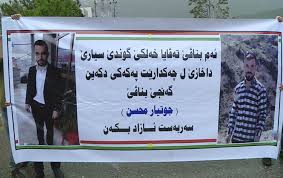
Cases published by the Kurdistan Human Rights Watch provide an opportunity for three specific comparisons. These comparisons are an analysis by the Watch; the ICRC study did not examine or verify these cases. Applying the law of armed conflict to any individual case would also require the relevant conditions to be established.
In the article “I Just Found Out What Happened to My Son,” published by the Watch on July 17, 2022, the father of Meysam Mohammadzadeh describes nearly four years of uncertainty and unsuccessful searches at police stations and hospitals. This account is relevant to the preservation of family contact and clarification of the fate of missing persons. Establishing an enforced disappearance, however, requires more than a lack of information; it requires documentation of the deprivation of liberty and its denial or the concealment of the person’s fate or whereabouts.
In the report “They Threw Mobasher’s Belongings in a Garbage Bag into the Yard,” published by the Watch on December 3, 2022, the family of Mobasher Karimpour recounts that, after three years without information, they learned through neighbours that his death had been announced in media outlets affiliated with PJAK. His father says that the family received no clear information about the body or grave and that his clothes and documents were thrown into the yard. Questions relevant to the framework of the report include: What evidence establishes that the person died, and where are the remains or burial site? The recommendation to document a person as missing in the absence of proof of death is directly relevant to this case.
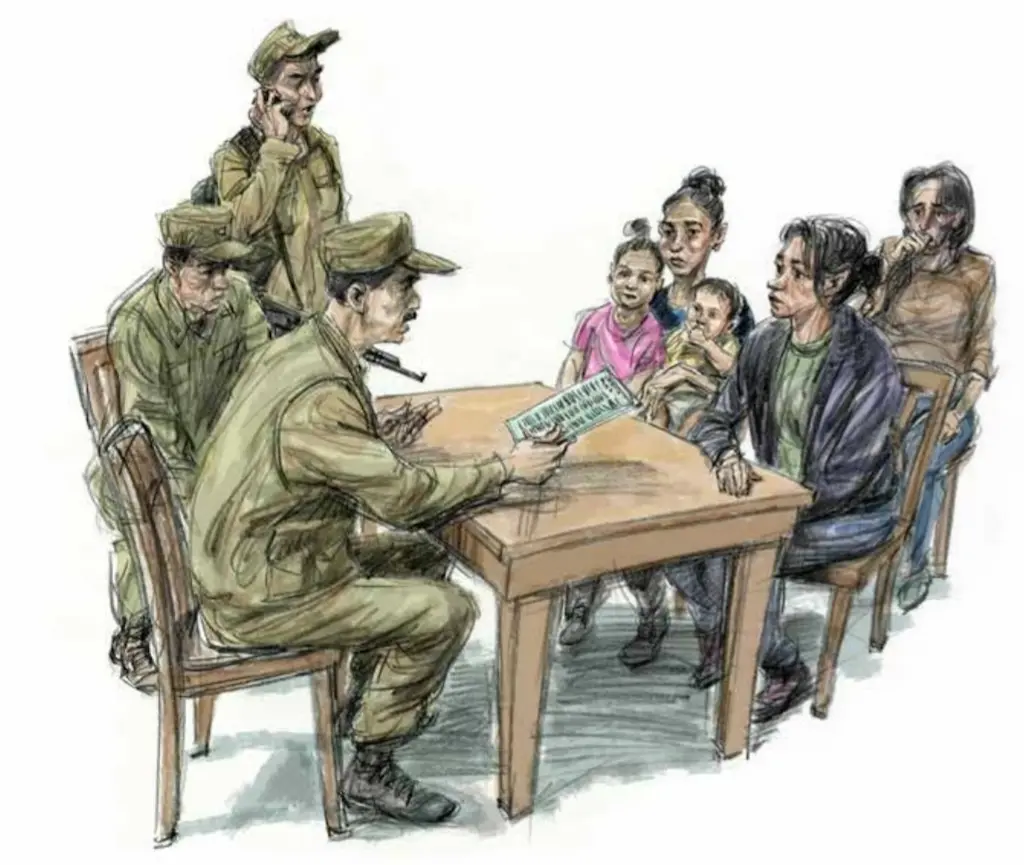
In the interview “From Deception in Cyberspace to Escape from the Camp – Part Two,” published by the Watch on September 15, 2026, Hira says she was prevented from disclosing her actual circumstances before a family visit and was interrogated after expressing a desire to return. These allegations, particularly if a deprivation of liberty is established, can be examined in relation to the requirement for meaningful family contact and the prohibition on punitive restrictions. Assessing compliance with these rights requires documentation of the circumstances of the visit and the consequences of the conversation; the mere occurrence of a visit is not sufficient.