
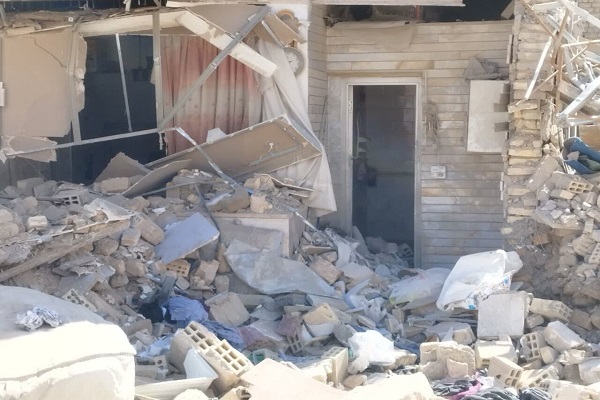
In recent days, a series of reports regarding armed clashes in the Marivan, Baneh, and Mahabad regions has once again drawn public attention to the resurgence of armed insecurity in parts of western Iran. These reports speak of clashes between government forces and armed groups, drone strikes, artillery usage, and the closure of transit routes—events that, regardless of the conflicting narratives offered by either side, reveal one shared reality: civilians bear the heaviest burden of this cycle of violence.
Under International Humanitarian Law (IHL), the principle of civilian protection stands as one of the most foundational rules governing any armed conflict. Even when conflicting parties claim self-defense or military necessity, these principles strictly obligate them to minimize the impact of their operations on the civilian population and prevent unnecessary harm to the lives, property, and livelihoods of ordinary people.
However, the reality on the ground in border regions demonstrates that whenever an armed clash erupts, its immediate consequence is the disruption of ordinary citizens’ daily lives. Road closures, the establishment of checkpoints, heightened security measures, transportation blockages, declining market activity, and the halting of local trade directly impact the financial stability of families whose daily income relies on agriculture, orchard farming, border trade, transport, or small businesses.
The recently reported case of damage to orchards and agricultural lands on the outskirts of Baneh—regardless of which party is held responsible—serves as a stark reminder that farmland, water resources, orchards, and livelihood infrastructure must never be turned into military battlegrounds. Harm to these vital resources is not merely a short-term financial setback; it poses a direct threat to the human security, food security, employment, and economic stability of local families.
Furthermore, armed conflicts inflict deep social wounds on local communities. Families are forced to live under a perpetual cloud of insecurity, children grow up in environments saturated with fear, school operations face severe disruptions, and access to medical, educational, and relief services becomes heavily restricted. Women, the elderly, individuals with disabilities, and children routinely bear the brunt of these conditions, as they possess fewer resources to cope with displacement, insecurity, or the breakdown of public services.
Global experiences from various conflict zones have repeatedly shown that no military operation conducted near residential areas or civilian infrastructure can ever be truly contained within purely military bounds. Even when the declared objective of an operation is strictly tactical, its economic, psychological, and humanitarian ripples inevitably spread far beyond the immediate combat zone, upending the lives of thousands of ordinary citizens.
From a human rights standpoint, civilian protection must never become a demand dependent upon the political identity or affiliation of the conflicting parties. The responsibility to respect the lives, security, and livelihoods of the people rests heavily upon all entities that deploy force. Adhering to the principles of distinction, proportionality, and precaution is not a political choice, but a binding legal and humanitarian obligation.
At a time when border regions critically require security, investment, job creation, and the restoration of public trust, the recurrence of armed operations poses a fundamental question to public opinion: What is the tangible gain of these actions for the residents of these very regions?
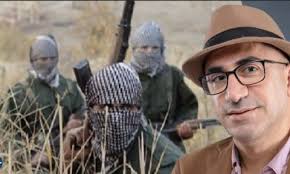
PJAK and other armed Kurdish groups have relied on a strategy of armed struggle, confrontation, and violence for years. Yet, they have consistently failed to provide a clear answer to a fundamental question: What concrete achievements has this prolonged warfare, conflict, and tension brought to the people of the Kurdish regions? Has this cycle resulted in enhanced security, prosperity, development, and greater rights, or has it instead bred widespread insecurity, restrictive security measures, economic devastation, and severe disruption to the daily lives of citizens?
If the outcome of every operation is the closure of roads, the intensification of a securitized atmosphere, damage to orchards and fields, a decline in economic activity, and mounting anxiety for families, then who stands to profit from these actions, and who pays the price? Do the leaders of these armed factions bear these costs, or is it the farmers, shopkeepers, laborers, women, children, and families who have absolutely no voice in the decision to initiate these clashes?
This question is specifically directed at PJAK, a group that identifies itself as the Iranian branch of the PKK. At a time when the PKK has engaged in processes to declare the end of its armed struggle, pursue disarmament, and transition from military solutions to political avenues, the question arises: Is it not high time for PJAK to critically re-evaluate its own strategy, distance itself from the perpetuation of violence, and join processes aimed at de-escalation and laying down arms?
Ultimately, the responsibility to respect human rights does not rest solely on the shoulders of states. Armed groups are equally accountable for the consequences of their actions on the lives, security, livelihood, and future of civilians. Until a transparent answer is provided to these questions, the profound concern will endure that the greatest losers in any new round of violence are not the warring parties, but the very people whose homes, farms, markets, schools, and children’s futures are ravaged under the shadow of this debilitating cycle.