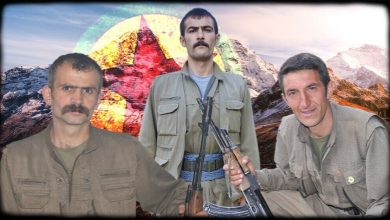

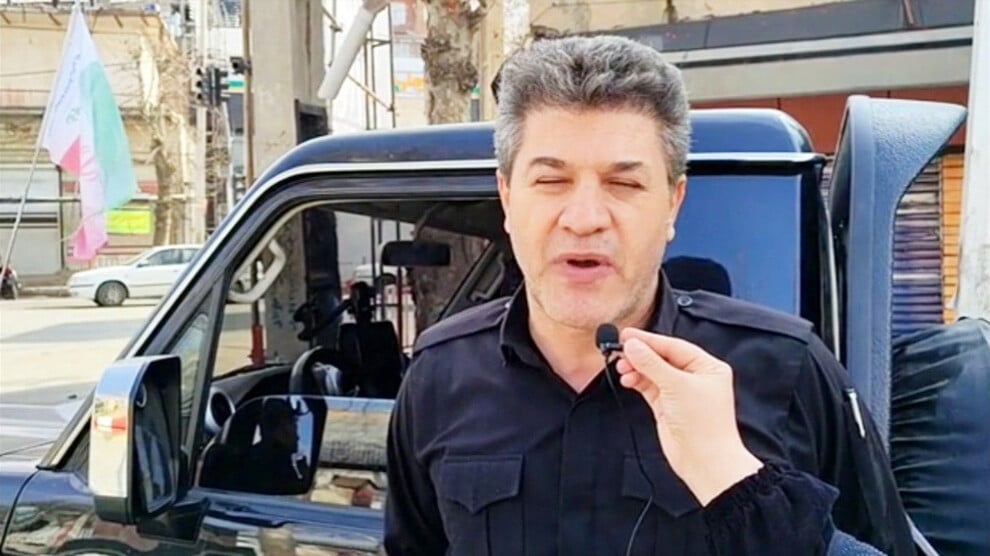
The publication of the official statement by the military wing of the PJAK militants, known as YRK, regarding the killing of an individual named “Omid Vashkalani” in Marivan, has once again raised concerns about the continuation of extrajudicial violence and the lack of accountability among some armed groups active in Kurdish regions.
In a report published by a media outlet close to PJAK, the full text of the YRK statement on this event was republished. The statement notes that on May 22, 2026, in the village of Tusuran, Marivan, “Omid Vashkalani” was “punished” by the local and autonomous forces of this group.
A notable point is that in this statement, not only is the responsibility for this action accepted, but the forces involved in it are also explicitly praised and thanked. YRK has also announced that some other groups intended to claim responsibility for this action, but it was ultimately revealed that the operation was carried out by forces affiliated with this group itself.
Further in the statement, Omid Vashkalani is accused of cooperating with the Islamic Republic of Iran, drug trafficking, prostitution, threatening opponents, and acting against “the values of the people.” However, no document, independent investigation process, judicial decree, or legal authority has been provided to prove these accusations.
From a human rights perspective, this very point is of fundamental importance. Even if the gravest accusations are raised against an individual, no political or military group has the right to simultaneously assume the roles of law enforcement agent, interrogator, prosecutor, judge, and executioner. Depriving an individual of the right to life without a fair trial and outside the legal process is a clear instance of extrajudicial execution or murder.
In the rhetoric of this statement, the word “punishment” replaces the judicial process. This is while determining crime and punishment within a legal framework requires independent review, the right to defense, the possibility of appeal, and adherence to the principles of a fair trial. Using concepts such as “traitor,” “contra,” “enemy asset,” or “regime collaborator” cannot substitute for these principles.
The term “contra” in the literature of some Kurdish armed groups is not merely a political description. Over past years, this word has been used repeatedly to label individuals accused of cooperating with governments or security agencies. The main problem is that in many cases, such labels are put forward within internal organizational decision-making frameworks rather than through a transparent judicial process; a situation that increases the risk of legitimizing the physical elimination of individuals.
Another section of this statement creates even more serious concerns. At the end, YRK declares that individuals who cooperate with the Islamic Republic and whose hands are stained with the blood of this group’s forces will be targets for their forces. This phrase practically constitutes a form of public threat; because no clear definition of the concept of “cooperation” is provided, and its determination has not been delegated to an independent authority.
The Iranian Kurdistan Human Rights Watch (IKHRW) has warned in numerous reports over past years against the violation of the fundamental rights of individuals within some Kurdish armed groups. Published reports on the recruitment of children in armed structures, ambiguous deaths in military camps, the disappearance of members, depriving families of information regarding the fate of their children, and preventing some forces from returning to normal life, have all emphasized a common issue: the lack of a transparent and independent mechanism for accountability.
In some cases previously documented by the Iranian Kurdistan Human Rights Watch, families have searched for years for the truth regarding the fate of their children but have received no clear answer. In such circumstances, the public acceptance of responsibility for the murder of an individual and the praise of its perpetrators raise more serious questions about these structures’ view on the right to life and the principle of accountability.
Another point worth reflecting on is the role of individuals who live and operate in European countries but simultaneously defend violent acts and the physical elimination of people in the media space. Rezgar Roshani, who published this statement on the social media platform X, introduces himself as a member of PJAK and, according to information published on his user account, resides in the United Kingdom.
This issue places important questions before European civil society, media, and human rights institutions. European countries have always introduced themselves as defenders of the rule of law, the right to life, fair trials, and countering political violence. Under such conditions, promotional support or legitimizing actions that lead to the killing of individuals outside of any judicial process contradicts the values these countries claim to defend.
The main concern is that some activists and affiliates of armed groups benefit from the political and civil freedoms available in Europe, but simultaneously support rhetoric in which murder, physical elimination, and threatening opponents are introduced as legitimate tools. The continuation of such an approach can weaken the credibility of human rights discourse and raise the question of whether human rights standards and the rule of law should be applied equally to all actors, including states and non-state armed groups.
What is observed in the recent YRK statement is not merely the announcement of responsibility for an armed action; rather, it is an attempt to legitimize the physical elimination of an individual based on accusations that have never been reviewed in an independent judicial process. The main danger of such an approach is that it obliterates the boundary between justice and revenge, and between accountability and political violence.
Groups that introduce themselves as defenders of freedom, the rights of the people, and justice are inevitable to answer this question: do they demand the right to life and the principle of a fair trial only for themselves, or do they recognize it for opponents and the accused as well?
The public acceptance of responsibility for the murder of an individual, praising its perpetrators, and threatening others with a similar fate is not only incompatible with the fundamental principles of human rights, but can also lead to the normalization of a cycle of violence and physical elimination in Kurdistan society; a cycle whose victims, ultimately, beyond any political orientation, will be the Kurdish citizens themselves.