
Sanctioning the International Criminal Court
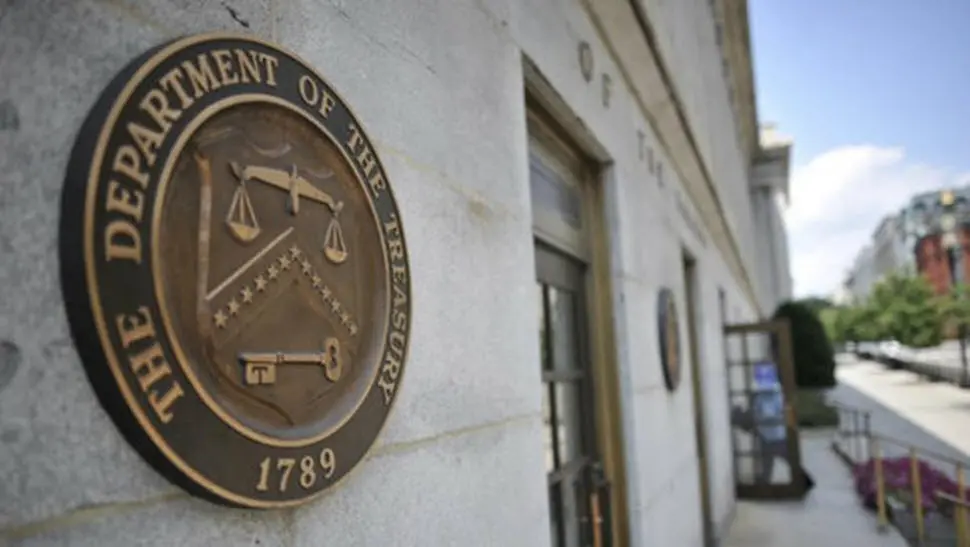
For the first time, a court’s name appeared on the United States sanctions list. On Friday, October 9, 2026, the U.S. Department of the Treasury’s Office of Foreign Assets Control (OFAC) added the International Criminal Court (ICC), together with the address of its headquarters in The Hague, to its list of sanctioned persons and entities. The official entry, identified by the code “ICC-EO14203,” signalled that financial pressure had expanded from individuals to the judicial institution itself. A dispute that had continued for years over the limits of the Court’s jurisdiction was now directly targeting its resources and transactions. The action is documented in OFAC’s official notice. The institution concerned is the International Criminal Court, not the International Court of Justice.
This confrontation has a complicated history. On September 2, 2020, the United States sanctioned Fatou Bensouda and Phakiso Mochochoko under Executive Order 13928. That policy, however, did not continue uninterrupted. On April 1, 2021, Joe Biden revoked the previous order through Executive Order 14022 and terminated the related national emergency. Trump’s return brought a renewed use of sanctions. Executive Order 14203 was issued on February 6, 2025; Karim Khan was named in its annex, and OFAC announced his addition to the sanctions list on February 13. Then, on June 5, four ICC judges—Reine Alapini-Gansou, Solomy Balungi Bossa, Luz del Carmen Ibáñez Carranza, and Beti Hohler—were also sanctioned. The October 2026 decision extended this pressure to the Court itself.
Signs of this latest phase had emerged earlier. On September 20, 2026, The Wall Street Journal, in a report by Matthew Dalton and Alexander Ward, reported preparations for sweeping sanctions, while Reuters published information from two informed sources on the same day. On October 8, a report attributed to the New York Post, whose republished version can be reviewed, described the action as imminent. The following day, Reuters reported that it had first published a statement by U.S. Secretary of State Marco Rubio. The displayed publication time was 14:02 UTC, equivalent to 17:32 in Tehran. The subsequent appearance of the statement in the Forth archive does not, by itself, establish that it was published first across all media outlets and official channels. The statement’s message, however, was clear. In a republished version of the State Department announcement, Rubio said: “Either the Court changes its ways, or we will end the Court’s operations.” This turned a dispute over a particular case into a threat against the continued operation of an institution.
Legal precision is the starting point for any critique of this decision. The International Criminal Court is not a general-purpose court for adjudicating every human rights violation. It is a forum for determining the criminal responsibility of individuals for crimes within the jurisdiction of the Rome Statute. Nevertheless, its work is directly connected to victims’ rights and the need to combat impunity. Defending the independence of such an institution does not mean endorsing every allegation or decision in advance. A court that must preserve access to justice is also obligated to uphold the rights of the defence and the requirements of a fair trial.
The stated legal basis for sanctioning the institution is Section 1(a)(ii)(A) of Executive Order 14203. This provision concerns direct involvement in the Court’s efforts to investigate, arrest, or prosecute persons protected by the order without the consent of their country of nationality. The criterion concerning the provision of material, financial, or technological support appears in the following provision, Section 1(a)(ii)(B). Section 1(a) provides for the blocking of property subject to U.S. jurisdiction, while Sections 3(a) and 3(b) prohibit the provision and receipt of related funds, goods, and services. Section 6 also covers transactions that violate or circumvent the prohibitions. The full text is available in the official version of the executive order. This framework creates financial and transactional pressure; it does not give the United States the authority to dissolve the Court or invalidate its judicial decisions.
The scope of the sanctions must be considered alongside their exceptions. Under paragraph (a) of General License No. 13, transactions necessary to maintain or wind down the Court’s operations and contracts are authorised until 12:01 a.m. Eastern Daylight Time on April 7, 2027. The accompanying explanation covers certain payments from member states, employee salaries, insurance, rent, and ordinary services. Paragraph (b) permits the use of blocked accounts for these same transactions, while paragraph (c) makes clear that the licence does not constitute general authorisation to transact with other sanctioned persons. Consequently, adding the Court to the sanctions list is not equivalent to an immediate halt to all its activities.
General License No. 14, in paragraphs (a) through (c), authorises certain telecommunications services, internet communications, enterprise software, and related cloud services. General License No. 15 covers certain pension-related transactions subject to its conditions, while General License No. 16 authorises services related to the continued detention, health, safety, and welfare of persons named in its annex. These documents do not support a claim that all technology or detention-related services have been completely cut off. A human rights critique remains credible only if it accurately describes the actual limits of the decision as well.
Despite these licences, the question of judicial independence remains unresolved. To fulfil its mandate, the Court needs continuity of services, protection of information, access to specialists, and the ability to plan its work. When these needs become subject to political pressure and financial uncertainty, the risk of disruption extends beyond administrative management and into judicial proceedings. A bank or service provider may distance itself even from authorised cooperation to avoid the costs of compliance reviews or the risk of penalties. This is an identifiable risk that can be analysed; establishing that it has occurred in any particular case requires separate evidence.
The potential costs of such disruption would not be borne by Court staff alone. Delays in securing funding for investigations could postpone the recording of witness testimony. Difficulties in maintaining secure services could complicate the protection of sensitive information. The withdrawal of specialist support could prolong the examination of evidence. At the other end of this chain are victims whose lives do not follow the timetable of diplomatic negotiations. As time passes, access to witnesses and documents, as well as opportunities for redress, may become more difficult. A threat to the Court’s independence thus becomes, through these mechanisms, a practical threat to the right to seek justice.
Washington explains its opposition by invoking national sovereignty and the fact that the United States is not a party to the Rome Statute. But a country’s non-membership does not, by itself, resolve every question of jurisdiction. Article 12(2)(a), subject to the applicable conditions, provides for territorial jurisdiction, while Article 13(b) concerns referrals by the United Nations Security Council. Article 17, meanwhile, preserves the role of genuine national proceedings, and Article 19 provides a mechanism for challenging the Court’s jurisdiction or the admissibility of a case. Disputes over the limits of the Court’s authority should be examined within these legal frameworks. A state’s economic power is no substitute for a legal argument about jurisdiction.
The Court itself is not beyond criticism. Case selection, the pace of investigations, resource management, and respect for the rights of accused persons should all be subject to independent assessment. Defending judicial independence increases the importance of accountability. But reforming a court’s performance is fundamentally different from making its continued existence conditional on the approval of a government concerned about its proceedings. Independence matters most when a judicial body can examine arguments and evidence even when its conclusions are unwelcome to the powerful.
From the perspective of Kurdistan Human Rights Watch, this standard must apply equally to all victims. Victims of state violence and victims of violence by non-state armed groups are equally entitled to have their allegations examined independently and on the basis of evidence. Neither the identity of a suspected perpetrator nor sympathy for a victim should determine whether responsibility is established. Nor does every case necessarily fall within the Court’s jurisdiction; making unsupported promises about the possibility of prosecution can itself damage families’ trust. What must be defended is the continued ability to document violations, assess allegations impartially, and access a competent judicial forum.
The solution is to lift measures that target the capacity for independent judicial proceedings and to channel disputes into legal processes. States Parties should turn their support into practical action: sustainable funding, protection for witnesses and staff, continuity of banking and technical services within the applicable legal frameworks, and consideration of legal mechanisms to prevent unjustified interruptions in cooperation. Existing licences may help prevent disruption, but guarantees of judicial independence should not depend on temporary extensions of permission to operate.
The Court itself must also protect its credibility through transparency, accountability, and rigorous adherence to fair-trial standards. A defence of the institution is strongest when it preserves the possibility of criticising it at the same time. The ultimate issue is not the predetermined acquittal or conviction of any individual; it is the preservation of the ability to judge according to law and evidence. If threats to end a court’s operations become an accepted instrument of policy, victims will learn that their path to justice remains open only for as long as those in power permit it.
Sources and References
- U.S. Department of the Treasury, Office of Foreign Assets Control (OFAC), notice adding the International Criminal Court to the sanctions list and issuing related general licences, October 9, 2026. The official source documenting the institutional designation. View document.
- Executive Order 14203, “Imposing Sanctions on the International Criminal Court,” issued February 6, 2025; published in the Federal Register on February 12, 2025, Volume 90, pages 9369–9373. The basis for examining the sanctions provisions; Karim Khan is named in the annex on page 9373. Official PDF.
- OFAC, notice announcing sanctions against Fatou Bensouda and Phakiso Mochochoko, September 2, 2020. View document.
- Joe Biden, Executive Order 14022, “Termination of Emergency With Respect to the International Criminal Court,” April 1, 2021. Revoked Executive Order 13928; text republished by the American Presidency Project at the University of California, Santa Barbara. View order.
- OFAC, notice concerning the executive order relating to the International Criminal Court and the addition of Karim Asad Ahmad Khan to the sanctions list, February 13, 2025. View document.
- OFAC, notice announcing sanctions against four International Criminal Court judges and issuing related general licences, June 5, 2025. The judges named were Reine Alapini-Gansou, Solomy Balungi Bossa, Luz del Carmen Ibáñez Carranza, and Beti Hohler. View document.
- Matthew Dalton and Alexander Ward, The Wall Street Journal, “Trump Escalates Effort to Dismantle International Criminal Court,” September 20, 2026. Report on preparations for sweeping sanctions against the Court. View report.
- Humeyra Pamuk and Anthony Deutsch, Reuters, “Trump Administration Preparing Sanctions Against International Criminal Court, Sources Say,” September 20, 2026; updated September 21. View report.
- The New York Post, “New State Department Sanctions Against International Criminal Court,” October 8, 2026. This article is referenced through a republished version on Manhattan Daily; the original page could not be retrieved directly at the time of review. Original page | Reviewed version.
- Humeyra Pamuk, Steve Holland, and Anthony Deutsch, Reuters, “U.S. Sanctions International Criminal Court Hours After Former Judge Wins Nobel Peace Prize,” October 9, 2026. Source for Reuters’ claim that it first published the announcement of the sanctions. View report.
- Marco Rubio, U.S. Department of State, statement, “Imposing Sanctions on the International Criminal Court,” October 9, 2026. The quotation was checked against a republished version of the State Department announcement on Forth; the State Department page could not be retrieved directly at the time of review. The time displayed by Forth does not, by itself, establish when the statement was first officially published. Official statement page | Reviewed version on Forth.
- U.S. Department of State, fact sheet, “Imposing Sanctions on the International Criminal Court,” October 9, 2026; republished on Forth. Explains the basis for designating the Court, the effects of the sanctions, and the accompanying licences. View text.
- OFAC, General License No. 13, “Authorizing Certain Transactions Related to the International Criminal Court,” October 9, 2026. Authorises the maintenance or wind-down of operations and contracts until 12:01 a.m. Eastern Daylight Time on April 7, 2027. Official PDF.
- OFAC, General License No. 14, “Authorizing Certain Transactions Related to Telecommunications and Enterprise Software Related to the International Criminal Court,” October 9, 2026. Official PDF.
- OFAC, General License No. 15, “Authorizing Transactions Related to Pension Payments Related to the International Criminal Court,” October 9, 2026. Official PDF.
- OFAC, General License No. 16, “Authorizing Certain Transactions Related to Specified Detainees of the International Criminal Court,” October 9, 2026. Official PDF.
- United Nations, Rome Statute of the International Criminal Court, adopted July 17, 1998. Relevant provisions include Articles 1 and 5 on the Court’s nature and subject-matter jurisdiction; Article 12(2)(a) on territorial jurisdiction; Article 13(b) on Security Council referrals; Article 17 on admissibility; and Article 19 on challenges to jurisdiction or admissibility. Text available through the United Nations legal database.