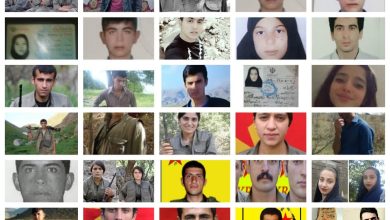

In many Middle Eastern armed groups, leaders are not merely military commanders; they gradually evolve into the psychological center of the organization. The structure, language, fears, and even human relations of the members slowly mirror the leader’s personality. Regarding Hossein Yazdanpanah, what recurs in the accounts of families, defectors, and human rights reports is not just a collection of security allegations, but a portrait of a specific personality pattern: a personality that prioritizes control over trust, loyalty over independence, and fear over human connection. In recent years, the Iranian Kurdistan Human Rights Watch (IKHRW) has published a series of reports on the PAK group and Hossein Yazdanpanah himself; reports whose common thread includes the recruitment of minors, psychological pressure on families, restricting members’ communication with the outside world, and the instrumental use of women and adolescent girls within the group’s structure. In personality psychology, a professional analysis is impossible without a direct clinical examination; therefore, a definitive psychiatric diagnosis cannot be issued for Yazdanpanah. However, behavioral patterns can be analyzed, and these patterns gain meaning when they are repeated across multiple, independent accounts.
An Intense Need for Control and Separation from Family
One of the most prominent traits observed in witnesses’ accounts is an intense need for control. In several reports, families have stated that after joining the group, their children were gradually alienated from their families, communication was severely restricted, and even requests to return were met with heavy psychological pressure. For a personality psychologist, reports regarding children in the PAK group indicate that this is not merely a political dispute. This type of behavior usually signals a structure where the leader perceives the emotional independence of the members as a direct threat to his authority. In such systems, the family is treated as a rival to the organization because the family possesses the potential to return the individual to a normal life, induce guilt, or diminish their emotional dependency on the group. In the account of one family, a mother explains that after months of no news, her daughter uttered only a few repetitive sentences during a brief phone call before the line was disconnected. In another account, a family claims that after their child attempted to leave, they were put under pressure and forced to take a public stance against their own family. These types of accounts, when independent and recurring, are highly significant for a personality analyst because they demonstrate that the organization does not merely control the behavior of its members; it reconstructs their psychological identity.
Cult-Like Characteristics and Global Dualism
This is precisely where the concept of cult-like characteristics enters the analysis. Cult leaders typically divide the world into two absolute spheres: “the loyalists” and “the traitors.” In this worldview, there is no room for critics; there are only enemies. In reports and reactions attributed to Yazdanpanah, protesting families or critical media are repeatedly branded with security and espionage labels. From the perspective of the psychology of power, this behavior is not accidental. Leaders who cannot tolerate ambiguity or criticism usually require a “permanent enemy” to maintain internal cohesion. The enemy keeps the organization united. Fear generates loyalty, and the more psychologically insecure the leader feels, the more intense this global dualism becomes.
An Instrumental View and Patterns of Violence Against Women and Minors
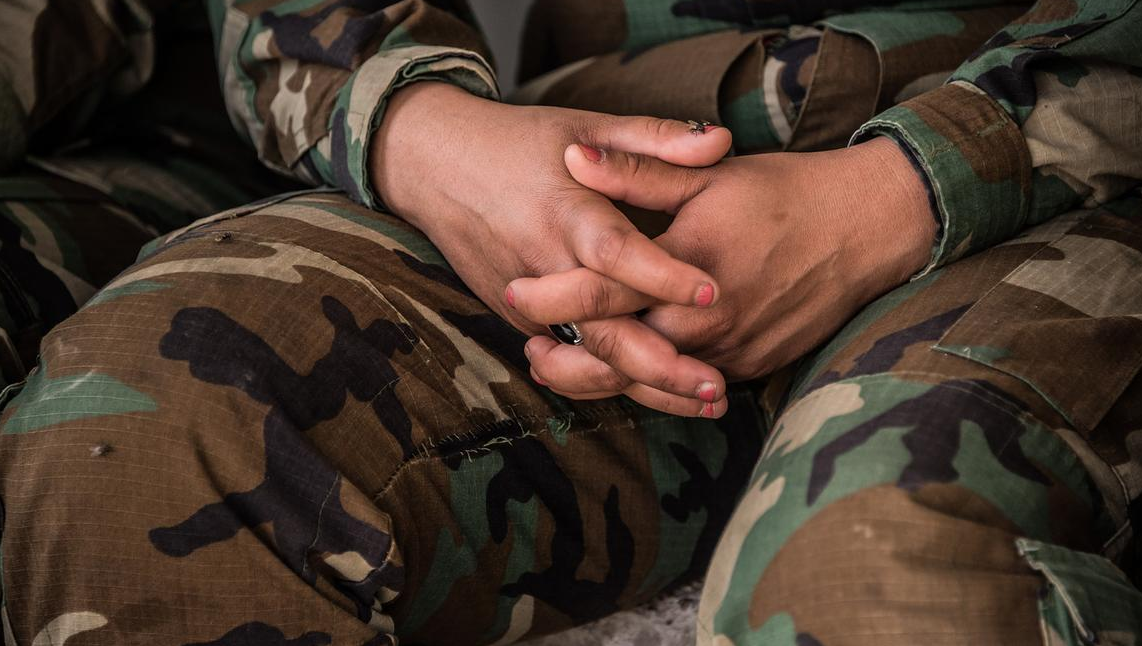
Perhaps the most crucial and shocking part of the accounts relates to women and adolescents. Some published reports allege that adolescent girls have been used within the group’s intelligence or organizational structures and lacked the freedom to leave. If these accounts are accurate, the issue extends beyond the violation of child rights; it points to a deeply instrumental view of human beings. In personality psychology, one of the most dangerous traits of authoritarian leaders is that they view individuals not as independent human beings, but as organizational resources. In such a mindset, a woman, child, or adolescent has a function before being a person: a loyal force, a security shield, a propaganda tool, or political capital. In some accounts by witnesses and defectors, the issue is not just control or deprivation, but a form of psychological humiliation and the gradual erosion of individual identity. In the psychology of violence, this pattern closely borders psychological sadism—a state where inflicting fear, humiliation, or dominance over the victim is not merely a security tool, but the very process of control and psychological attrition becomes an integral mechanism of power. If the accounts regarding sexual pressure, the humiliation of women, or exploiting the emotional vulnerability of adolescent girls are correct, we are then confronted with a pattern known in many closed, cultic, and paramilitary structures as dominance-based violence; a space where sexual violence serves not merely personal gratification, but as a mechanism to break the will, instill fear, and consolidate power.
Political Megalomania and the Leader’s Psychological Replication in the Organization
In many closed structures, the leader gradually develops a form of political megalomania—a state in which the individual believes that their political goal is so sacred that conventional moral rules no longer apply to them. The result of such a mindset is usually an unwritten maxim: “If the organization survives, any cost is justified.” This is precisely where the line between political leadership and psychological dominance blurs. Eyewitnesses and defectors offer a picture of an environment where fear, surveillance, and psychological pressure play a dominant role. In some narratives, members speak of a constant feeling of being watched, intra-group distrust, and the fear of being accused of treason. In organizational psychology, this type of atmosphere is typically the byproduct of a leadership that values control over trust. And perhaps this is the most critical point: closed organizations ultimately morph into the likeness of their leader’s personality. If the leader suffers from chronic paranoia, the organization becomes deeply suspicious. If the leader holds an instrumental view of human beings, the members are reduced to mere tools. If the leader cannot tolerate criticism, the organization perceives every question as a threat. The image that emerges from piecing together the accounts surrounding Hossein Yazdanpanah is not that of a mere commander, but that of a personality who apparently demands power not just to advance a political goal, but to exercise psychological control over his human environment. In such a structure, loyalty supersedes truth, and fear replaces trust. This is the exact moment a political group gradually transforms into a cultic structure.